
Osman Husain
.jpg)
CookieYes works well for many websites, but it won’t fit every team forever. As consent requirements, tag setup, and reporting needs grow, some businesses need more control, broader workflows, or a better fit for Shopify stores, agencies, and multi-site setups.
This guide compares six CookieYes alternatives for 2026, with a close look at pricing, Google Consent Mode support, consent logs, Data Subject Access Request (DSAR) workflows, and which platforms suit each best.
Here’s a quick side-by-side look at our top picks.
| Tool | Best for | Entry price | High-level takeaway |
| Enzuzo | Teams that want consent, policies, and DSAR workflows in one place | Free or $9/month Starter | Strong fit for mid-market teams, stores, and agencies that need enterprise-grade consent without enterprise pricing. Deploys in days. |
| Termly | Small businesses that want a banner and policy tools | Free or $10/month Starter | Good for smaller sites that want cookie consent, policies, and a simple setup without much fuss. |
| iubenda | Businesses that want cookie consent plus legal docs in one subscription | Free or $24.99/month Advanced | Broad legal-and-consent toolkit with more depth than a banner-only tool, though the pricing model needs a close look as traffic grows. |
| Usercentrics | Teams that expect more scale, languages, and cross-domain needs | €7/month Essential | Better suited to growing businesses and more complex consent setups than lighter SMB tools. |
| Cookie Information | Marketers who care about Consent Mode and privacy-friendly analytics |
€19/month Cookie Banner |
A strong choice for teams that want consent management tied closely to measurement and analytics recovery. |
| Osano | Teams that need broader privacy operations, not just a banner | 30-day free trial | Best for companies that have moved past basic cookie consent and need subject rights, data mapping, assessments, and vendor-risk features too. |
Why look for a CookieYes alternative?
Teams usually switch consent management platforms (CMPs) when they encounter setup friction, scaling limits, or gaps in reporting and workflows. That can mean paid tiers that get expensive as traffic or domains grow, limited room to shape the consent banner around your site, gaps in reporting, or a need to handle more than cookie consent.
For others, the trigger is legal: a CIPA or GDPR demand letter that moves compliance from a to-do to a this-week problem.
Swigart Law Group has been targeting sites running Meta Pixel without consent , with claims ranging from $10K to $200K, and those letters tend to concentrate minds quickly.
A third group is simply being priced out of their current tool. OneTrust is raising its minimum ACV to $10,000 in 2026, pushing a wave of mid-market customers to evaluate alternatives. Cookiebot also doubled its pricing in August 2025, generating significant customer frustration.
Once marketing wants cleaner Google Consent Mode signals, legal wants stronger consent logs, and web teams want less manual intervention in tag setup, the basic choice can start to look complicated. CookieYes offers a free plan and paid plans starting at $10 per month, which is reasonable for lighter use, though its feature mix still fits some teams better than others.
This matters more now than it did a few years ago. A CMP is no longer just a cookie banner with a polite face. It sits in the middle of user consent, Google tag behavior, first-party data collection, and how your site handles third-party cookies for analytics or targeted advertising. Microsoft Consent Mode became mandatory for EEA, UK, and Switzerland markets in May 2025, adding another layer of requirement beyond Google alone.
How we chose the best CookieYes alternatives
We looked at the parts that usually create work for real teams. First, we looked at consent management basics. That means the consent banner itself, cookie scanning, script blocking, consent logs, granular consent options, and how easy it is to manage cookie consent across different privacy laws, such as the General Data Protection Regulation (GDPR) and the California Consumer Privacy Act (CCPA).
Next, we looked at the tools that matter once a site grows. That includes Google Consent Mode, Google Tag Manager support, multiple languages, region-based rules, cross-domain consent, pricing that scales without fine print, and support for managing user consent across multiple websites or stores.
We gave extra weight to products that help with proof and process, since that's where many teams get stuck. Consent logs, request workflows, customer request handling, and Data Subject Access Request (DSAR) support all matter when privacy compliance has to hold up under internal review and not just look fine on the front end.
For some buyers, broader privacy operations also matter, such as data mapping or data protection impact assessments. For others, that's overkill, and a smaller tool is the better call.
Best CookieYes Alternatives for 2026
1. Enzuzo
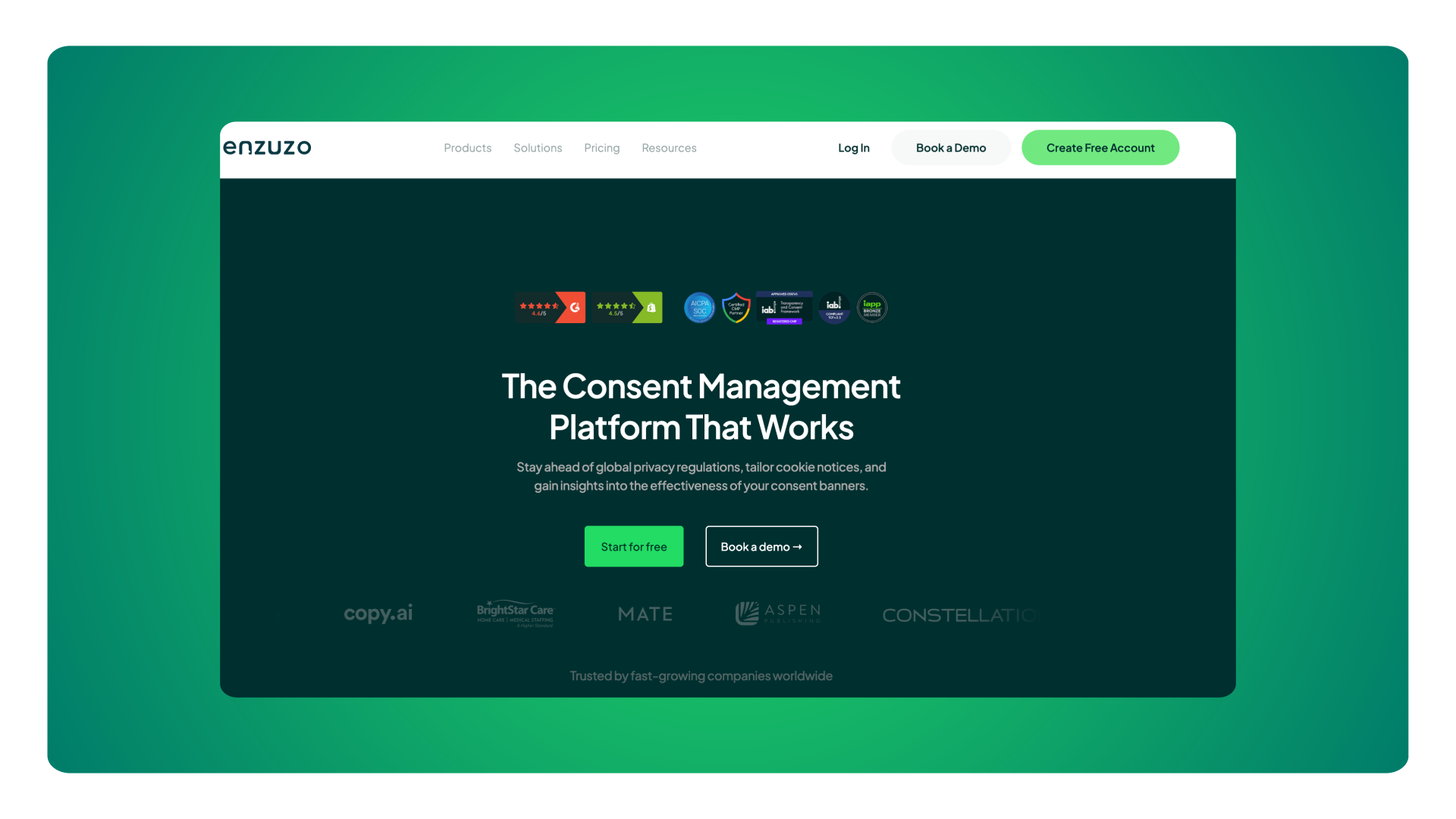
Best for: Mid-market teams and SaaS platforms switching off OneTrust or responding to a CIPA demand letter; and any growing team that needs enterprise-grade consent without enterprise pricing or implementation timelines.
Enzuzo is built for the gap that most CMPs ignore: companies too large to live with a basic cookie banner but too focused to need a full enterprise privacy suite. If your team is being displaced by OneTrust's new $10,000 minimum ACV, Enzuzo is one of the three CMPs OneTrust itself recommends to affected customers. If you've received a CIPA or Meta Pixel demand letter and need a compliant consent banner deployed quickly, Enzuzo can have you live the same day.
It's also a Google CMP Gold Partner with support for cookie consent, legal policy generation, and DSAR workflows — no custom development required to get started.
Pricing is a structural advantage over the incumbents. Plans start free, then Starter at $9/month (or $7 billed yearly), Growth at $29/month (or $22 billed yearly), and Pro at $79/month (or $59 billed yearly). Those tiers scale by domains and monthly visitors. Growth adds subdomains, geo-specific consent, TCF, and DSAR management. Pro adds more domains, more traffic capacity, and stronger support.
Beyond price, Enzuzo includes Google Consent Mode v2, Microsoft Consent Mode, 25+ languages, consent logs and compliance reporting, geo-specific consent, subdomain support, and consent analytics to help teams monitor banner performance. It also supports Global Privacy Control, which helps businesses respond to browser-based opt-out signals automatically.

One reason Enzuzo stands out in this comparison is scope. Alongside the banner, consent logs, and Consent Mode support, it includes legal policies and DSAR workflows. For Shopify stores, multi-domain setups, and agencies, the mix of consent management, policy tools, and request workflows is useful because privacy work rarely stays in one lane.
The tradeoff is deliberate scope. Enzuzo focuses on external compliance - the consent layer that drives lawsuits and regulatory fines. If your team's primary need is ROPAs (Records of Processing Activities), internal data mapping, vendor risk management, or privacy impact assessments, that's full privacy operations territory, and you're better off shopping for a full GRC platform. For teams that need consent management, Consent Mode, and DSAR workflows solved quickly and affordably, Enzuzo's focused scope is a feature, not a gap.
Book a consent compliance audit and learn about CookieYes migration options
2. Termly
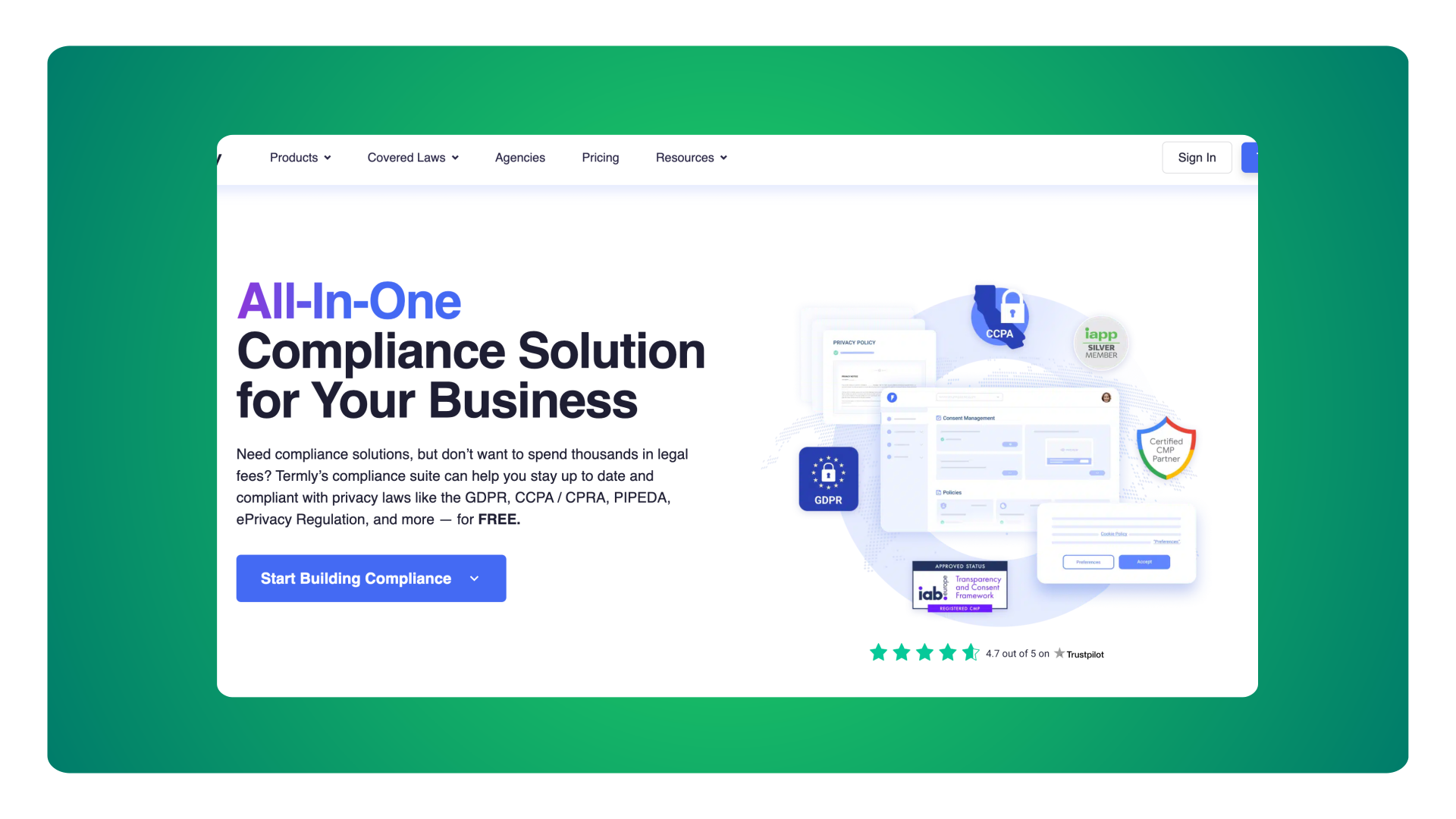
Best for: Small businesses that want a one-stop shop for cookie consent and policy generation.
Termly is often the practical pick for smaller businesses that want cookie consent management, legal policy tools, and a lighter learning curve. Its pricing is simple. There's a free version with one basic legal policy, 10,000 banner views per month, a cookie policy and banner, cookie script auto-blocker, and quarterly scans. Paid plans start at $10 per website per month when billed annually for Starter, or $14 monthly. Pro+ starts at $15 annually or $20 monthly.
It covers more than a banner. Termly includes a consent preference centre, cross-domain consent, scheduled scans, and an embeddable DSAR form. On higher tiers, it adds Google Consent Mode v2, IAB TCF support, custom banner styles, multi-language support, and regional consent rules. That gives website owners a clean path from basic cookie consent management to more polished privacy compliance without a big jump in complexity.
The limit is depth. Termly is useful and affordable, though it is still more of a banner-and-policies product than a broader privacy operations platform. For teams with heavy compliance management needs, many domains, or more complex Google Tag workflows, it may feel a bit too small at a certain point.
3. iubenda

Best for: Businesses that want cookie consent plus legal documents in one subscription.
iubenda has been in this category for a long time, and its appeal is still the same. You get a consent management platform, privacy and cookie policy generation, terms and conditions tools, geo-targeting, site scans, and higher tiers that move into broader legal coverage. Its Essentials plan starts at $5.99 per site per month, billed yearly for up to 25,000 pageviews. Advanced starts at $24.99 yearly for up to 50,000 pageviews, and Ultimate starts at $99.99 yearly for up to 150,000 pageviews.
That makes iubenda a sensible choice for teams that care about data privacy compliance and want one vendor for the front-end pieces. Its cookie banner product includes automatic updates, geo-targeting, monthly scans, multiple languages, and broader legal documents as you move up tiers. For some site owners, that's simpler than stitching together a consent manager and policy generator from different vendors.
The pricing model deserves a closer look, especially for higher-traffic sites. Since it is pageview-based and layered by plan, the low entry price can look cheaper than the real long-term cost for busy sites. If your main concern is scaling consent management across multiple domains or marketing properties, iubenda may not be the cleanest fit.
4. Usercentrics
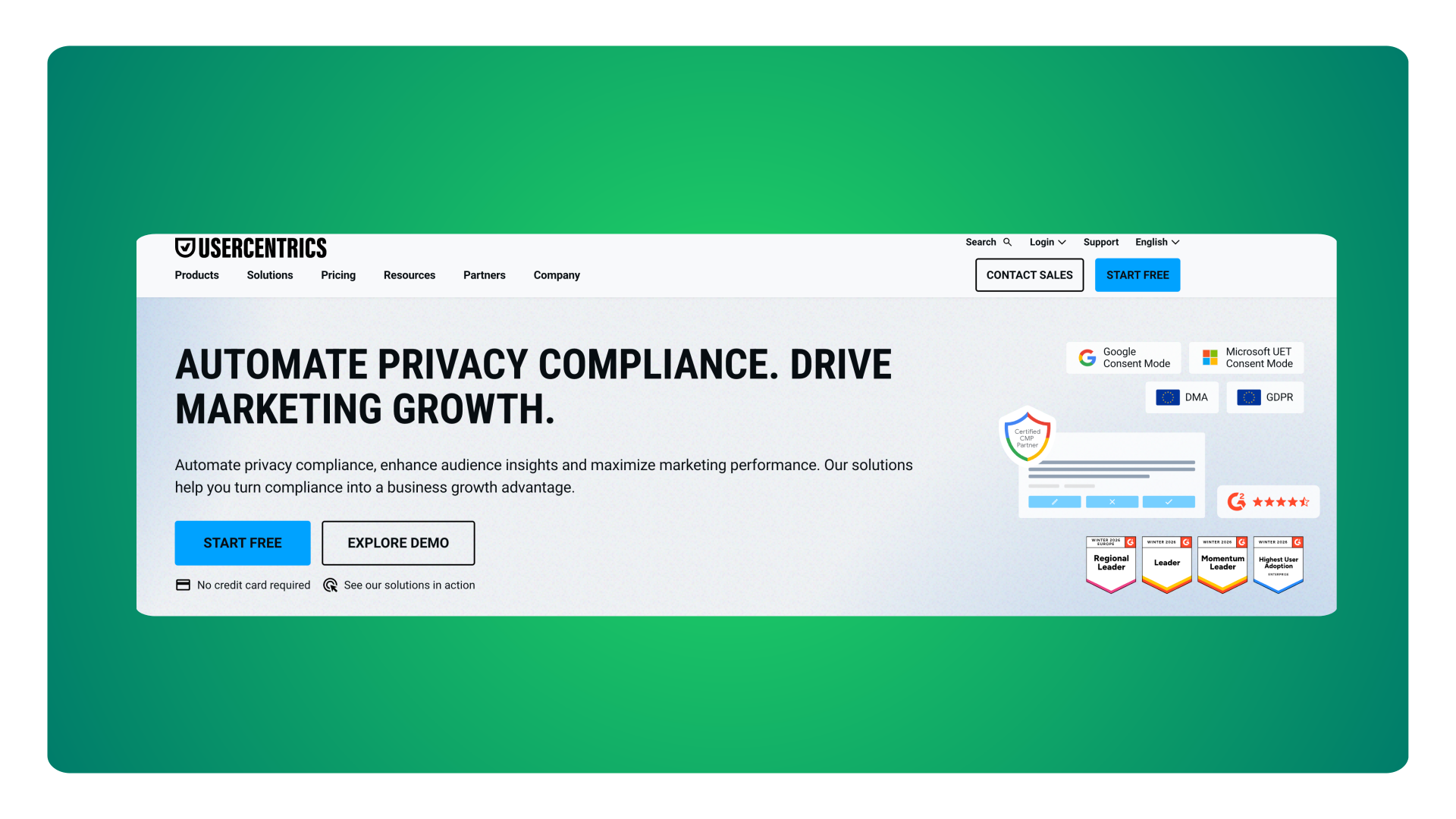
Best for: Teams that want more flexibility, more languages, and a stronger growth path than a very basic CMP.
Usercentrics has moved further upmarket than many lightweight banner tools, and that shows in its pricing and plan design. Its Web CMP plans start at €7 per month for one domain and up to 1,500 sessions, then €15 for up to 3,000 sessions, €30 for up to 15,000 sessions and three domains, and €50 for up to 50,000 sessions and ten domains. It supports geolocation rules, broad language coverage, cross-domain consent sharing, IAB TCF v2.3, and Google-certified CMP status.
This makes Usercentrics a good CookieYes alternative for teams that expect more moving parts. If you need multiple languages, more control over banner styling, stronger consent analytics, or cross-domain consent preferences, Usercentrics has room for that. It's better suited to growing businesses than tools built mainly for a single, simple site.
The tradeoff is complexity and pricing. Usercentrics isn't priced like a casual plugin. It makes more sense when your consent management needs go beyond basic cookie compliance, and you know session-based pricing will still make sense for your traffic.
5. Cookie Information
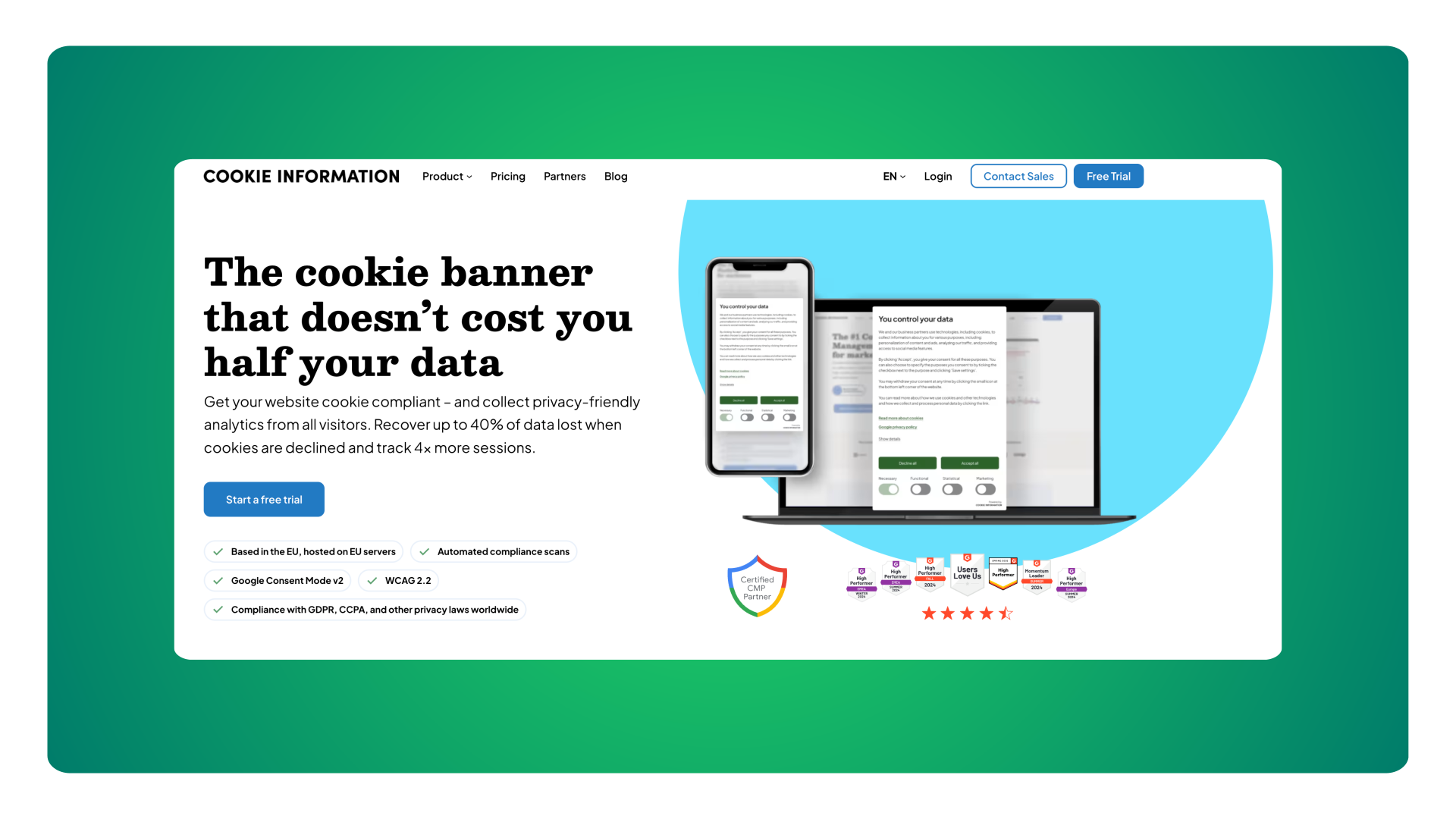
Best for: Teams that care a lot about Google Consent Mode and privacy-friendly analytics.
Cookie Information takes a sharper, more marketer-focused angle than many CMPs. Its cookie banner plans start at €19 per month for small websites with up to 500 subpages, or €39 per month for larger sites up to 5,000 subpages. It offers a separate cookie banner and analytics tracking starting at €35 per month, and promotes privacy-friendly analytics as a way to recover insights from visits where users decline cookies.
There are two reasons it stands out in this comparison. First, it's a Google CMP Partner with Gold status and native Consent Mode v2 integration. Second, it makes a more explicit case than most vendors around measurement, including anonymous tracking, visitor data before consent in certain privacy-safe forms, and side-by-side use with existing analytics tools. For e-commerce operators and marketers, that angle will either be very appealing or slightly too much, depending on how measurement-focused the team is.
Cookie Information is less of an all-in-one privacy platform than some other tools here. It's stronger as a consent and analytics decision than as a broader system for managing DSAR workflows, policies, or company-wide privacy operations.
6. Osano
Best for: Teams that have outgrown basic cookie consent and need broader GRC operations.
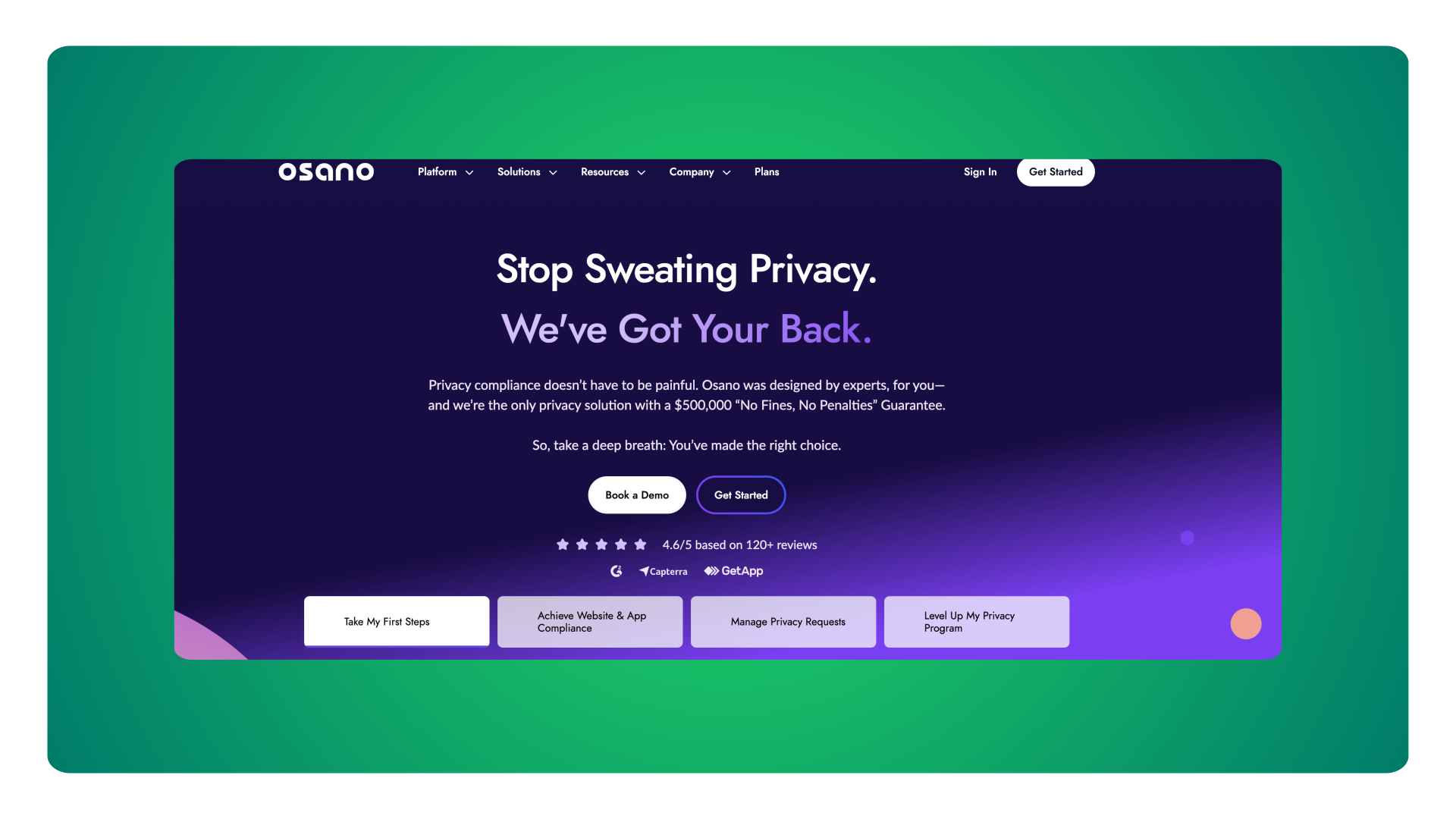
Osano is the heavyweight in this list for teams that need more than a banner and a log. Its platform covers consent, preference management, subject rights, data mapping, privacy assessments, and vendor risk — starting at $199/month, with pricing that scales significantly at higher tiers through a sales conversation. Osano says its platform supports compliance with 95+ privacy laws in 50+ countries, and it offers a "No Fines, No Penalties" pledge that currently covers fines or penalties of up to $500,000 if the issue arises from its platform.
This is where Osano becomes a very different kind of CookieYes alternative. It isn't just about cookie consent management. It's for businesses that want compliance management across multiple workflows, including subject rights and data discovery. If your legal or privacy stakeholders care about data protection impact assessments, vendor risk, or data mapping, Osano is in a different league from lighter CMPs.
The obvious tradeoff is weight. Osano is broader, which usually means more budget and more process. If your real need is a better consent banner, stronger Google Consent Mode support, and easier consent logs for your website, or if you're switching off OneTrust and need a right-sized replacement, Osano may be more platform than the problem calls for.
Best CookieYes Alternatives by Use Case
Best for teams leaving OneTrust
If your team is being displaced by OneTrust's new $10,000 minimum ACV, Enzuzo is the most direct fit. Enzuzo is one of three CMPs that OneTrust itself recommends to affected customers, covers comparable consent management functionality, and deploys in days at roughly 80% lower cost.
If your needs extend into full privacy operations, such as data mapping, vendor risk, or internal governance, Osano is the next step up, though the investment scales accordingly.
Best for Ecommerce & Shopify
Enzuzo has a robust consent management product for ecommerce, offering native integrations for both Shopify and Webflow. Cookie Information is a good fit, too, with proven traction across Shopify & Wix.
Best for agencies and multi-domain work
Enzuzo and Usercentrics are the strongest fits here. Enzuzo scales by domains and visitors, with agency and enterprise paths plus DSAR support. Usercentrics offers plans with more domains, more banner languages, cross-domain consent sharing, and stronger analytics as you move up tiers.
Best for Google Consent Mode
Osano, Cookie Information, and Enzuzo are the cleanest picks if Google Consent Mode is high on the list. All three lean into Consent Mode support, and Enzuzo plus Cookie Information both emphasize Google-certified CMP status. Cookie Information is the most measurement-focused of the three.
Best for small businesses
Termly and iubenda make the most sense here. Termly keeps the entry price low and bundles policy tools with cookie consent features. iubenda is a strong option if you want legal documents and consent management in one subscription and can live with pageview-based pricing.
Best for broader privacy workflows
If the job has expanded beyond consent management into request handling, assessments, or data mapping, look at Enzuzo and Osano. Enzuzo covers cookie consent and DSAR workflows in a tighter package — the right stop for most OneTrust-displaced mid-market teams. Osano makes more sense when the job has grown to include internal governance — data mapping, vendor risk, and privacy impact assessments — typically at companies with dedicated privacy operations budgets.
How to Choose the Right CookieYes Alternative
If you're leaving OneTrust, the decision is simpler than it might look. Most OneTrust customers in the $1K–$10K ACV range need the same things: multi-domain consent management, Google Consent Mode, consent logs, and reliable support. Enzuzo is built for exactly this: right-sized features, Slack support included, live by Friday. If your team has expanded into full privacy operations (data mapping, vendor risk, ROPAs), Osano is the logical next step but comes at a significantly higher price point.
If you're starting fresh, begin with your actual setup. A single brochure site, a Shopify store, a content-heavy publishing setup, and an agency portfolio do not have the same needs. If your team manages a single, smaller site, a free plan or a lighter paid tier may be fine. If you're managing multiple domains, multiple languages, or a mix of analytics and advertising tools, session or domain limits quickly become a concern.
Then look at how much work the CMP creates around the banner. Cookie scanning, automatic script blocking, geolocation rules, custom CSS, Google Tag Manager support, and consent logs are not flashy features. They are the bits that save your web team from spending Friday afternoon asking why a tag fired early in Belgium and nowhere else.
Next, decide whether you need more than cookie consent management. Some teams need only a consent banner and a record of user consent. Others need DSAR forms, request workflows, policy generation, or a path into broader privacy compliance. If you're trying to manage consent preferences, customer requests, and policy work across one website or store, a tighter all-in-one platform can be easier to live with than bolting together three separate tools.
Last, check how pricing really scales. Look past the free version and the first paid tier. Ask what happens when traffic grows, when you add domains, when you need multiple languages, or when legal asks for stronger consent logs and reporting. That's where the true cost of a CMP tends to appear from behind the curtain.
FAQs about CookieYes alternatives
What is the best CookieYes alternative for companies leaving OneTrust?
Enzuzo is the most direct fit. It's one of three CMPs OneTrust recommends to customers being priced out of its new $10,000 minimum ACV. It covers comparable consent management functionality at roughly 80% lower cost and deploys in days. If your needs extend into full privacy operations — data mapping, vendor risk, internal governance — Osano is the next step up.
What is the best CookieYes alternative?
That depends on what you need the replacement to do. If you want cookie consent and DSAR workflows in one place at mid-market pricing, Enzuzo is a strong fit. If you mainly want a dedicated CMP with strong Google Consent Mode support, Cookie Information may suit you better.
Which CookieYes alternatives support CIPA compliance?
CIPA (the California Invasion of Privacy Act) has become a significant compliance trigger in 2025–2026, with Swigart Law Group targeting websites running Meta Pixel and similar trackers without prior consent — claims range from $10,000 to $200,000+. Enzuzo covers CIPA compliance and is building an active tracker crawler to help detect at-risk configurations before a demand letter arrives. CookieYes, Termly, iubenda, and Usercentrics do not have a clear CIPA posture.
Is CookieYes free?
Yes, CookieYes has a free plan. It includes a basic cookie banner, basic customization, up to 15,000 pageviews per month, and 100 pages per scan on one domain. CookieYes also offers paid plans if you need more pageviews, more advanced customization, geo-targeted banners, or more frequent scanning.
What should I look for in a consent management platform?
Look for the basics first. You want a clear consent banner, reliable consent logs, script blocking, cookie scanning, region-based controls, and support for your stack. After that, check whether the platform supports Google Consent Mode, Microsoft Consent Mode, multiple languages, consent preferences, and any broader privacy workflows you need, such as customer requests or DSAR handling.
What is the difference between a cookie banner and a consent management platform?
A cookie banner is the front-end notice users see. A consent management platform does the heavy lifting: managing user consent, storing consent logs, blocking scripts before consent where needed, syncing consent preferences, and integrating with systems like Google Tag Manager or analytics tools. Think of the banner as the visible tip and the CMP as the machinery under the floorboards. Less glamorous, more useful.
Osman Husain
Osman is the content lead at Enzuzo. He has a background in data privacy management via a two-year role at ExpressVPN and extensive freelance work with cybersecurity and blockchain companies. Osman also holds an MBA from the Toronto Metropolitan University.
LinkedIn →More related blogs
Your next read
.png)