Osman Husain
Quick Overview
- Ecommerce stores running Meta Pixel, TikTok Pixel, or Google Ads without a compliant cookie consent banner are exposed to CIPA lawsuits with claims as high as $200,000 per incident
- GDPR, CCPA, and an expanding set of US state privacy laws each require different consent rules for the same visitor, depending on where they are located
- The three tools best suited to ecommerce in 2026 are Enzuzo (multi-domain, GTM-native, best for growing stores), CookieYes (Shopify-native, best for single-store SMBs), and Osano (best for mid-market brands with advanced compliance needs)
- Google Consent Mode v2 is required for any store running Google Ads or GA4 in the EU, and non-compliance directly impacts your ad attribution
Why cookie consent management is now a revenue problem for ecommerce stores
Most ecommerce operators think of cookie consent as a legal checkbox.
In 2026, it is a revenue problem.
If your store runs retargeting campaigns using the Meta or TikTok pixel without obtaining valid consent from California visitors, you are at risk of lawsuits under the California Invasion of Privacy Act (CIPA).
Swigart Law Group, the firm most active in this space, has sent demand letters to hundreds of online retailers with claims ranging from $10,000 to $200,000 per violation. Several companies have approached Enzuzo after receiving these letters, with many accelerating their CMP deployment as a result.
If your store serves EU customers and runs Google Ads, it now requires a Google-certified CMP to pass consent signals via Consent Mode v2. Stores without proper consent integration see conversion tracking modeled rather than measured, which degrades bid optimization and campaign performance over time.
And if your store operates across multiple geographies, the patchwork of laws is genuinely complex: GDPR (opt-in required), CCPA (opt-out required), and US state laws like VCDPA and CPA each handle consent differently for the same visitor, depending on where they are browsing from.
A consent management platform (CMP) handles all of this automatically. The right one for your store depends on your technical setup, how many domains you run, and where your customers are located.
| Your situation | Best fit | Why |
| Multi-domain store, GTM-based tracking, US and EU customers | Enzuzo | Flat pricing for up to 10 domains, geofencing across all jurisdictions, GTM-native deployment |
| Single Shopify store, simple tech stack, no GTM | CookieYes | Native Shopify app, fast setup, covers GDPR and CCPA basics |
| Mid-market brand with a compliance team and per-domain budget | Osano | Privacy monitoring, vendor risk tools, solid geo-targeting across jurisdictions |
| Store that received a CIPA demand letter | Enzuzo | Explicit CIPA coverage, geofenced opt-in for California, GTM pixel blocking |
| Store running Google Ads in the EU | Enzuzo or CookieYes | Both are Google-certified CMPs supporting Consent Mode v2 |
What to look for in a CMP for ecommerce
Before comparing tools, understand the five capabilities that actually matter for ecommerce stores:
Google Tag Manager integration. Most ecommerce stores manage their tracking pixels through GTM. Your CMP needs to block tags from firing until consent is given, and it should work without breaking your analytics or conversion tracking. This is the implementation step where most stores run into problems.
Geofenced consent rules. A visitor from Frankfurt sees a different banner than a visitor from Austin. Your CMP must automatically detect the visitor's location and apply the correct consent mode. Opt-in for EU, opt-out for California, notification-only for other jurisdictions. Anything short of this creates compliance gaps.
Google Consent Mode v2 certification. If you run Google Ads or GA4 and serve EU traffic, this is mandatory. A Google-certified CMP sends consent signals to Google's tag infrastructure so your measurement can continue operating in a privacy-safe way. Stores without this certification risk degraded ad performance as Google applies modeled conversion data.
CIPA and US state law coverage. European compliance gets most of the press, but US-based stores face real and growing litigation risk. Your CMP should handle CCPA opt-out, cover newer state laws (VCDPA, CPA, CTDPA), and address CIPA pixel liability specifically.
Multi-domain support at a flat price. Growing ecommerce brands often operate more than one domain: a main store, a regional subdomain, a wholesale portal, a blog. Per-domain pricing from some vendors gets expensive fast. Flat multi-domain pricing is meaningfully better for brands thinking about scale.
Ease of deployment. A well-designed consent banner for ecommerce stores helps boost conversion rates and bolsters trust among your audience.
The three best cookie consent platforms for ecommerce in 2026
1. Enzuzo: best for multi-domain ecommerce brands and mid-market retailers
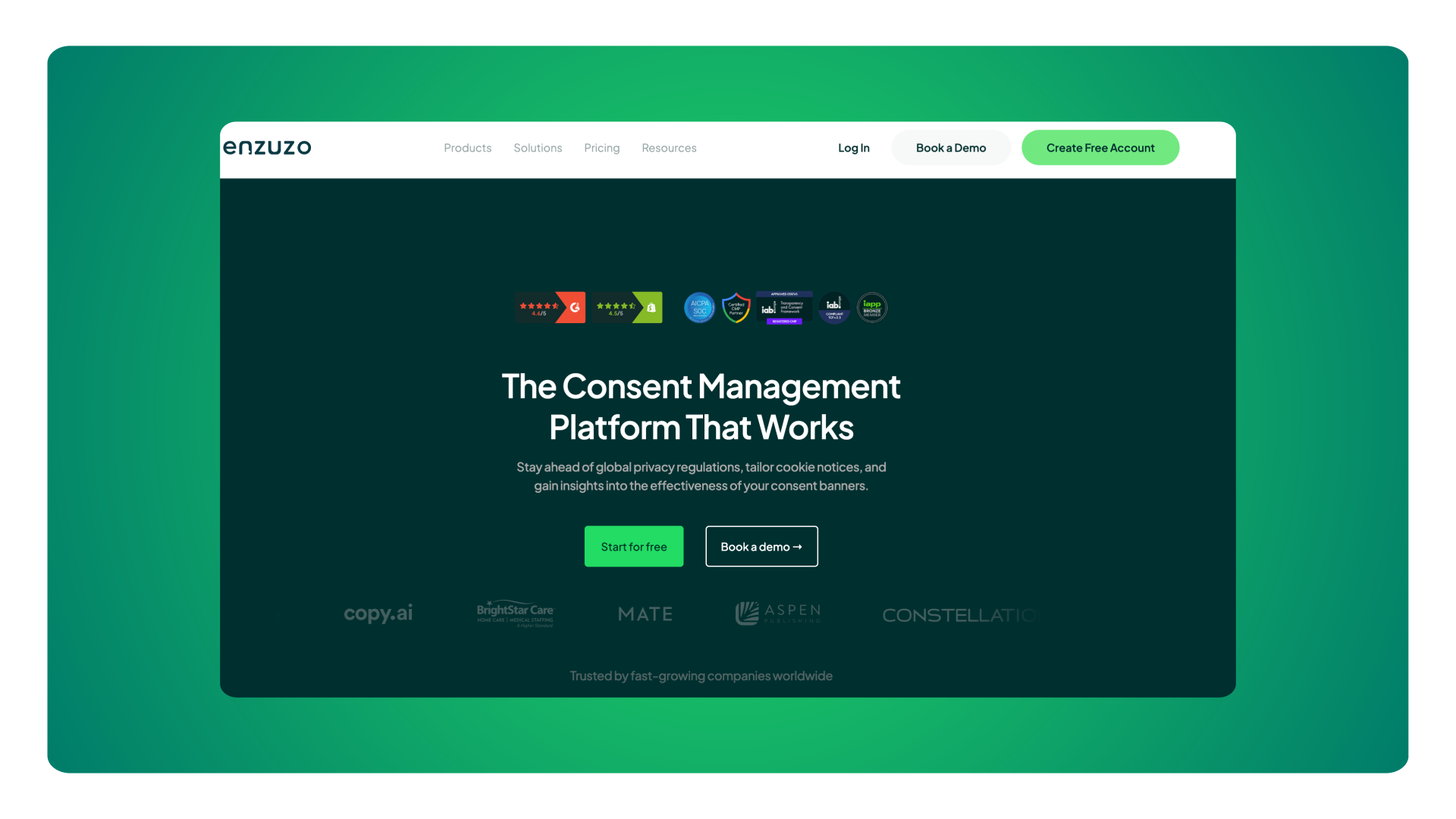
Enzuzo is a consent management platform built specifically for mid-market companies and growing SaaS platforms. It covers cookie consent, DSAR processing, privacy policy generation, and Google Consent Mode v2 in one platform.
Where it excels for ecommerce:
Multi-domain pricing is Enzuzo's clearest structural advantage. PLG Pro covers 10 domains for $59 per month (billed annually). Every competitor in this list charges per domain. If you run a main store, a regional subdomain, and a blog, you are already paying for three separate licenses with Osano or CookieYes. With Enzuzo, you are not.
GTM integration is where most ecommerce stores do their heaviest compliance work. Enzuzo deploys through a GTM template, which means your existing tag architecture does not need to change. Consent triggers are applied at the GTM layer, blocking pixels from firing until the visitor has given or declined consent. Setup typically takes a few hours rather than days.
CIPA and US state law coverage is explicitly built into the platform. Enzuzo applies geofenced consent rules automatically: a California visitor sees a CCPA-compliant opt-out banner, an EU visitor sees a GDPR-compliant opt-in, and visitors from other US states get the appropriate treatment based on current law. The platform updates these rules automatically as new state laws take effect, which means you are not manually tracking legislative calendars.
The DSAR form is included - this is critical for both GDPR & CCPA compliance. When a customer submits a data subject access request, Enzuzo manages the intake and creates an audit trail. For ecommerce brands with large email lists and marketing databases, this matters more than it used to.

Enzuzo is trusted by 100,000+ businesses and agencies worldwide, holds a 4.6/5 rating on G2, and is a Google CMP Gold Partner.
Where to be aware of limitations:
Shopify merchants who want a fully native installation without GTM will find CookieYes a simpler option. Enzuzo has a Shopify integration but GTM-based setup is still the primary deployment path for complex stores. If you are running a single Shopify store with no GTM infrastructure, CookieYes is faster to get live.
Pricing: PLG Pro at $59/month (billed annually) covers 10 domains. Mid-market plans start at $300/month for high-traffic deployments. A free trial is available. For a deeper look at how Enzuzo is built specifically for ecommerce use cases, see the ecommerce cookie consent management overview.
See how Enzuzo handles cookie consent for ecommerce stores. Book a 20-minute demo. No contract, no commitment. Or get started with a free plan.
2. CookieYes: best for single-store Shopify merchants
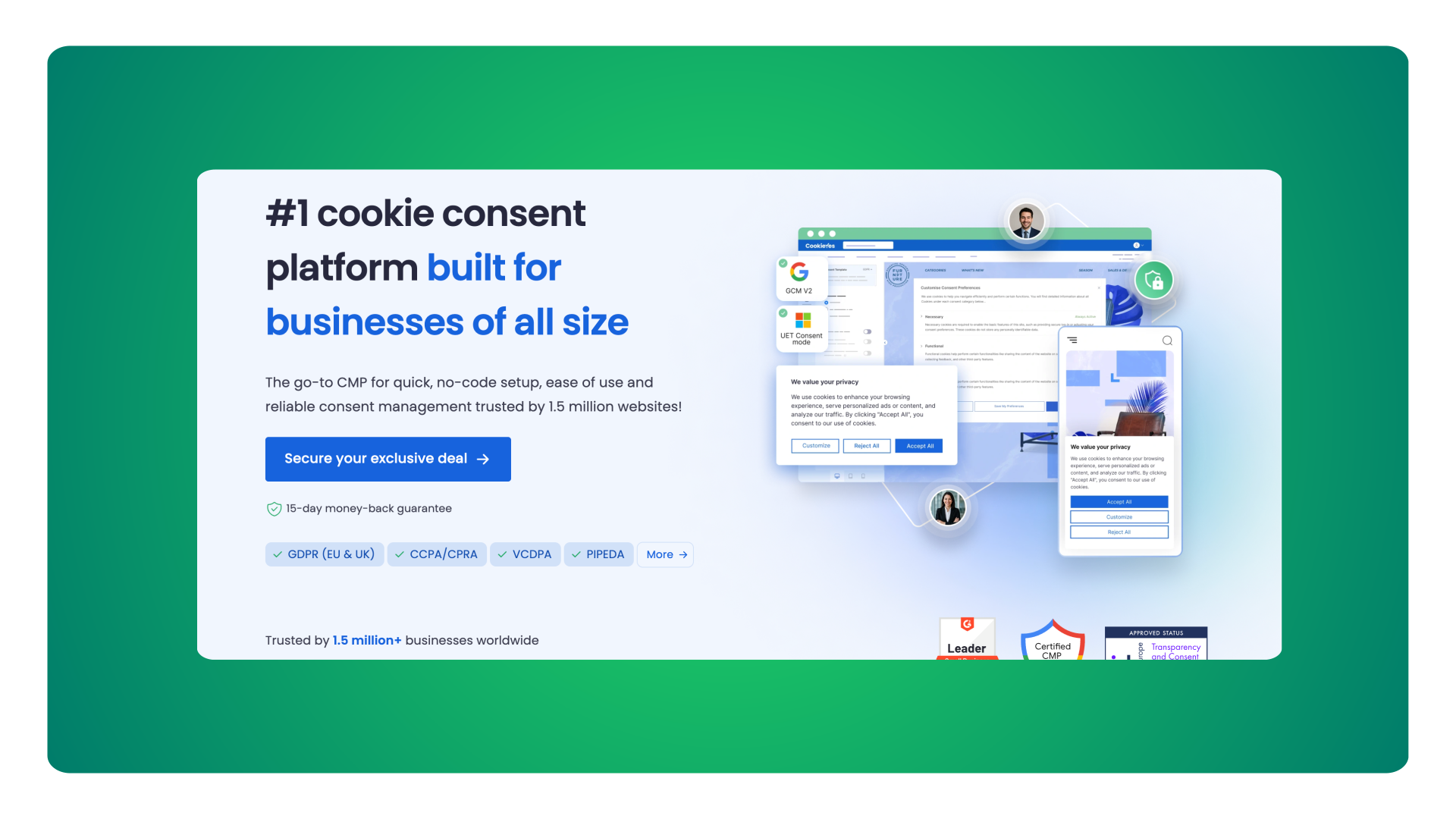
CookieYes is a widely used cookie consent tool with a native Shopify app that installs without requiring GTM. For merchants running a single Shopify store who want to get a compliant banner live quickly, it is a practical starting point.
Where it works well:
The Shopify app means installation is genuinely simple. CookieYes detects cookies automatically, generates a banner, and handles basic GDPR and CCPA requirements without requiring technical configuration. For a store with one domain, one region, and a standard Shopify tech stack, CookieYes covers the basics.
Google Consent Mode v2 is supported on paid tiers, which matters for stores running Google Ads in the EU.
Where merchants run into limits:
CookieYes charges per domain. A brand running a main store, a separate international store, and a blog is paying for three separate subscriptions. At three domains on CookieYes's paid tier, you are already paying more than you would for Enzuzo Pro, which covers 10 domains.
US state law coverage beyond CCPA is limited. If you have meaningful traffic from Virginia, Colorado, or Connecticut, CookieYes may not apply the correct consent rules automatically.
DSAR processing is not included. If you receive a data subject access request, you will need to handle it manually or with a separate tool.
Pricing: Free plan covers 100 consent transactions per day. Paid plans start at $10/month per domain.
3. Osano: best for mid-market brands with advanced privacy needs
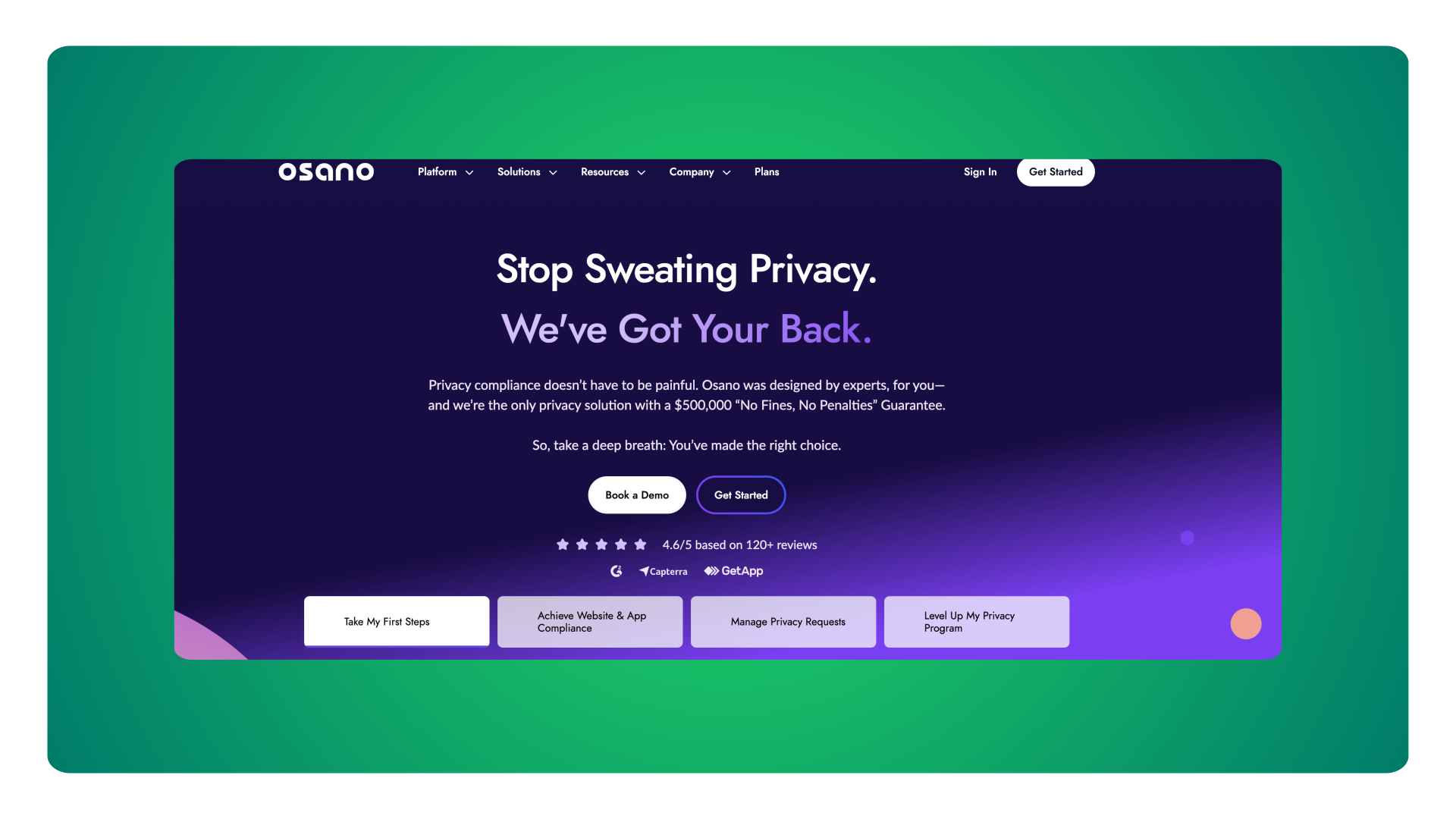
Osano is a mid-market privacy platform with consent management, vendor monitoring, and privacy risk assessment built into one tool. It is well suited to ecommerce brands that need more than a cookie banner and have compliance teams who actively monitor their tech stack.
Where it works well:
Osano includes a privacy law alert system that notifies compliance teams when regulations change. For mid-market brands with a dedicated legal or privacy function, this is genuinely useful. The vendor risk assessment capabilities let you monitor the compliance posture of third-party tools running on your site.
The consent management itself is solid: geofencing works across GDPR, CCPA, and several US state laws, and the banner customization is flexible.
Where to be careful:
Osano has recently removed all pricing from its website. Earlier, prices started at $199/month per domain for a limited package with under 30,000 monthly pageviews. Now, it is difficult to estimate what the plans start at.
For stores that primarily need cookie consent and Consent Mode v2 without the broader privacy monitoring suite, Osano includes capabilities you will pay for but may not use. If your team does not have a dedicated privacy function to act on vendor monitoring alerts, those features do not generate return.
Pricing: Inquire within.
How to choose between them
The decision comes down to your current setup and how you expect to grow.
Choose Enzuzo if you run more than one domain, manage tracking through GTM, serve customers across multiple geographies, or are growing toward mid-market scale. The multi-domain pricing model means you will not hit a cost cliff as you expand.
Choose CookieYes if you run a single Shopify store, have a simple tech stack without GTM, and want the fastest possible time to compliant. It is a reasonable starting point for stores in their early stages.
Choose Osano if you are a mid-market brand with a compliance team that will actively use privacy monitoring and vendor risk tools, and your budget can absorb per-domain pricing across your domain portfolio.
If you want a broader comparison across the full CMP market beyond these three tools, see the guide to the best consent management platforms of 2026.
What about CIPA? The risk ecommerce brands are underestimating
A large number of online retailers assume their GDPR compliance handles their US exposure. It does not.
CIPA is a California wiretapping statute that Swigart Law Group (and other law firms) has successfully applied to the use of session replay tools and tracking pixels like Meta Pixel. The statute allows for statutory damages without proof of actual harm, which is why it has become the preferred vehicle for class action litigation against ecommerce brands.
The standard plaintiff argument is that a third-party pixel intercepts communications between a user and a website in real time, and without consent. Retailers with significant California traffic and no consent mechanism for tracking pixels are exposed.
A compliant CMP that blocks Meta Pixel from firing until a California visitor explicitly opts in is the primary technical defense. Enzuzo's CIPA coverage is explicit, and the CIPA lawsuit guide on the Enzuzo blog goes into detail on how the litigation works and what implementation looks like.
The academic literature on consent fatigue is also worth understanding. Research from the University of California Berkeley and the IAB shows that opt-in rates on cookie banners vary widely depending on banner design and placement. .
FAQ
Does my Shopify store need a cookie consent banner?
Yes, if you serve visitors from the EU, UK, or California, or if you run any third-party tracking pixels (Meta, TikTok, Google). GDPR requires opt-in consent from EU visitors before non-essential cookies fire. CCPA and CIPA require opt-out mechanisms for California visitors and create litigation risk for stores using session replay or pixel tracking without disclosure.
What is Google Consent Mode v2 and do I need it?
Google Consent Mode v2 is a framework that tells Google's tags whether a visitor has consented to tracking. For stores running Google Ads or GA4 and serving EU traffic, it became mandatory in March 2024. Without it, your conversion measurement relies on modeled data rather than actual signals, which reduces campaign optimization accuracy. Any Google-certified CMP implements Consent Mode v2 automatically.
Can CIPA lawsuits actually affect my ecommerce store?
Yes. CIPA does not require a California business address. It applies to any website accessible by California residents. Swigart Law Group has targeted retailers across the US. The presence of Meta Pixel, TikTok Pixel, or session replay tools on a site without user consent is the core exposure. Statutory damages under CIPA range from $5,000 to $10,000 per violation.
How much does cookie consent management cost for an ecommerce brand?
It depends on your domain count and the vendor. PLG tools like CookieYes start at $10 per month per domain. Enzuzo covers up to 10 domains for $59 per month (billed annually) with DSAR included. Mid-market tools like Osano are much more expensive. For a brand running three to five domains, Enzuzo's pricing is materially lower than per-domain alternatives.
What is the difference between a cookie banner and a consent management platform?
A cookie banner is a UI element. A consent management platform manages the consent data behind it: recording what each visitor consented to, blocking tags from firing without consent, applying different rules by jurisdiction, and generating an audit trail for regulatory inquiries. If you are using a basic cookie banner plugin without consent signal integration into your tag manager, you are likely not actually compliant, even if the banner appears on your site.
How long does it take to set up a CMP on an ecommerce store?
With GTM-based tools like Enzuzo, setup typically takes a few hours for a straightforward single-domain store. Multi-domain setups with multiple GTM containers take longer. Native Shopify tools like CookieYes can be live in under an hour for simple stores. Enterprise implementations with custom consent flows, server-side tagging, and multi-language support take longer across all vendors.
Does a CMP affect my site speed?
Some CMPs add meaningful page weight. Enzuzo is deployed as a lightweight GTM template. Cookiebot has documented page speed impact due to its cookie scanning approach. When evaluating tools, check whether the CMP loads synchronously (blocks page render) or asynchronously, and test your Core Web Vitals before and after implementation.
Getting started
If you have received a demand letter, the right move is to get a CMP in place immediately, not after consulting with counsel. Most demand letters are pre-litigation and the presence of a compliant consent mechanism significantly affects how cases proceed.

If you are acting proactively, the free tier available at enzuzo.com covers the basics for a single domain with no time limit. Mid-market and multi-domain brands can book a demo to see how geofencing, GTM integration, and DSAR work across a full domain portfolio.
Osman Husain
Osman is the content lead at Enzuzo. He has a background in data privacy management via a two-year role at ExpressVPN and extensive freelance work with cybersecurity and blockchain companies. Osman also holds an MBA from the Toronto Metropolitan University.
LinkedIn →More related blogs
Your next read