9 Best CCPA Compliance Software Platforms [2026]
Table of Contents
This guide compares nine CCPA compliance software platforms for 2026. Each review covers what the tool does well, who it's designed for, and where it falls short, based on public product pages, pricing documentation, and direct experience with the category.
Quick comparison: 9 best CCPA compliance software platforms
| Tool | Best For | Consent Mgmt | DSAR Automation | Setup Time | Starting Price |
| Enzuzo | Mid-market, Shopify, agencies | Strong | Strong | Hours | Free; paid from ~$9/mo |
| OneTrust | Large enterprise | Strong | Strong | Weeks–months | Custom ($10K+ ACV) |
| TrustArc | Expert-guided compliance | Strong | Strong | Weeks | Custom |
| Osano | Consent + vendor risk | Strong | Strong | Days | Free; paid from $199/mo |
| Ketch | Data permissioning at scale | Strong | Strong | 2–4 weeks | Free; paid from $150/mo |
| DataGrail | SaaS-heavy enterprise DSAR | Moderate | Strong | Weeks | Custom |
| iubenda | European SMBs, policy-first | EU/CCPA | Form only | Hours | From ~$2/mo |
| Termly | US small businesses | Paid tiers | Form only | Minutes | Free; paid from ~$10/mo |
| CookieYes | WordPress, budget-conscious | Free tier | None | Minutes | Free; paid from $10/mo |
How to evaluate CCPA compliance software
The right tool depends on where your compliance work actually lives.
If your privacy program is primarily website-facing, covering cookie consent, privacy policies, data request handling, and keeping your marketing stack compliant, you need a tool built for that reality. Enzuzo and Ketch are the strongest fits here, though they target different price points and complexity levels.
If your data lives across dozens of internal systems, vendor contracts, and SaaS applications, you need something that maps and tracks that broader footprint. DataGrail, OneTrust, and TrustArc are built for that kind of program.
If you're a small business or a solo operator and you mainly need a cookie banner and a compliant privacy policy, iubenda, Termly, or CookieYes will cover the basics without the overhead.
Three questions worth answering before you evaluate any tool:
How many domains do you need to cover? Several tools on this list charge per domain. At two or three properties the math changes quickly.
Do you need automated DSAR handling or just a form? If you're receiving data requests at any real volume, a form that emails you manually creates operational risk. Automated intake, verification, and response workflows are worth the upgrade cost.
Do you have California-specific exposure beyond basic consent? California's Invasion of Privacy Act (CIPA) creates class action risk for sites running unconsented third-party scripts. Most lightweight tools have no CIPA posture at all.
1. Enzuzo: Best for website-first CCPA compliance
Best for: Mid-market companies, Shopify stores, marketing agencies, and teams that need CCPA compliance to work at the website and store layer without a dedicated privacy team.
TL;DR: Purpose-built for website compliance. Covers the full CCPA lifecycle (consent, policies, DSARs, Google Consent Mode) in one platform. Multi-domain pricing and a native Shopify app are the standout differentiators at this price point.
Enzuzo is a consent management platform (CMP) purpose-built for the compliance needs that most websites and online stores actually face: cookie consent, privacy policies, "Do Not Sell" workflows, DSAR handling, and Google Consent Mode, all in one platform, deployable in hours.
Where most CCPA compliance software starts with enterprise data governance and treats the website as one component, Enzuzo starts at the website and builds out from there. That's a meaningful distinction for teams that need to get compliant quickly without a legal department or a months-long implementation.
For CCPA specifically, Enzuzo covers the full compliance lifecycle: auto-generated CCPA/CPRA-compliant privacy policies, cookie banners with geo-targeting, automated "Do Not Sell or Share" link management, and DSAR intake and response workflows with audit trails. It's a Google-certified CMP in the Gold category and supports Microsoft Consent Mode, which matters for businesses running ad campaigns across both platforms.
The Shopify integration is a standout differentiator. Enzuzo has a dedicated Shopify app that handles consent, policies, and data requests natively. No direct competitor offers this at a comparable price point.
One thing that genuinely sets Enzuzo apart from this entire list: multi-domain management at no extra cost. Every other tool on this list charges per domain or per site. Enzuzo's PLG Pro plan covers 10 domains for $59/month, billed annually. For agencies managing client sites or businesses with multiple web properties, that pricing model changes the calculation significantly.
CCPA compliance also increasingly requires CIPA awareness. California's Invasion of Privacy Act (CIPA, Penal Code §631) has become a source of class action risk for sites running unconsented third-party scripts, with statutory damages of $5,000 per violation. Enzuzo includes CIPA coverage. Most SMB tools on this list don't.
Pricing: Free tier available. Paid plans start at $9/month (Starter, 1 domain) through $59/month (PLG Pro, 10 domains, billed annually). Mid-market plans from $250/month for high-traffic deployments.
Where it's a weaker fit: Organizations that need deep data mapping across internal enterprise systems, or teams requiring formal privacy impact assessment workflows.
Book a strategy call to learn more about how Enzuzo can help your company achieve robust CCPA compliance
2. OneTrust: Best for large enterprise programs
Best for: Large enterprises and multinational organizations managing CCPA alongside GDPR, LGPD, and dozens of other frameworks.
TL;DR: The most comprehensive privacy platform on the market. Justified for enterprise teams with complex, multi-regulation programs. Overkill and cost-prohibitive for most businesses below that threshold.
OneTrust is the most recognized name in enterprise privacy technology. For large teams with complex, multi-regulation compliance programs, it earns that reputation. The platform covers consent management, DSAR automation, data mapping, vendor risk, privacy impact assessments, and employee training across a global regulatory footprint.
For CCPA specifically, OneTrust handles cookie consent with multilingual banners, GPC signal support, "Do Not Sell" workflow automation, and robust DSR intake and fulfillment. Its data mapping capabilities span on-premises and cloud environments.
The trade-off is cost and complexity. OneTrust's minimum ACV is $10,000. Implementation typically takes weeks to months. Smaller teams often find the platform's breadth overwhelming relative to what they actually need.
Worth noting: OneTrust actively refers mid-market customers who don't need the full enterprise suite to lighter alternatives, including Enzuzo. If you're evaluating OneTrust and your requirements are website-focused rather than enterprise-wide, that referral pattern tells you something useful.
Pricing: Custom quote. Minimum ACV typically $10,000.
Where it's a weaker fit: Small and mid-market businesses that need website compliance without an enterprise implementation cycle.
3. TrustArc: Best for expert-guided compliance
Best for: Mid-to-large organizations that want a combination of software automation and dedicated consulting expertise.
TL;DR: Software plus advisory services in one package. Strong for organizations that want expert guidance through CCPA/CPRA, not just a tool to configure.
TrustArc pairs a technology platform with hands-on advisory services. For organizations that want expert guidance through their CCPA/CPRA compliance program rather than just a platform to figure out themselves, this model is genuinely differentiated.
Strengths include privacy impact assessments (especially relevant now that CPRA reclassifies employee data as PII), cookie consent with GPC support, data inventory tools for tracking third-party vendor relationships, and a dedicated team that helps you navigate regulatory changes as they happen.
The consulting-plus-software model comes at a premium. TrustArc requires more technical expertise to implement than lighter tools and pricing is custom-quoted at the mid-to-high end of the market.
Pricing: Custom quote.
Where it's a weaker fit: Businesses that want a self-serve tool with predictable pricing, or organizations that don't need the consulting component.
4. Osano: Best for consent management and vendor risk scoring
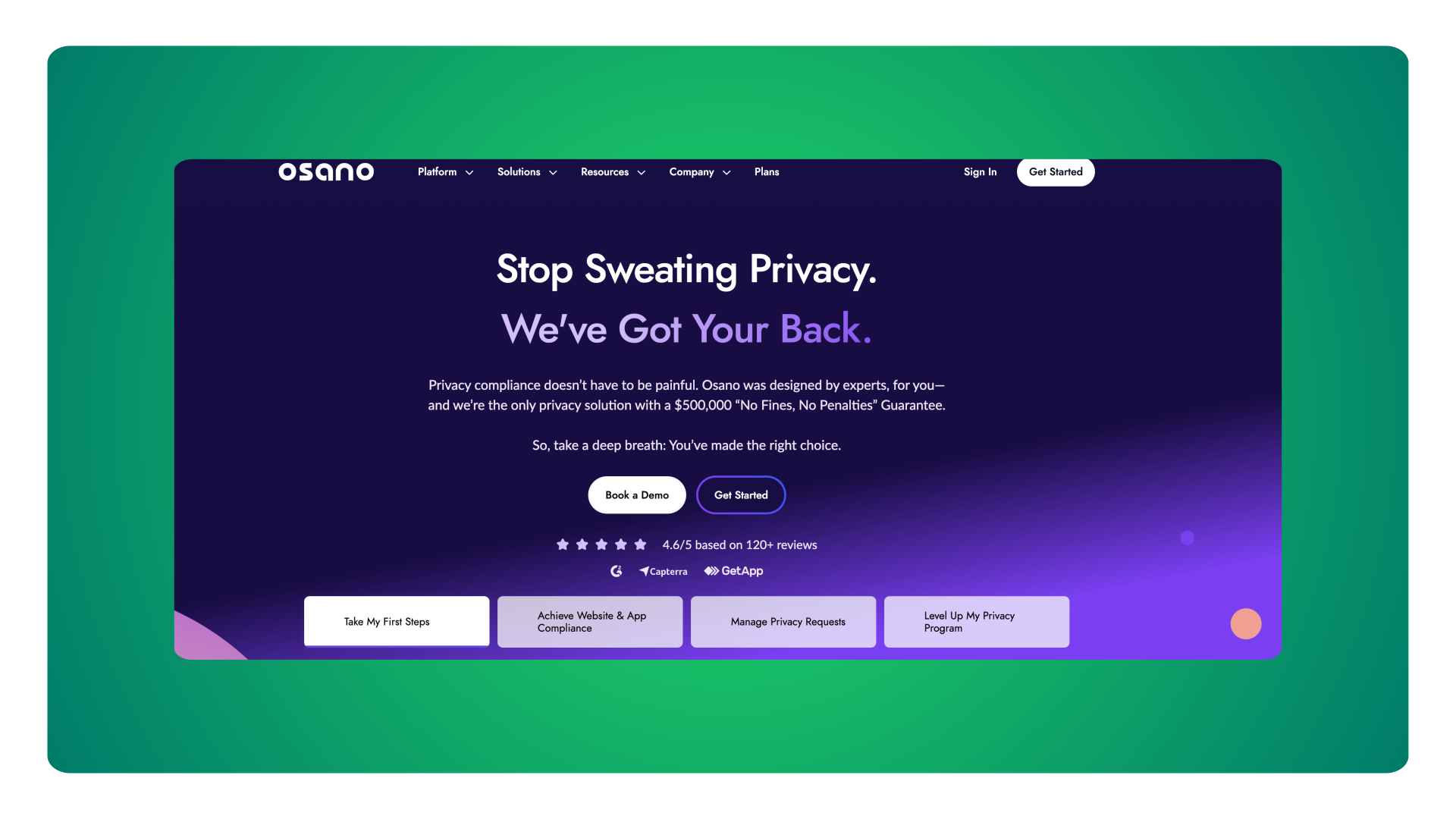
Best for: Mid-size businesses that want a privacy platform with built-in vendor privacy scoring.
TL;DR: Strong consent management with a unique vendor risk scoring layer. Pricing jumps quickly at multiple domains. Best for teams where third-party risk visibility is a real program requirement.
Osano covers the core CCPA bases: cookie consent, GPC support, "Do Not Sell or Share" automation, DSAR workflows for both consumer and employee rights requests, and compliance reporting. Its privacy policy and cookie banner templates are ready to deploy.
What sets Osano apart from most tools on this list is its vendor risk scoring. It grades thousands of SaaS vendors on their privacy practices, giving teams visibility into third-party risk at a glance. For CCPA compliance programs that include vendor management, that's a capability worth paying for.
Osano also carries a "No Fines, No Penalties" pledge covering regulatory fines up to $500,000, which is a differentiator worth noting in its positioning.
Pricing: Free tier (limited). Paid from $199/month per domain.
Where it's a weaker fit: Small businesses or single-site operators where $199/month isn't justified. Per-domain pricing adds up quickly for multi-site operators.
5. Ketch: Best for data permissioning at scale
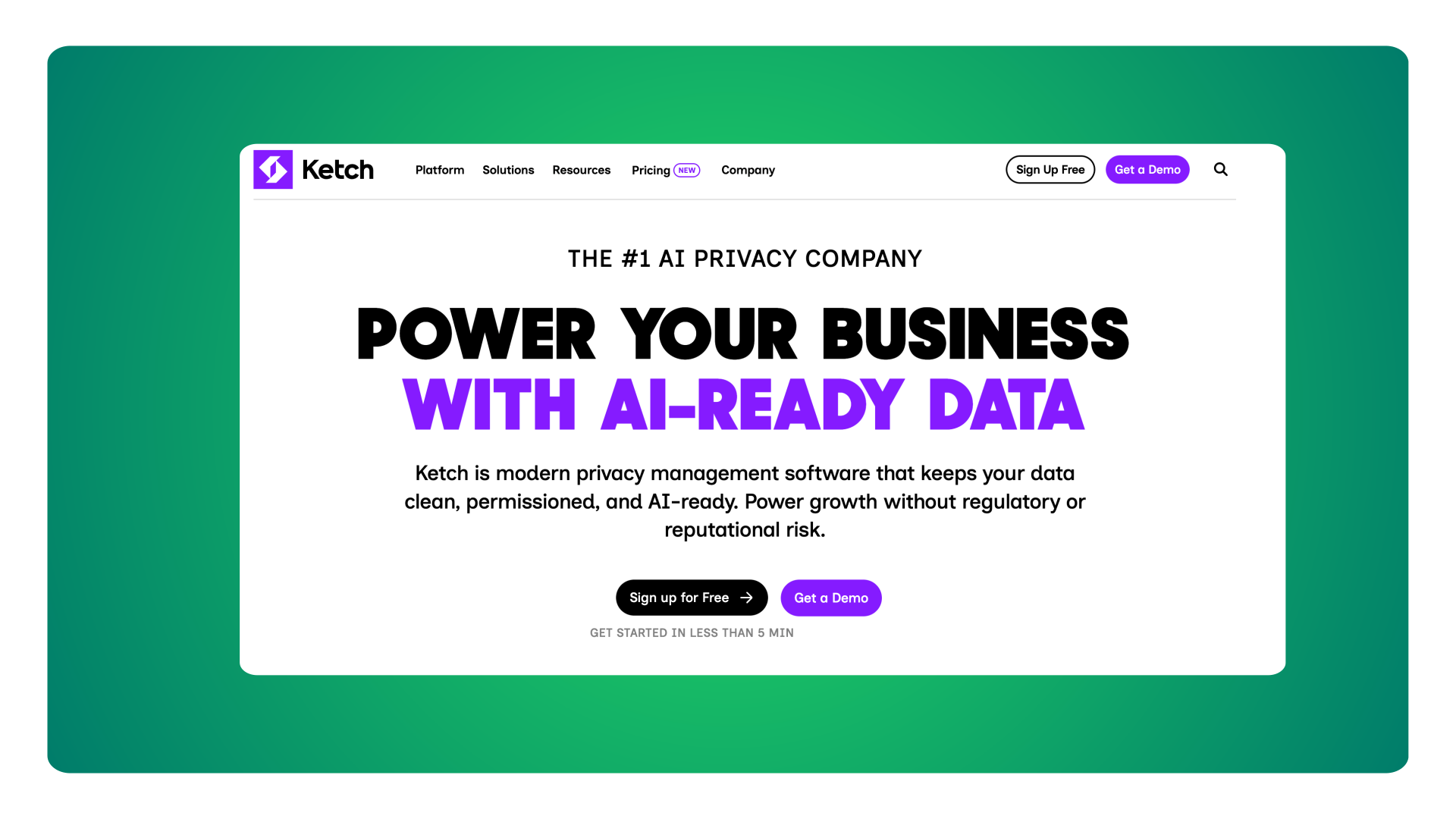
Best for: Mid-market to enterprise businesses that need consent preferences to flow through complex data ecosystems, including ad tech, marketing platforms, data warehouses, and AI pipelines.
TL;DR: Not just a cookie banner. Ketch orchestrates consent across your entire data stack. Best when you have an engineering team who can leverage the API and orchestration capabilities.
Ketch describes itself as a "data permissioning platform" rather than a traditional privacy tool, and the distinction matters. Where most CMPs capture consent at the website layer, Ketch orchestrates and enforces those preferences across every downstream system where personal data lives: CRM, data warehouse, ad platforms, even AI models.
For CCPA compliance, Ketch handles cookie consent, GPC signal, "Do Not Sell" workflows, and DSR automation with solid depth. Its identity resolution layer connects user identifiers across devices and platforms, so an opt-out on your website carries through to their profile in your advertising audiences automatically.
Setup takes longer than lighter tools, typically two to four weeks. The platform is best leveraged by teams with a data engineering function who can take full advantage of its orchestration capabilities.
Pricing: Free plan (up to 5,000 monthly visitors). Starter at $150/month (up to 30,000 visitors). Plus from $333/month. Enterprise custom.
Where it's a weaker fit: Teams that want quick deployment without engineering involvement, or businesses where the complexity of data orchestration isn't justified by their stack.
6. DataGrail: Best for DSAR automation across large stacks
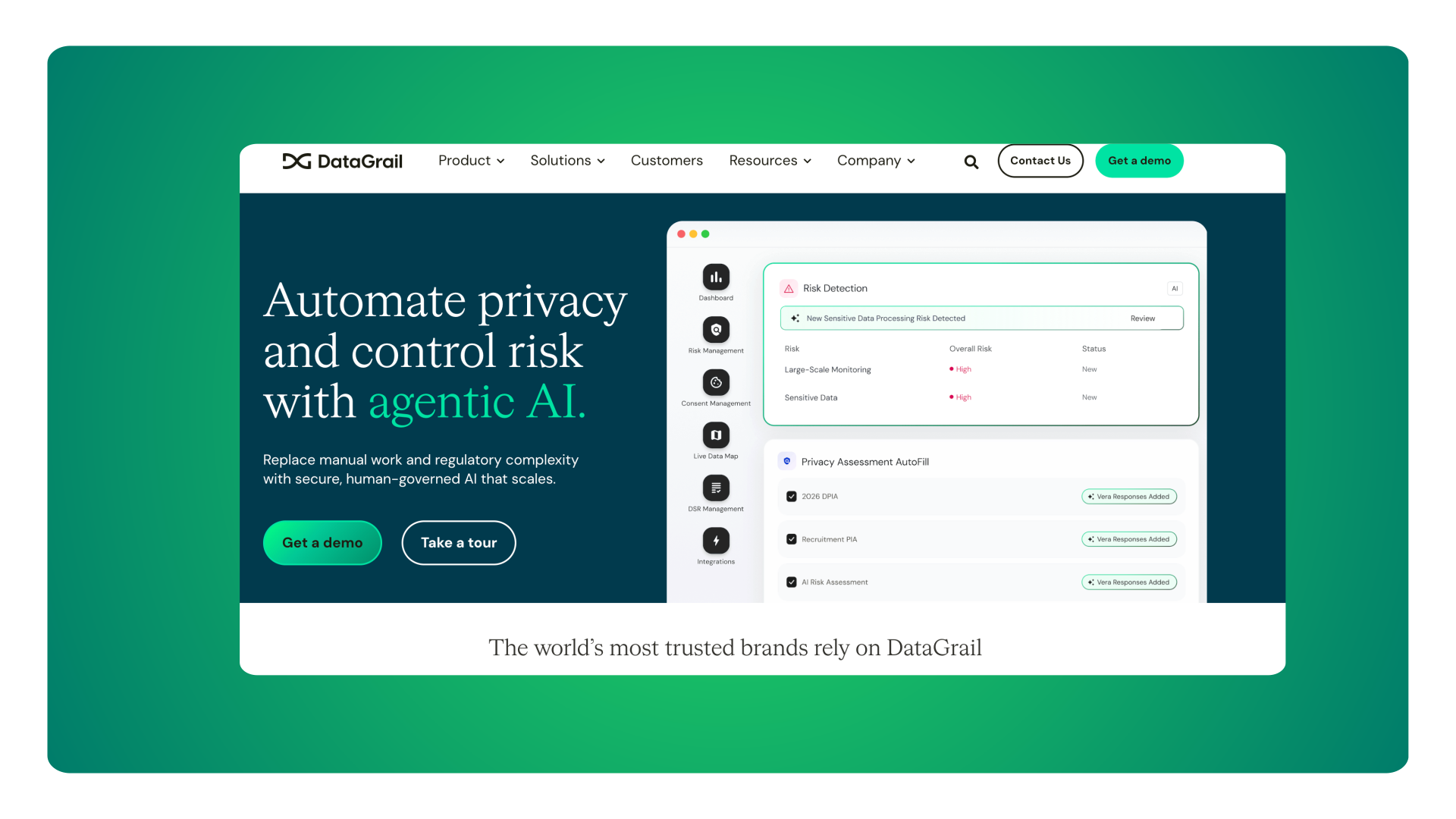
Best for: Larger organizations with personal data distributed across dozens of SaaS applications that need automated data discovery, mapping, and DSR fulfillment.
TL;DR: Exceptional for DSAR automation at volume across complex SaaS environments. Not a website consent tool. Enterprise pricing, enterprise use case.
DataGrail's core strength is its integration depth. With over 2,500 pre-built connectors, it can automatically discover where personal data lives across your entire SaaS stack and then fulfill access, deletion, and correction requests without manual effort. For CCPA programs where the hard part is tracking data across Salesforce, Marketo, Zendesk, and 40 other tools, DataGrail removes most of that friction.
The platform recently introduced AI agent tooling to further automate compliance workflows, which is worth tracking as CCPA enforcement ramps up around automated decision-making.
On the consent management side, DataGrail covers cookie consent and CCPA opt-out workflows, though this is supporting capability rather than its core strength. Pricing is custom and enterprise-oriented.
Pricing: Custom quote.
Where it's a weaker fit: Small and mid-market businesses, or teams whose primary need is consent management rather than DSAR automation at scale.
7. iubenda: Best for European SMBs and policy-first compliance
Best for: Small businesses, freelancers, and European companies that need CCPA and GDPR compliance through automated legal documents and consent tools.
TL;DR: Strong legal document automation across many jurisdictions at low cost. DSAR handling is form-based only. Better as a policy and documentation tool than a full CCPA operations platform.
iubenda leads with privacy policy and cookie policy generation, covering CCPA, GDPR, LGPD, and other frameworks across more than 150,000 customers. For businesses that need compliant policies in multiple languages and jurisdictions, it's one of the most affordable options available.
For CCPA specifically, iubenda covers cookie consent and required disclosures, but has notable limitations. DSAR handling is form-based rather than automated. US state law support beyond California is limited. Google Consent Mode v2 support is available on paid tiers only.
It's best thought of as a policy and consent documentation tool rather than a full CCPA compliance operations platform.
Pricing: From approximately $2/month at entry tier. Advanced tiers for more features and regulations.
Where it's a weaker fit: Businesses that need automated DSAR workflows, deep US state law coverage, or multi-domain management.
8. Termly: Best for small businesses on a budget
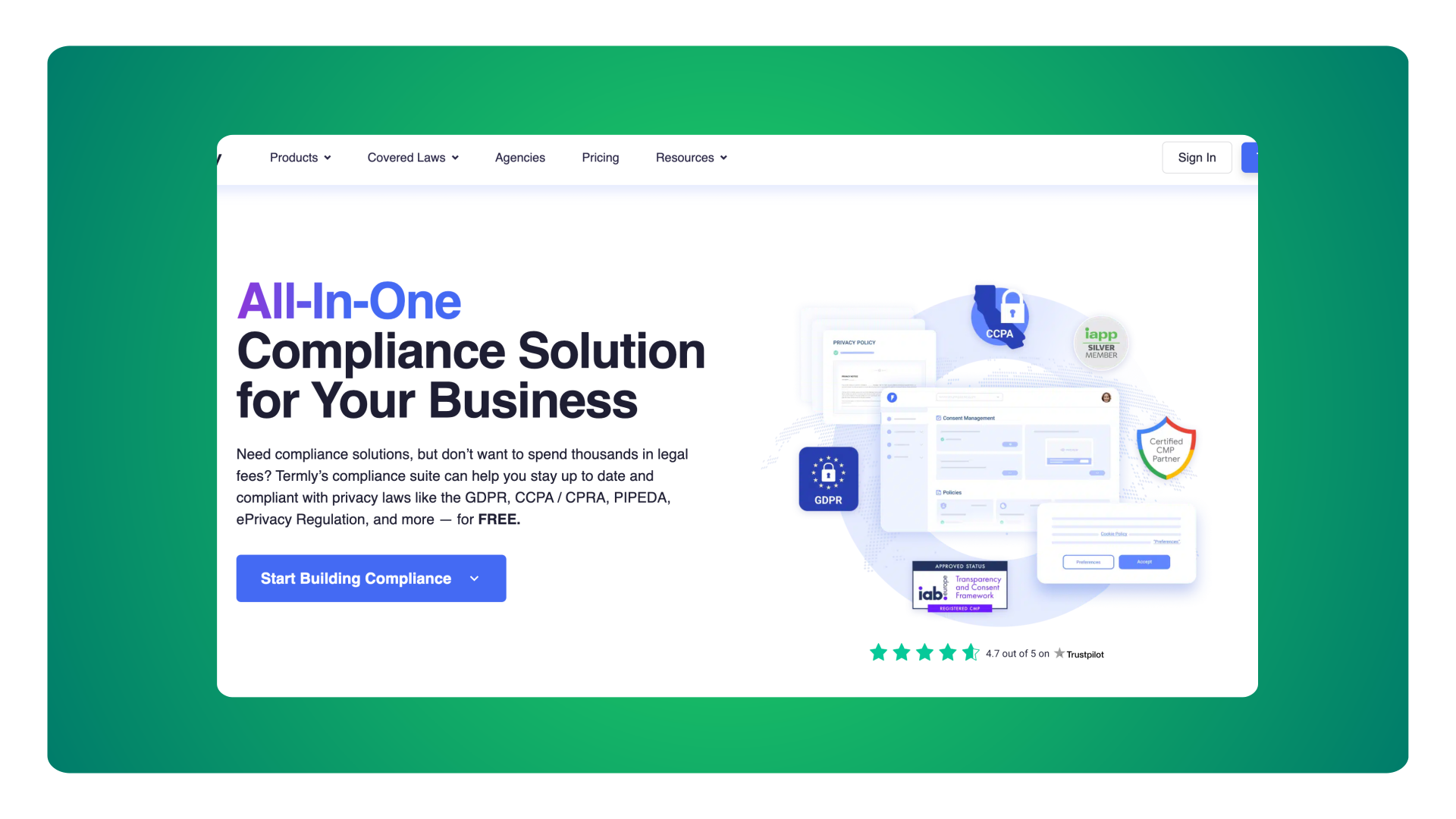
Best for: Small US-based businesses, freelancers, and creators that need straightforward CCPA compliance without legal expertise or a large budget.
TL;DR: Simple, affordable, and attorney-crafted. Good for US-focused small businesses that need CCPA basics covered. Not built for EU analytics, multi-site operations, or DSAR automation.
Termly is a lightweight compliance platform designed to make CCPA and basic GDPR compliance accessible to small businesses. It generates attorney-crafted privacy policies, cookie consent banners, and the required "Do Not Sell" disclosures through a simple, guided setup.
The free plan covers up to 10,000 monthly page views, which is workable for small personal sites or early-stage stores. Paid plans start at approximately $10/month. DSAR handling is form-based rather than automated, and Google Consent Mode v2 support is available on paid tiers only.
Termly is a reasonable starting point for US-focused small businesses that need CCPA basics covered without a significant investment. It's not the right tool for multi-site operators, Shopify merchants with meaningful volume, or teams that need EU analytics to keep working properly.
Pricing: Free plan. Paid from approximately $10/month.
Where it's a weaker fit: Multi-site operators, businesses with significant EU traffic, or teams that need DSAR automation rather than a form.
9. CookieYes: Best for WordPress sites and budget-conscious operators
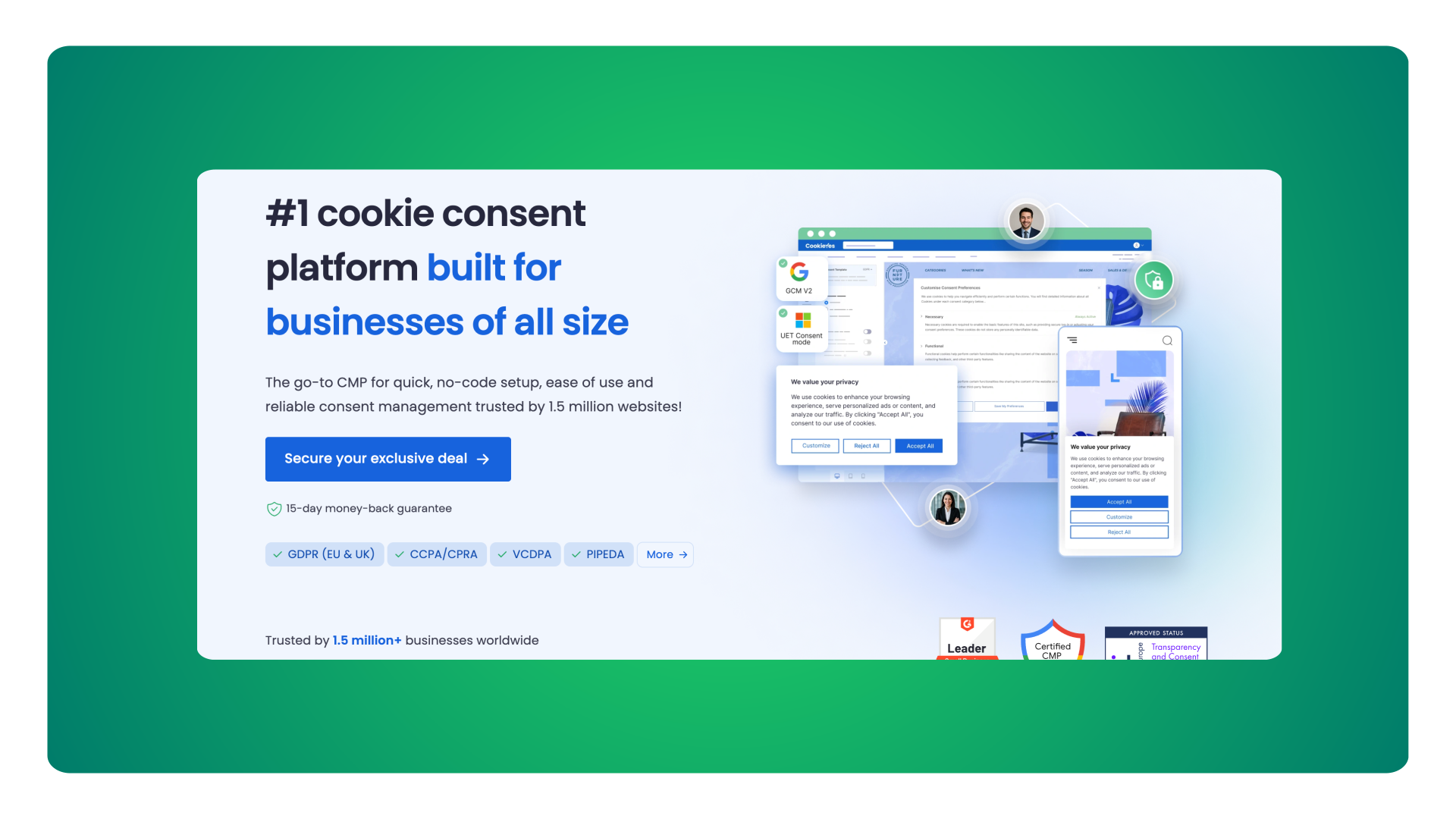
Best for: WordPress users, single-site operators, and budget-conscious businesses that need CCPA and GDPR cookie consent with minimal setup.
TL;DR: The go-to for WordPress. Fast setup, solid free tier, no DSAR automation. A good starting point that most growing businesses will eventually outgrow.
CookieYes is one of the most widely deployed cookie consent tools available, with over one million websites on the platform. Its free tier covers basic consent banners for CCPA and GDPR, and paid tiers add analytics, branding customization, and expanded compliance controls.
For WordPress users in particular, CookieYes is a natural starting point. The plugin installs in minutes and handles cookie consent without requiring technical knowledge. A basic Shopify app is available, though it's limited compared to a native integration.
The platform doesn't include DSAR automation or CIPA coverage. For businesses that need to handle data requests or that have US state law exposure beyond basic CCPA consent, CookieYes isn't sufficient as a standalone compliance tool.
Pricing: Free plan. Paid plans from $10/month (Basic), $20/month (Pro), $40/month (Ultimate).
Where it's a weaker fit: Multi-domain operators, businesses with formal DSAR requirements, or teams that need geo-targeting across multiple US state privacy laws.
What to look for in CCPA compliance software
Consent management and GPC support
California now treats the Global Privacy Control signal as a valid opt-out request. Any CCPA compliance tool worth considering should handle GPC automatically. Also verify that the consent management layer supports geo-targeting. You likely don't need to serve the same banner globally, and a tool that serves CCPA-specific banners to California visitors while handling GDPR separately is meaningfully more useful.
DSAR handling
The CCPA gives consumers the right to know, delete, correct, and opt out, with a mandatory 45-day response time. Tools vary significantly here. Some provide only a form that emails you manually; others automate intake, verification, routing, and response. If you're receiving more than a handful of requests per month, form-only handling creates real operational risk.
Fit with your web and commerce stack
Shopify merchants and agencies managing multiple client sites have different needs than a single-property SaaS business. Check whether the tool handles multi-domain management, and what implementation actually looks like for your tech stack.
Pricing transparency and multi-domain economics
Several tools on this list price per domain. At two or three domains the math changes quickly, and for agencies managing client portfolios it becomes prohibitive. Check the per-domain pricing model before comparing headline prices.
CIPA coverage
California's Invasion of Privacy Act is an emerging compliance risk that most lightweight tools don't address. If you're running third-party tracking scripts (pixels, session recorders, analytics tools) on a site with California visitors, unconsented interception of communications creates class action exposure under CIPA §631. Check whether the tool you're evaluating has a documented CIPA posture.
FAQs About CCPA Compliance Software
Who needs to comply with CCPA?
Any for-profit business that operates in California and meets at least one of these thresholds: annual gross revenues exceeding $25 million; buying, selling, or sharing the personal information of 100,000 or more California consumers or households per year; or deriving 50% or more of annual revenues from selling or sharing consumers' personal information.
Does CCPA apply to businesses based outside California?
Yes. CCPA applies based on where your customers are located, not where your business is headquartered. If you collect personal data from California residents and meet the thresholds above, compliance is required regardless of where your business operates.
What's the difference between CCPA and CPRA?
The California Privacy Rights Act (CPRA), which took effect in 2023, is an amendment to CCPA that strengthened consumer rights. Key additions include the right to correct inaccurate data, the right to limit the use of sensitive personal information, expanded opt-out rights covering data sharing rather than just selling, and reclassification of employee data as covered PII. Any CCPA compliance software worth using in 2026 should fully support CPRA requirements.
What are the key consumer rights under CCPA/CPRA?
California residents have the right to know what personal data is collected and why; the right to delete their personal data; the right to opt out of the sale or sharing of their data; the right to correct inaccurate information; the right to limit the use of sensitive personal information; and the right to non-discrimination for exercising any of these rights.
What happens if my business fails to comply with CCPA?
Fines under CCPA reach $2,500 per unintentional violation and $7,500 per intentional violation. CPRA also created the California Privacy Protection Agency with dedicated enforcement authority. Beyond regulatory fines, CCPA includes a private right of action for data breaches, allowing consumers to sue for $100–$750 per incident. California's Invasion of Privacy Act (CIPA) adds a separate class action risk for unconsented third-party tracking scripts, with statutory damages of $5,000 per violation.
Do small businesses need CCPA compliance software?
If your business meets the CCPA thresholds and collects data from California residents, yes. For most small businesses, a lightweight tool covering consent management, a compliant privacy policy, and a "Do Not Sell" mechanism is sufficient to start. The right entry point depends on your traffic volume, number of domains, and whether you receive consumer data requests that need a documented response workflow.
What's the best CCPA compliance software for Shopify stores?
Enzuzo has the most complete Shopify integration for CCPA compliance, with a dedicated Shopify app covering cookie consent, privacy policies, and DSAR workflows. CookieYes has a basic Shopify app, but it doesn't cover the full compliance stack. Most other tools on this list don't have Shopify-native integrations.
Ready to get CCPA compliant without the enterprise overhead? Start free with Enzuzo or book a strategy call to see how it fits your stack.

Osman Husain
Osman is the content lead at Enzuzo. He has a background in data privacy management via a two-year role at ExpressVPN and extensive freelance work with cybersecurity and blockchain companies. Osman also holds an MBA from the Toronto Metropolitan University.