Best GRC Tools in 2026: Top 10 Platforms Compared by Buyer Trigger

Stephen Cooper
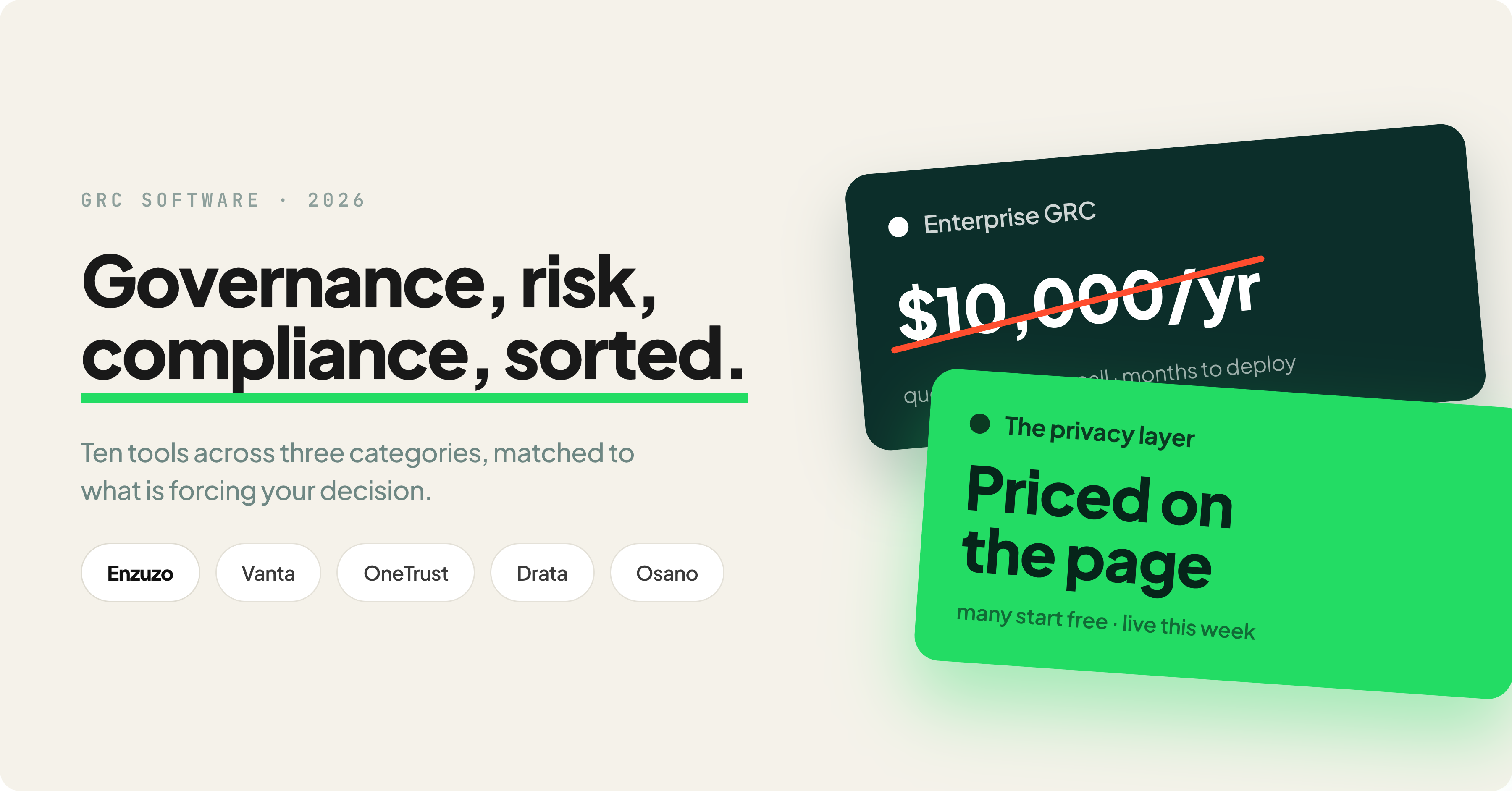
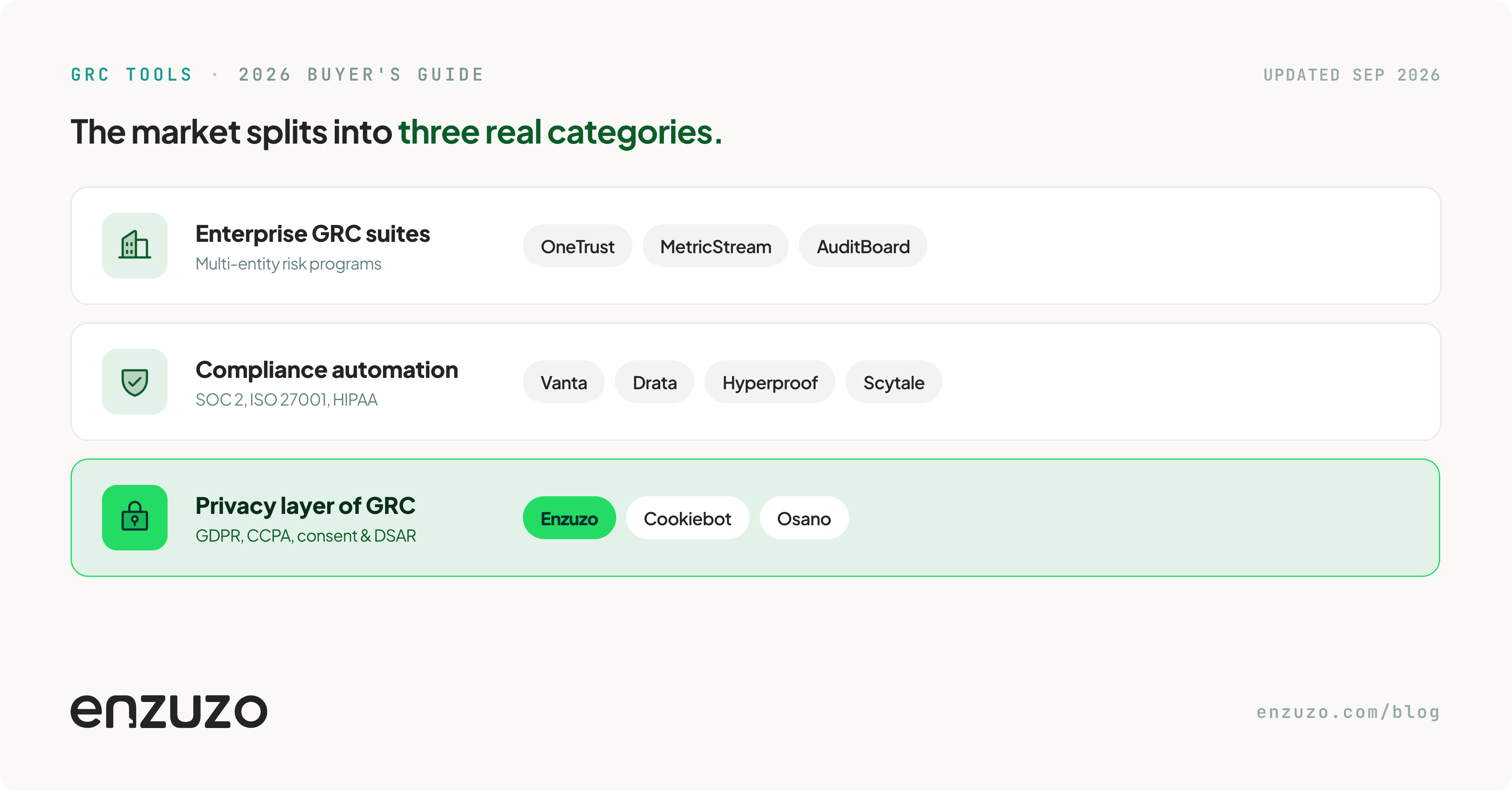
The best GRC software depends on your specific compliance needs. Enterprise risk programs typically run on integrated suites like OneTrust, MetricStream, or AuditBoard. Mid-market security teams pursuing SOC 2 or ISO 27001 audits choose compliance-automation platforms like Vanta, Drata, or Hyperproof. Companies handling consumer privacy compliance (GDPR cookie consent, CCPA, DSARs) layer in a purpose-built consent management platform like Enzuzo, Cookiebot, or Osano. We call this third category the privacy layer of GRC.
This guide compares ten leading tools across all three categories, with public pricing where vendors disclose it.
Who should read this guide
This guide is for compliance, security, and privacy leaders at mid-market companies and up evaluating GRC tools against a tangible buying trigger: a customer asked for a SOC 2 report, a regulator issued a fine in your industry, a new privacy law just took effect, or your internal audit team needs a system of record.
What are GRC tools?
GRC stands for Governance, Risk, and Compliance. The frameworks most GRC tools cover include SOC 2 (a security framework U.S. SaaS buyers require before signing), ISO 27001 (the international information security management standard), GDPR (the EU's General Data Protection Regulation), CCPA (the California Consumer Privacy Act), HIPAA (the U.S. healthcare data protection law), and PCI DSS (the payment card industry's data security standard).
GRC software is the operational layer that enforces governance policies, manages risk assessments, and proves compliance with regulatory frameworks. The category covers three overlapping functions:
- Governance: policy management, approvals, access controls, audit trails
- Risk: risk register, third-party risk assessments, control mapping
- Compliance: framework alignment (SOC 2, ISO 27001, HIPAA, GDPR), evidence collection, audit prep, including responding to DSARs (Data Subject Access Requests, the formal way a user asks what data you hold about them under GDPR or CCPA)
The market for GRC tools has fragmented into three distinct categories.
That makes the decision harder, not easier. A 200-person SaaS company chasing a SOC 2 audit needs a fundamentally different tool than a 5,000-person enterprise running a multi-jurisdiction risk program, and both need different tools than a direct-to-consumer brand worried about a wiretapping lawsuit.
This guide separates the market into the three categories that actually exist (enterprise GRC suites, compliance automation platforms, and the privacy layer of GRC), names the leading vendors in each, and gives you a framework to choose the right category before you choose a vendor.
How we evaluated GRC tools
We scored every vendor in this guide against six weighted criteria. The methodology is published here for transparency.
| Criterion | Weight | What we looked for |
|---|---|---|
| Feature breadth | 25% | Coverage across governance, risk, and compliance functions; framework support (SOC 2, ISO 27001, GDPR, CCPA, HIPAA, PCI DSS) |
| Compliance coverage | 20% | Number of supported frameworks; international standards; regulatory currency |
| Integration ecosystem | 20% | Native integrations with cloud platforms, identity providers, ticketing, monitoring tools |
| Pricing transparency | 15% | Public starting price; published tier structure; predictable scaling |
| Implementation effort | 10% | Time to first audit-ready state; pre-built templates; in-house vs. consultant-led deployment |
| User reviews | 10% | Verified G2 and Capterra ratings; review volume; consistency of feedback |
Best GRC tools at a glance
| Vendor | Category | Starting price | Best for |
|---|---|---|---|
| OneTrust | Enterprise GRC | Custom; from $10k/yr minimum | Multi-entity enterprises with global compliance needs |
| MetricStream | Enterprise GRC | Not publicly disclosed | Regulated industries (banking, healthcare, energy) |
| AuditBoard (Optro) | Enterprise GRC | Not publicly disclosed | Internal audit teams and SOX compliance |
| Vanta | Compliance automation | From ~$10K/yr (quote-based)* | SOC 2 and ISO 27001 first-time audits |
| Drata | Compliance automation | From ~$7.5K/yr (quote-based)* | Continuous compliance across multiple frameworks |
| Hyperproof | Compliance automation | Not publicly disclosed | Multi-framework programs with custom controls |
| Scytale | Compliance automation | Custom (quote-based)* | Multi-framework SOC 2/ISO 27001 with a hands-on expert team |
| Enzuzo | Privacy layer | Free | GDPR/CCPA cookie consent and DSAR for mid-market |
| Cookiebot | Privacy layer | From ~$8/mo per domain | EU-focused cookie consent at scale |
| Osano | Privacy layer | Free; paid from $199/month | Privacy-first companies needing data mapping and DSAR |
Enterprise GRC suites
Enterprise GRC suites are the integrated platforms built for organizations with thousands of employees, multiple business entities, and overlapping regulatory obligations across jurisdictions. Implementation typically takes months and requires dedicated internal resources or a consulting partner. Pricing is custom for every account and rarely disclosed publicly.
1. OneTrust
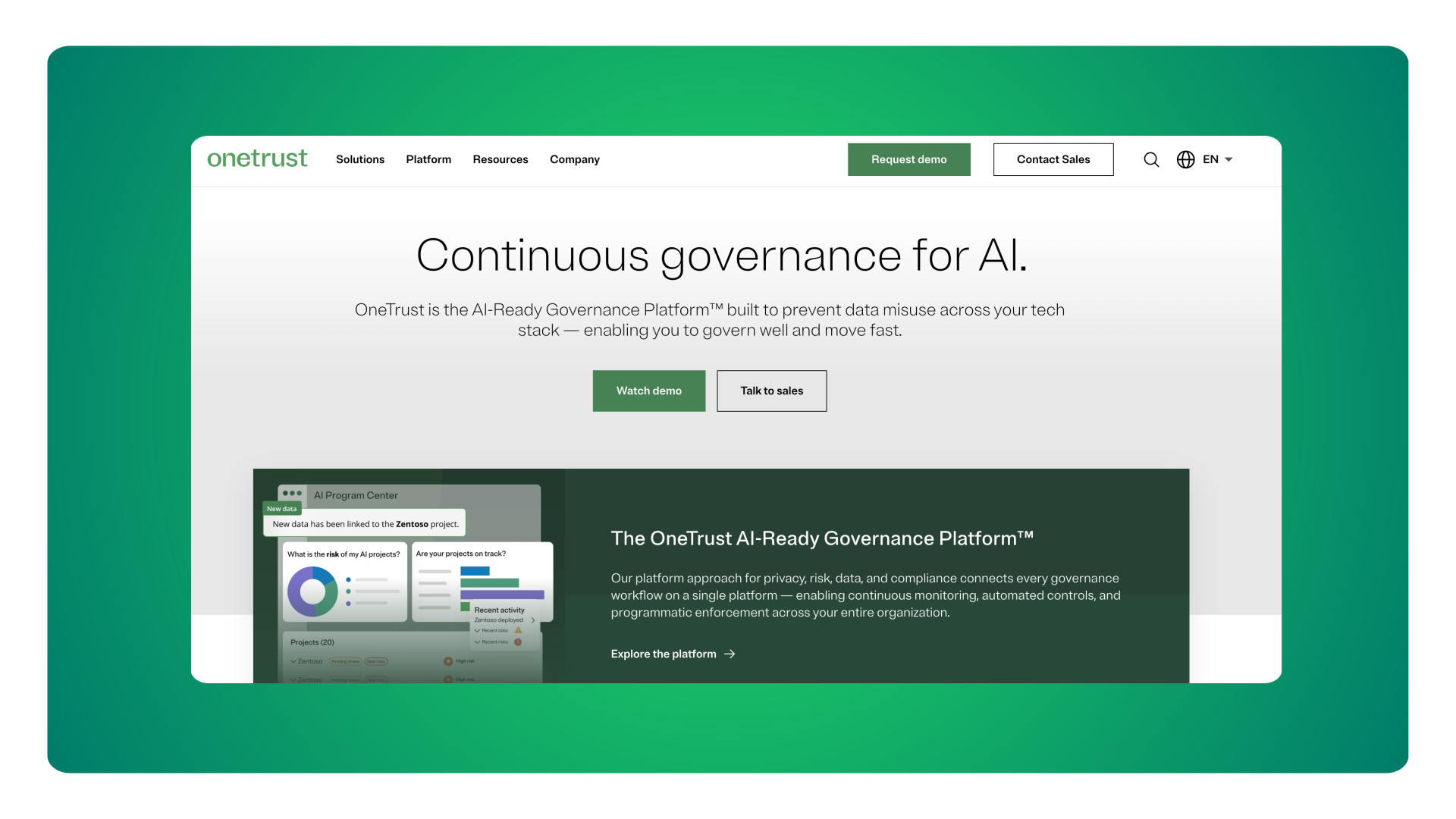
Quick take: Enterprise GRC suite. Pricing: custom; $10,000/year minimum, six figures for a full multi-module deployment. Best for: Fortune 1000 multi-entity programs with CISO, CPO, and CRO roles in place.
OneTrust started as a privacy management tool in 2016 and has since acquired its way into a full enterprise GRC suite. The company now offers separate platforms for Privacy & Data Governance, Tech Risk & Compliance, GRC and Security Assurance, ESG, and Third-Party Risk. OneTrust is one of the most widely deployed GRC platforms among Fortune 500 companies.
Strengths: breadth of framework coverage (50+ regulations), unified data layer across modules, enterprise integrations, established analyst recognition.
Weaknesses: a full multi-module deployment runs into six figures, modules are sold separately so total cost grows quickly, and customer reviews on G2 frequently cite implementation complexity and ongoing reliance on professional services.
Best for: Fortune 1000 organizations running mature, multi-jurisdiction privacy and risk programs that need every module in one stack. If your buying trigger is "we have a CISO and a CPO and a Chief Risk Officer," OneTrust is on your shortlist.
2. MetricStream
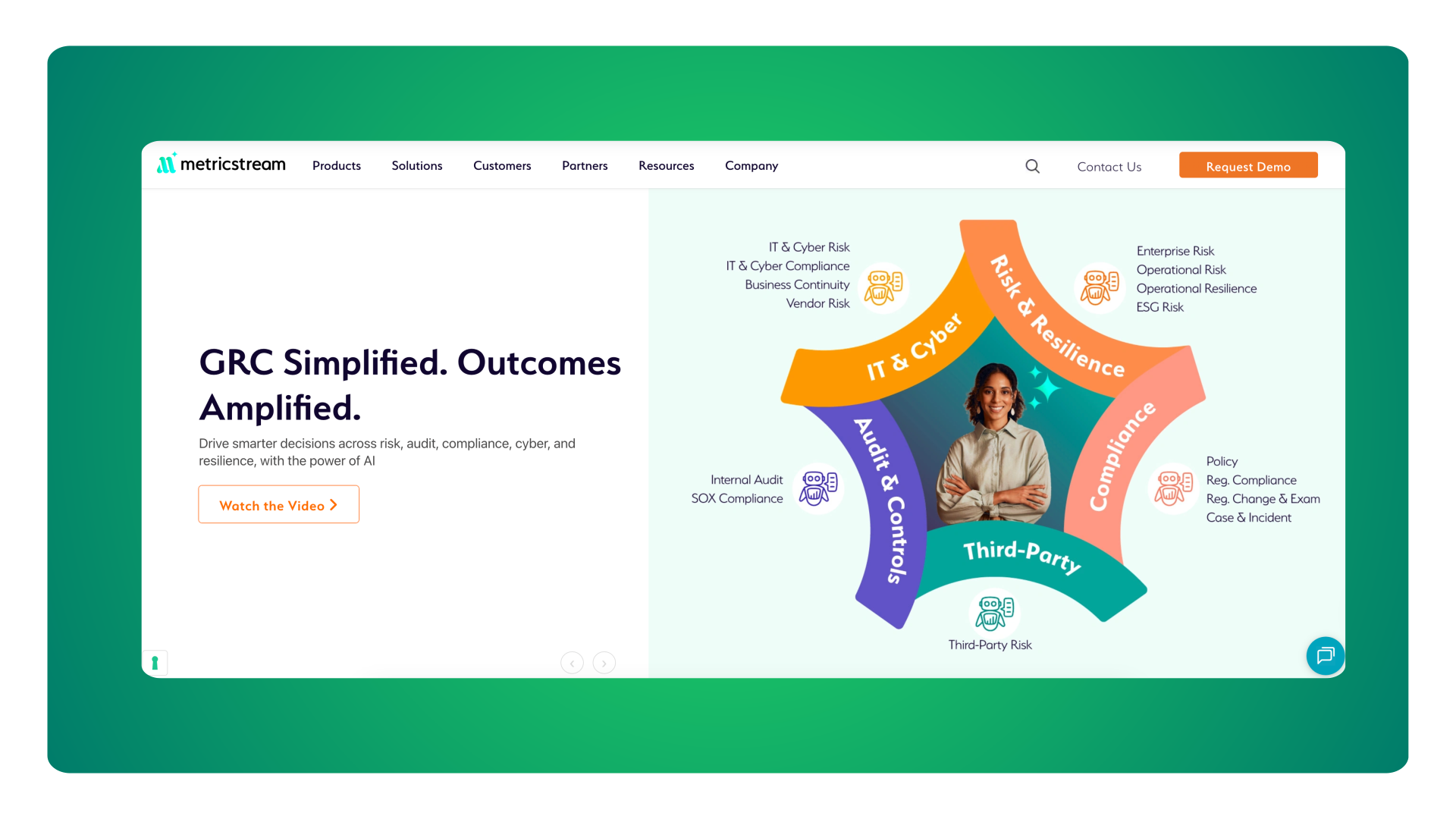
Quick take: Enterprise GRC suite. Pricing: custom (not publicly disclosed). Best for: regulated industries (banking, pharmaceuticals, energy) where audit defensibility matters most.
MetricStream is the longest-tenured pure-play GRC vendor in the market, founded in 1999. The platform spans enterprise risk management, regulatory compliance, internal audit, third-party risk, and ESG, with deep configurability for regulated industries.
Strengths: mature workflow engine, strong industry-specific templates (banking, life sciences, energy), customizable control libraries, multi-language support for global teams.
Weaknesses: historically on-premises with a slower cloud migration than competitors, user interface lags newer platforms, and total cost of ownership is among the highest in the category.
Best for: highly regulated industries (financial services, pharmaceuticals, utilities) where audit defensibility matters more than user experience and where a dedicated GRC team will operate the platform.
3. AuditBoard (Optro)
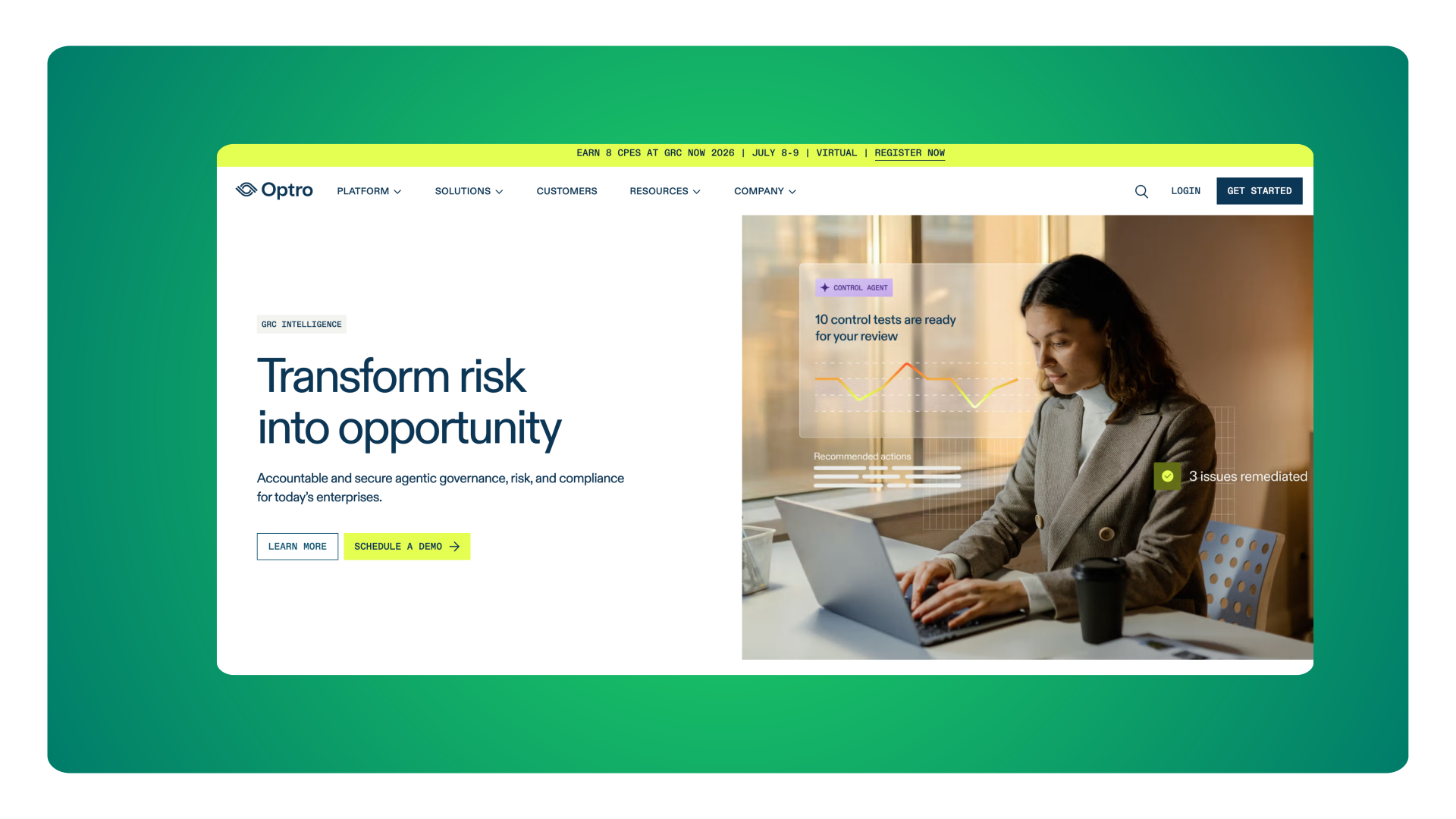
Quick take: Enterprise GRC suite. Pricing: custom (not publicly disclosed). Best for: internal-audit-led programs where SOX 404 (the Sarbanes-Oxley financial controls requirement) is the primary use case.
AuditBoard, which rebranded to Optro in March 2026, is the GRC platform most commonly chosen by internal audit teams. In October 2025 it acquired FairNow, an AI governance platform, and now maps to ISO 42001. Its strongest features are SOX compliance, IT controls, and audit workflow automation. AuditBoard appears in the top 3 of every G2 Grid report for IT Risk Management since 2022.
Strengths: purpose-built for audit teams, excellent SOX 404 workflow, intuitive interface compared to legacy GRC suites, strong reporting and dashboarding.
Weaknesses: lighter coverage of pure privacy regulations (GDPR, CCPA) than OneTrust, limited international framework support outside North America and Europe, and pricing remains custom-quoted with no published starting tier.
Best for: mid-to-large enterprises where the internal audit function owns the GRC program. If your project lead is the VP of Internal Audit and your top priority is SOX, AuditBoard is the natural fit.
Compliance automation platforms
Compliance automation platforms emerged after 2018 as a lighter, faster alternative to enterprise GRC suites. They are purpose-built for getting through audits (SOC 2, ISO 27001, HIPAA, PCI DSS) by connecting to your cloud stack, collecting evidence automatically, and managing the auditor relationship. Implementation is usually 4 to 12 weeks.
4. Vanta
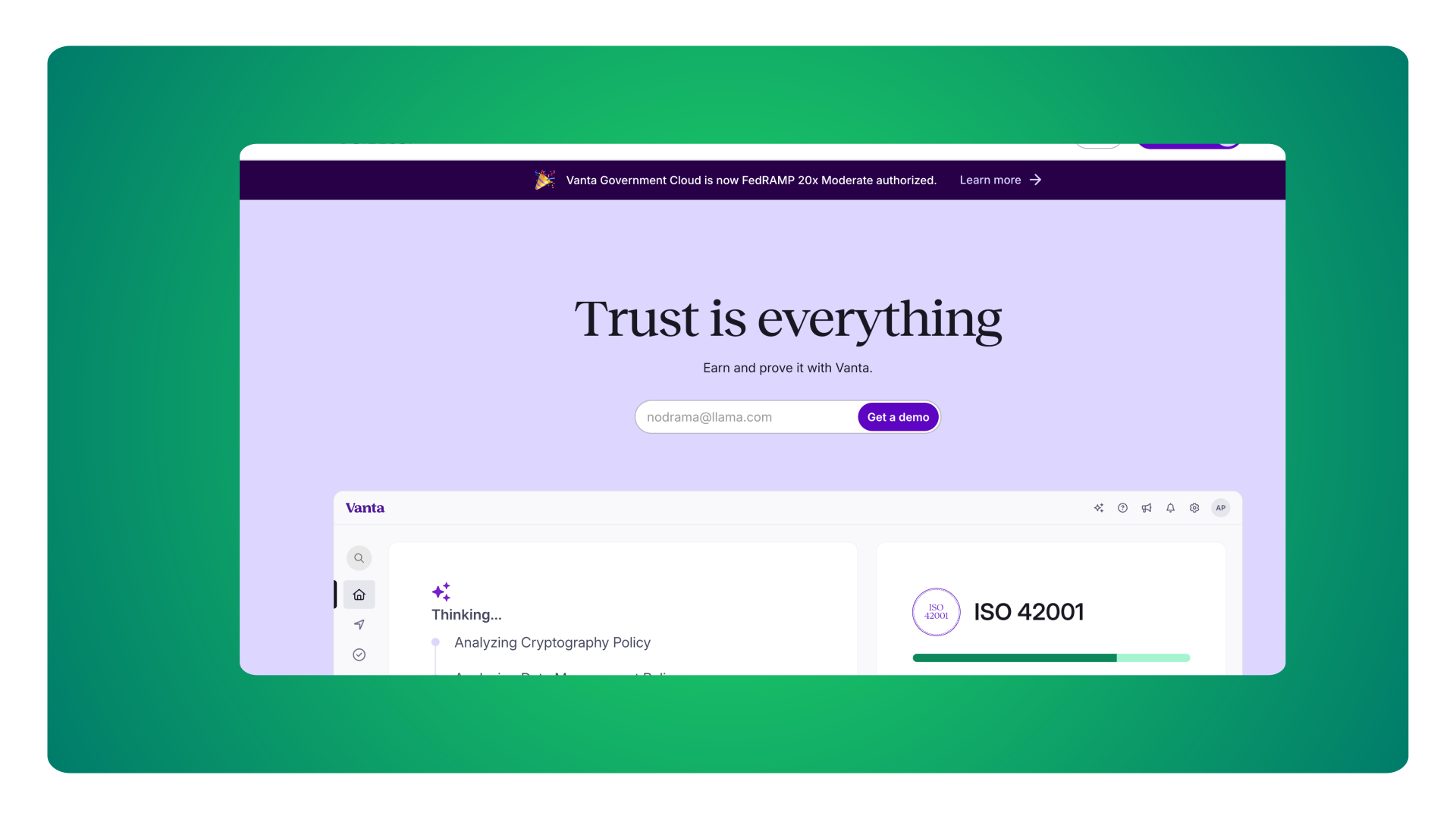
Quick take: Compliance automation. Pricing: quote-based, from roughly $10,000/year (no public price card). Best for: SaaS companies (50-500 employees) pursuing their first SOC 2 or ISO 27001 audit.
Vanta is the category-defining compliance automation platform. Founded in 2018, it pioneered the model of "audit-ready in weeks, not months" by integrating directly with AWS, GCP, Okta, GitHub, and dozens of other tools, then continuously verifying control state against framework requirements. According to G2, Vanta has the highest review volume in its category by a significant margin.
Strengths: broadest integration ecosystem (300+ native integrations), strong SOC 2 and ISO 27001 workflows, deep auditor-partner network, fast time-to-audit-ready state.
Weaknesses: lighter coverage of complex enterprise frameworks (NYDFS, the New York Department of Financial Services cybersecurity regulation; EU AI Act), limited customization for non-standard controls, and pricing scales steeply for larger employee counts.
Best for: SaaS companies between 50 and 500 employees pursuing their first SOC 2 or ISO 27001. If your buying trigger is "our biggest prospect just asked for a SOC 2 report," Vanta is the default answer.
5. Drata
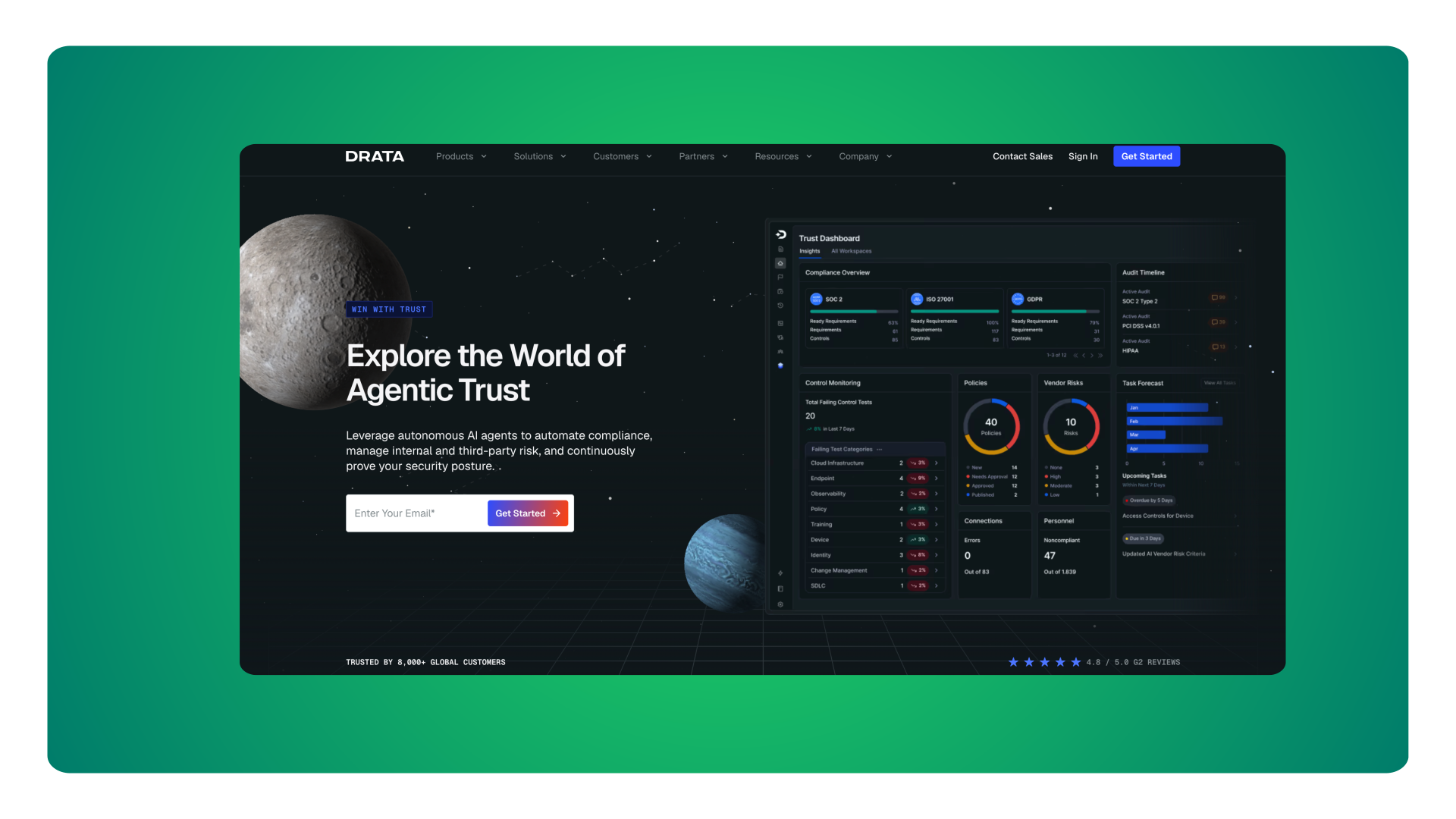
Quick take: Compliance automation. Pricing: quote-based, from roughly $7,500/year (no public price card). Best for: security-mature SaaS companies running multiple frameworks (SOC 2 + ISO 27001 + HIPAA + PCI DSS) in parallel.
Drata launched in 2020 and quickly became Vanta's most direct competitor. The platform's distinctive bet is continuous compliance across multiple frameworks simultaneously, rather than getting one audit done and stopping there. Drata holds the highest G2 satisfaction rating in the compliance automation category as of May 2026.
Strengths: strong multi-framework support out of the box, automated control mapping across frameworks, polished user experience.
Weaknesses: smaller integration library than Vanta (200+ vs 300+), enterprise tier required for advanced features like custom frameworks, occasional customer feedback about support response times during peak audit season.
Best for: security-mature SaaS companies that already have a SOC 2 and now need ISO 27001, HIPAA, and PCI DSS in parallel. Drata is built for the second-audit-and-beyond company more than the first-timer.
6. Scytale
Quick take: AI-powered GRC and compliance automation. Pricing: custom. Best for: SaaS companies managing multiple frameworks that want automation plus hands-on GRC support.
Scytale combines compliance automation with dedicated GRC expert support. The platform automates evidence collection, continuously monitors controls, and maps requirements across 80+ frameworks, including SOC 2, ISO 27001, HIPAA, GDPR, PCI DSS, and ISO 42001.
Strengths: automated evidence collection, continuous monitoring, cross-framework mapping, broad framework coverage, and dedicated GRC expert support.
Weaknesses: pricing is not publicly disclosed, and teams focused solely on cookie consent or DSAR management may need a dedicated privacy platform.
Best for: growing SaaS companies that want to reduce manual work and manage multiple compliance frameworks in one platform.
7. Hyperproof
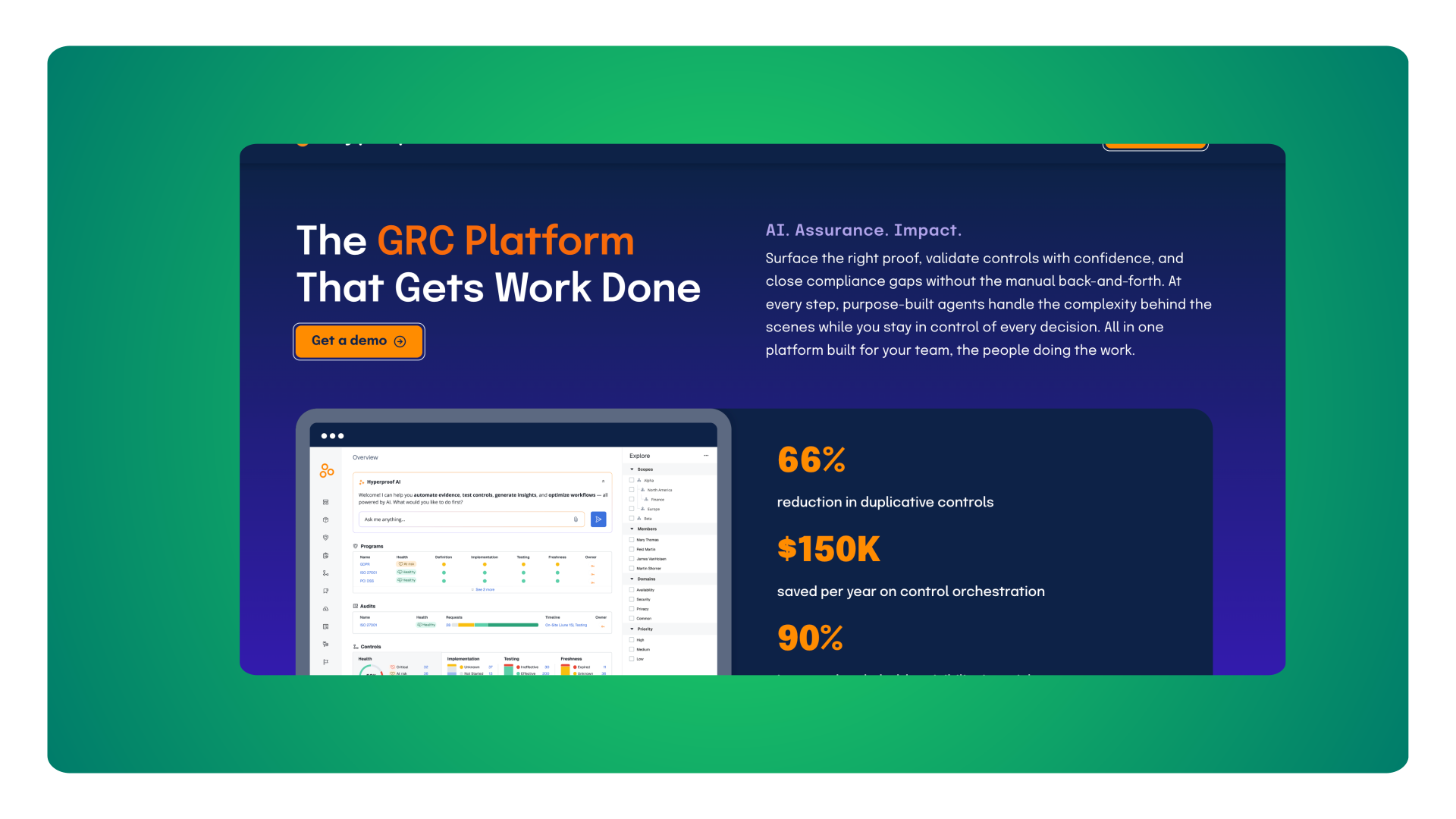
Quick take: Compliance operations / continuous compliance. Pricing: custom (not publicly disclosed). Best for: established compliance teams running 4+ frameworks who want one control library. G2: 4.6/5.
Hyperproof takes a different angle than Vanta or Drata. Rather than focusing on first-time audit prep, it positions itself as a continuous compliance operations platform for teams that are already running multi-framework programs and want one system of record. This explains why Hyperproof shows up frequently in head-to-head comparisons against Workiva, which has a similar continuous-controls angle.
Strengths: built for compliance operations, not just audit prep; flexible control library; strong reporting; multi-framework mapping; good fit for compliance ops teams managing 4+ frameworks.
Weaknesses: less hands-on auditor support than Vanta or Drata for first-time audits, longer implementation, and pricing is not publicly disclosed.
Best for: companies with an established compliance function managing multiple frameworks who want a single control library rather than one tool per framework.
Hyperproof vs Workiva: Hyperproof is the cleaner choice for security and IT compliance; Workiva is stronger for SOX, ESG, and financial reporting where its unified financial reporting suite shines.
The privacy layer of GRC (consent, DSARs, and data subject rights)
The privacy layer of GRC is the category most often overlooked in GRC buyer's guides. These platforms are purpose-built for GDPR, CCPA, and other consumer privacy regulations. They handle cookie consent banners, DSAR workflows, and the operational mechanics of giving users control over their data.
This layer matters because it addresses a category the other two layers do not. Enterprise GRC suites assume privacy is a module you add for an extra fee. Compliance automation platforms assume privacy is out of scope. The privacy layer is the only category built around the assumption that consent receipts, DSAR turnaround times, and cookie scanner accuracy are essential compliance requirements, too.
8. Enzuzo
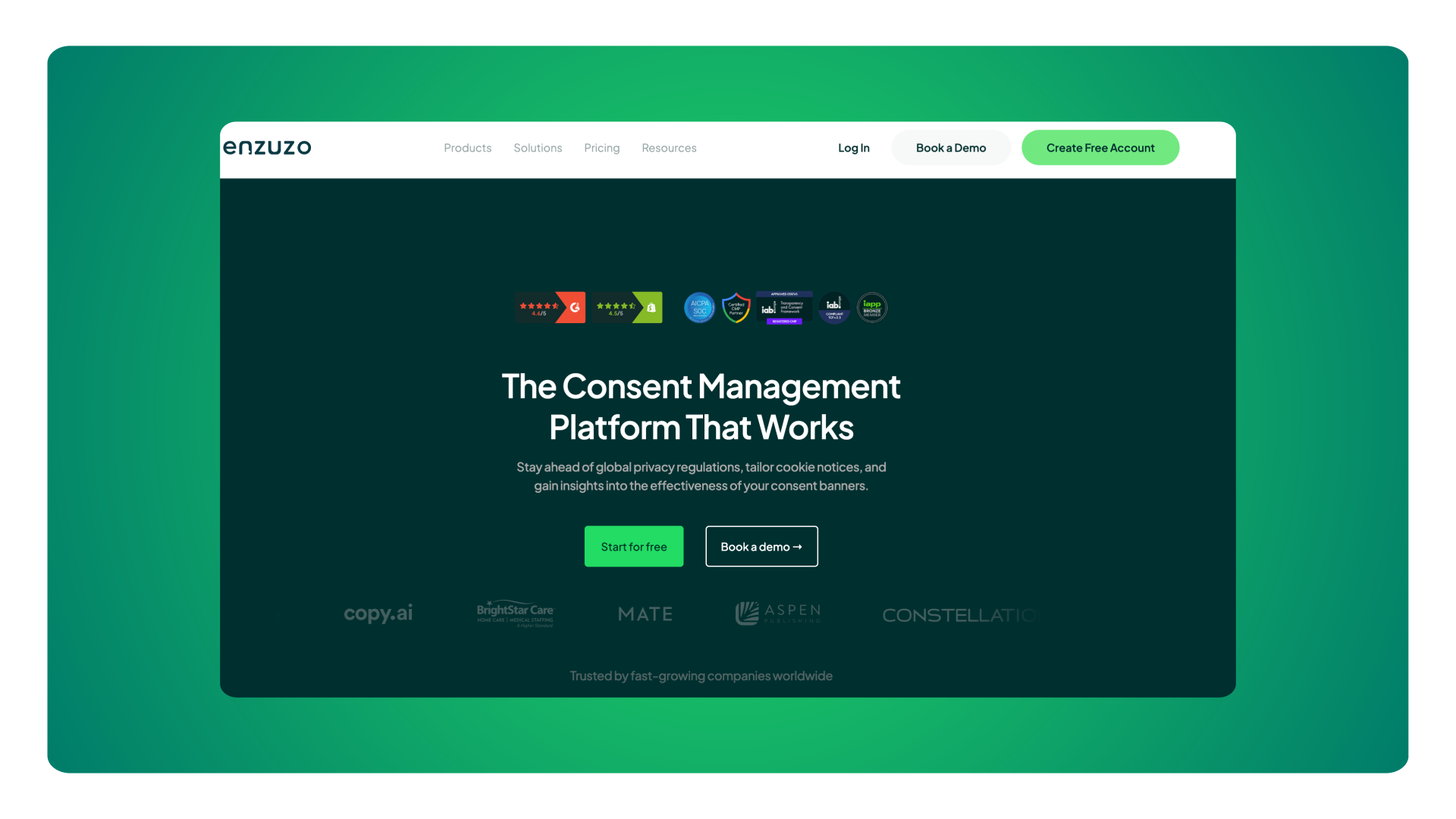
Quick take: Privacy layer of GRC. Pricing: free tier; paid from $9/month. Best for: mid-market companies whose primary compliance trigger is consent management, GDPR/CCPA compliance, and DSARs.
Enzuzo is a consent management platform and data privacy operations tool for mid-market companies. The platform handles GDPR/CCPA cookie consent, Google Consent Mode v2, DSAR forms, privacy policy generation, and more. Enzuzo is purpose-built for SaaS, e-commerce, and professional services companies with 50K to 5M+ monthly website visitors.
Strengths: transparent pricing, fast implementation (most customers live in under a day), Google Consent Mode v2 certified, multi-jurisdiction support including GDPR, CCPA, LGPD (Brazil's data protection law), PIPEDA (Canada's privacy law), and emerging US state laws.
Weaknesses: focused on consumer privacy rather than enterprise risk, no SOC 2 or ISO 27001 audit automation, lighter on internal audit workflows than the enterprise GRC suites.
Best for: mid-market companies whose primary GRC trigger is privacy compliance (GDPR, CCPA, state-level US laws). If you were just hit with a CIPA wiretapping lawsuit, Enzuzo is a targeted solution.
See Enzuzo pricing for current tier details and book a call with a compliance expert to understand your options.
9. Cookiebot
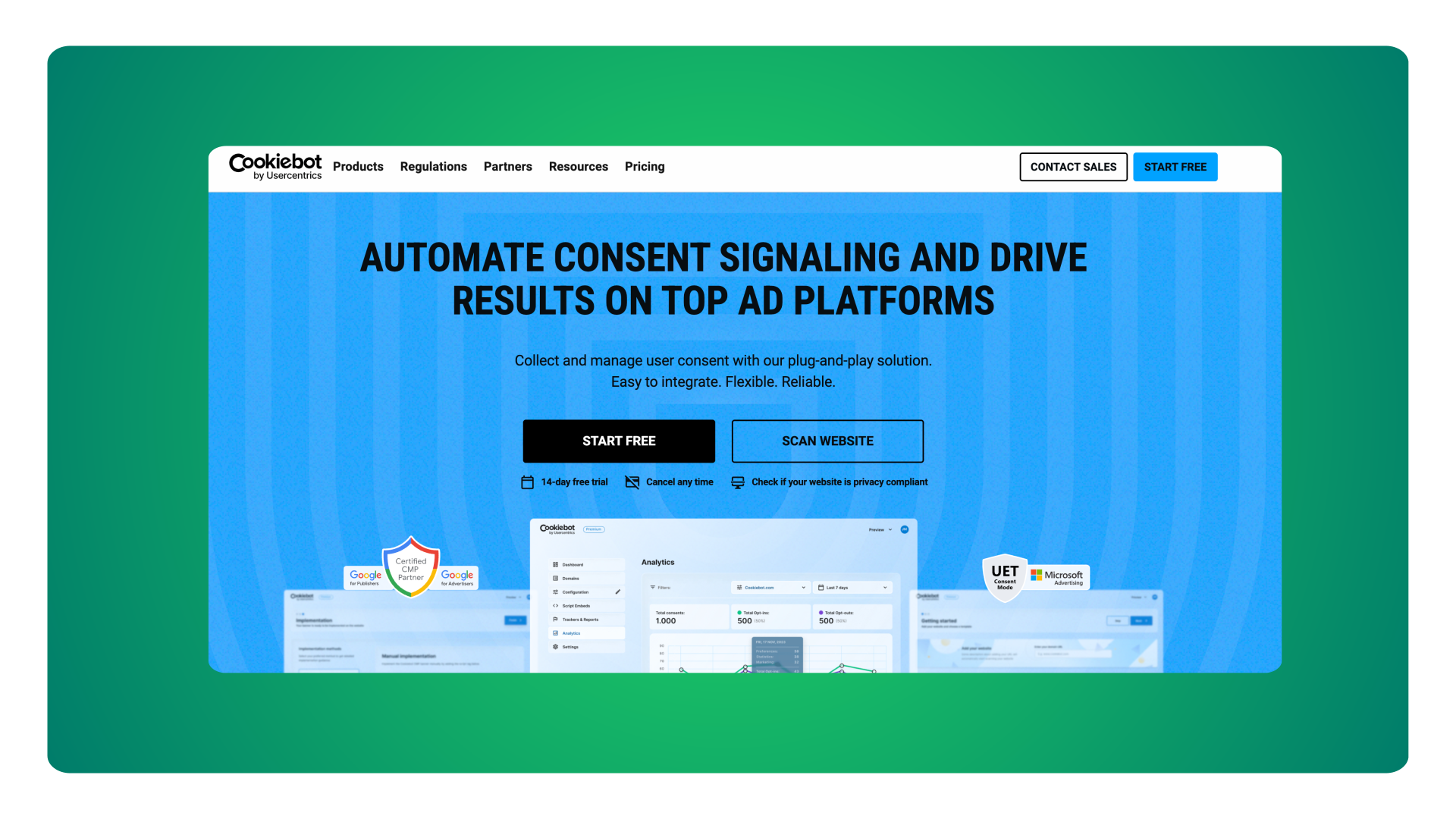
Quick take: Privacy layer of GRC. Pricing: from about $8/month per domain; most sites land near $34/month. Best for: European-headquartered companies, publishers, and ad-tech operators needing TCF 2.2 (the IAB's Transparency and Consent Framework) compliance at scale.
Cookiebot is a well established cookie consent platform. It is widely deployed across European publishers and ad-tech companies. After the Usercentrics merger in 2023, the combined entity covers consent, preference management, and emerging AI consent requirements.
Strengths: mature cookie scanner with strong technical accuracy, deep ad-tech integrations (TCF 2.2 compliance), wide language support, scaled deployment proven at major publishers.
Weaknesses: pricing is billed per domain by subpage count with no multi-site discount, the base tier roughly doubled in August 2025, and the DSAR workflow lags purpose-built DSAR platforms.
Best for: European-headquartered companies, publishers, and ad-tech operators where TCF compliance and consent at scale are the primary requirements.
10. Osano
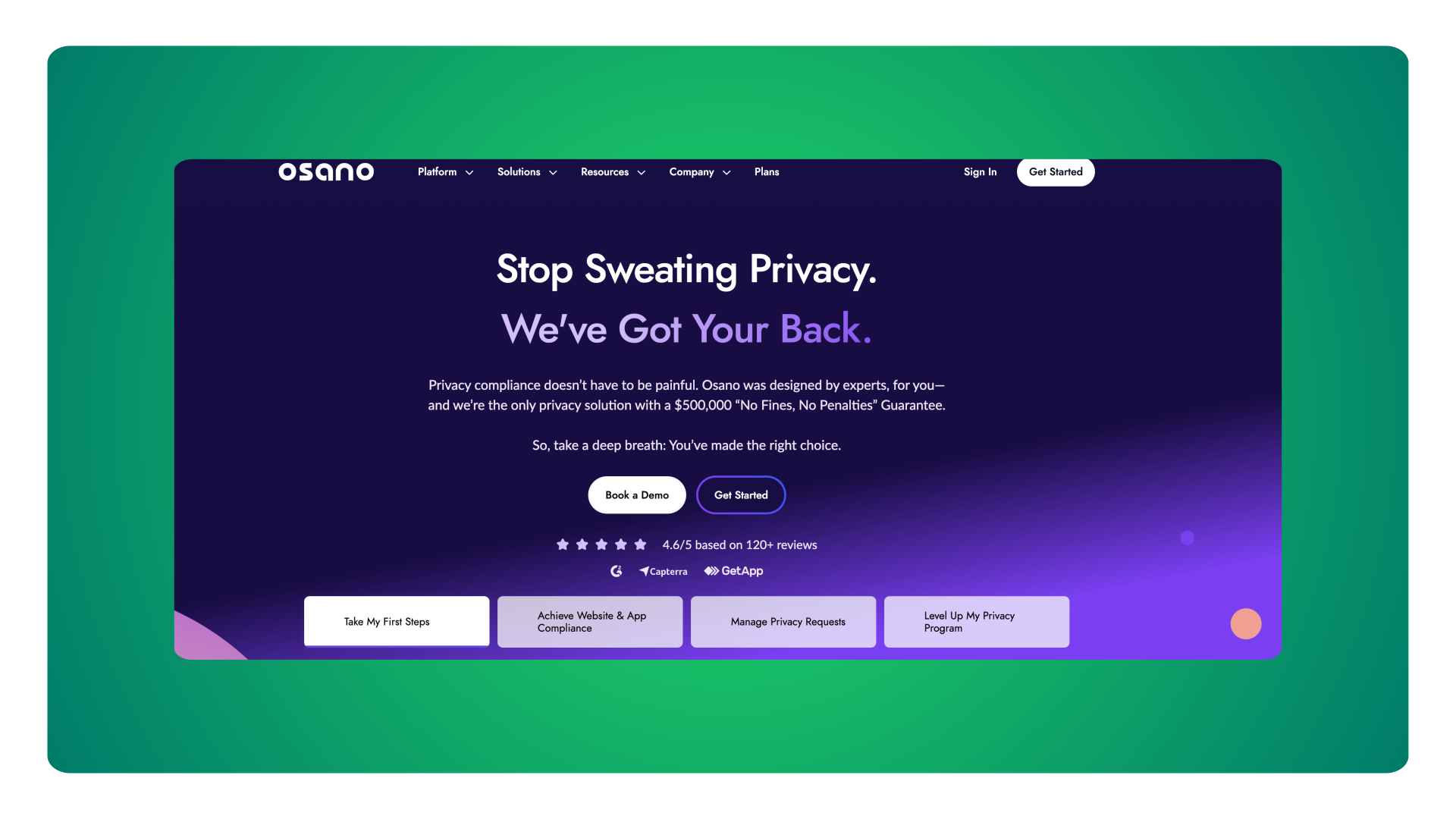
Quick take: Privacy layer of GRC. Pricing: free tier; paid from $199/month. Best for: B2B SaaS companies that need consent + DSAR + vendor risk assessment in one tool.
Osano is a privacy-first GRC platform that grew out of an open-source compliance tool. It covers cookie consent, DSAR workflows, vendor risk assessments, and data mapping. The platform's most distinctive feature is its public Vendor Privacy Database, which tracks the privacy practices of 11,000+ third-party data processors.
Strengths: strong DSAR workflow, public vendor privacy database, transparent pricing including a free tier, growing data-mapping features for mid-market.
Weaknesses: smaller integration ecosystem than competitors, support hours limited outside US business hours on lower tiers, and enterprise features locked to higher pricing tiers.
Best for: privacy-first companies that need both consent management and vendor risk assessment in one tool. Particularly strong for B2B SaaS companies whose customers are asking detailed privacy questions about their vendor stack.
How to pick the right GRC tool for your buying trigger
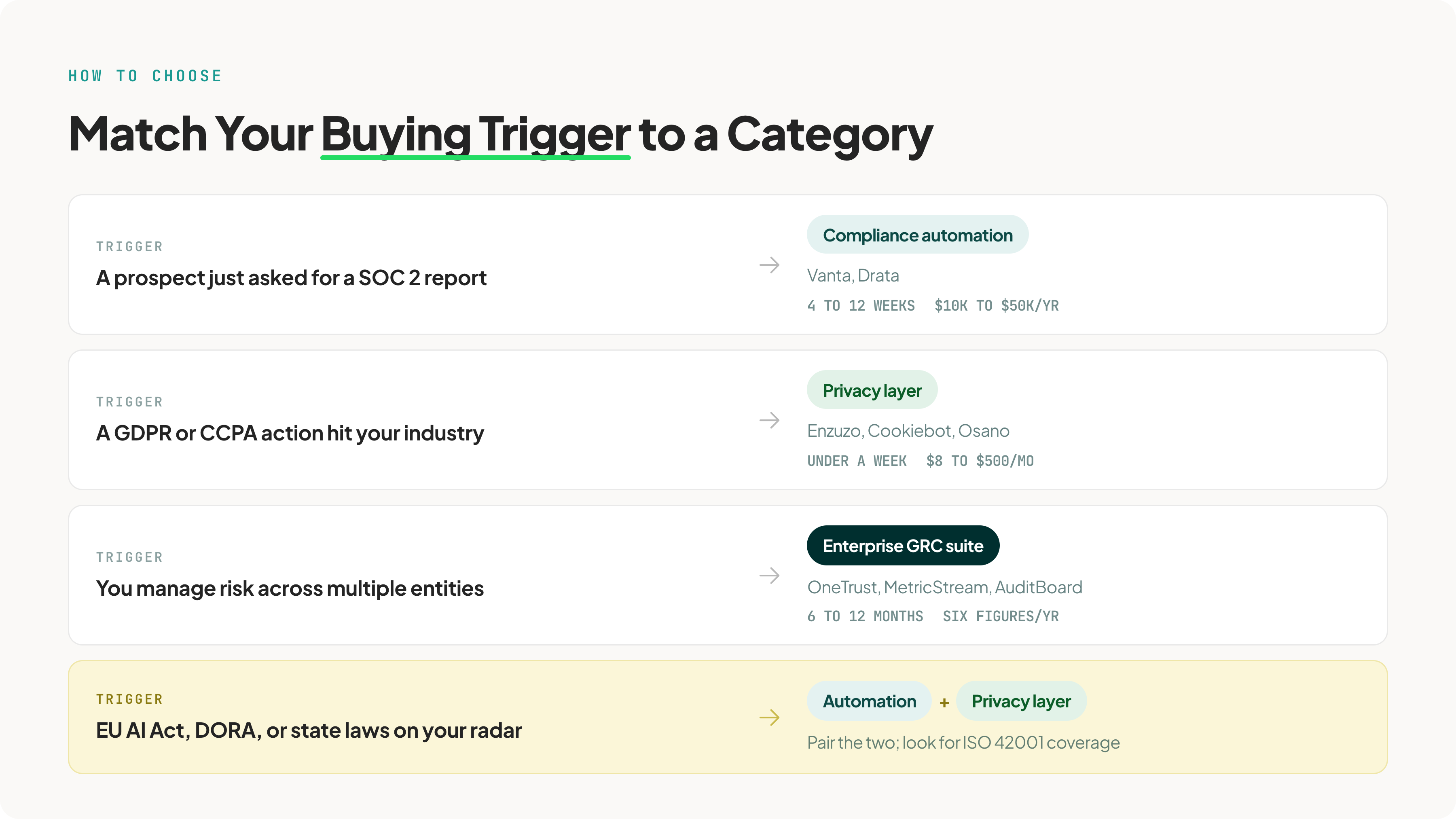
The category you need is usually determined by what is forcing you to make a decision. Match your trigger to the right category before you compare vendors.
Your prospect or customer just asked for a SOC 2 report → compliance automation
Trigger: enterprise sales contract is gated on SOC 2 Type II (the audit report most U.S. enterprise buyers require before purchasing). Choose Vanta or Drata. Implementation: 4 to 12 weeks. Budget: $10K to $50K annually.
A GDPR or CCPA enforcement action just hit your industry → privacy layer of GRC
Trigger: a competitor was just fined, your Chief Compliance Officer is asking about exposure, your website has tracking pixels you cannot explain. Choose Enzuzo, Cookiebot, or Osano. Implementation: usually under a week for cookie consent and DSAR. Budget: from $8 to $500 per month depending on traffic and features.
You are managing risk across multiple business entities → enterprise GRC
Trigger: your company has multiple subsidiaries, operates across regulatory jurisdictions, and you have full-time risk, compliance, and audit teams. Choose OneTrust, MetricStream, or AuditBoard. Implementation: 6 to 12 months. Budget: enterprise contracts starting in six figures.
EU AI Act, DORA, or state-level US privacy laws are on your radar → compliance automation + privacy layer of GRC (both)
Trigger: a new regulation in your industry crosses both data privacy and operational risk. The EU AI Act governs how AI systems can be deployed in the EU. DORA (Digital Operational Resilience Act) requires EU financial entities to manage IT risk and third-party providers.
State-level U.S. privacy laws (Colorado, Connecticut, Virginia, Texas, and others) extend CCPA-style rights to more jurisdictions. This is the only category where buying a single tool usually does not work. Most mid-market companies in this position pair a compliance automation platform (for the operational controls) with a privacy-layer platform (for the consent and DSAR mechanics).
On the AI-governance side, look for ISO 42001 coverage, the emerging AI management standard, which Scytale and Optro both cover.
What is an integrated GRC platform?
An integrated GRC platform is a single system that runs governance, risk, and compliance on one data layer, instead of stitching together separate tools for policy, risk, and audit. Integrated platforms fit large organizations with overlapping obligations across entities and jurisdictions.
OneTrust, MetricStream, and Optro (formerly AuditBoard) are the top integrated GRC tools.
The trade-off is cost and setup time. An integrated suite can run into six figures and take months to deploy. Mid-market teams usually get more value from a focused compliance automation platform plus a privacy layer than from a full suite they will not use end to end.
What is the best GRC software for your industry?
The best GRC software by industry follows the same category logic as the rest of this guide: your industry decides which frameworks and regulators you answer to, and that points to a category before it points to a single tool.
| Industry | Primary compliance driver | Best-fit category | Representative tools |
|---|---|---|---|
| Financial services / fintech | SOC 2, PCI DSS, DORA, NYDFS | Compliance automation, plus enterprise GRC at scale | Vanta, Drata; MetricStream, OneTrust |
| Healthcare / health tech | HIPAA, SOC 2, HITRUST | Compliance automation | Vanta, Drata, Scytale |
| Insurance | NAIC model laws, SOX, SOC 2 | Enterprise GRC, plus audit | MetricStream, Optro (AuditBoard) |
| Manufacturing / industrial | ISO 27001, third-party risk | Compliance automation, plus enterprise GRC | Drata, Hyperproof; MetricStream |
| Utilities / energy | NERC CIP, audit defensibility | Enterprise GRC | MetricStream, OneTrust |
| Legal / professional services | GDPR, CCPA, client data, DSARs | Privacy layer, plus compliance automation | Enzuzo; Vanta |
| SaaS / technology (mid-market) | SOC 2, ISO 27001, GDPR | Compliance automation, plus privacy layer | Vanta or Drata, plus Enzuzo |
How much does GRC software cost?
GRC software costs range from free to six figures a year, split cleanly by category. Privacy-layer tools are cheapest, compliance automation sits in the low five figures, and enterprise suites run into six figures.
| Category | Typical starting price | Billing model | Example tools |
|---|---|---|---|
| Privacy layer | Free to $199/month | Per domain, or by traffic tier | Enzuzo, Cookiebot, Osano |
| Compliance automation | $7,500 to $25,000/year (quote-based) | Per framework, plus headcount | Vanta, Drata, Scytale, Hyperproof |
| Enterprise GRC suite | Six figures (custom) | Per module, plus services | OneTrust, MetricStream, Optro |
Compliance automation figures are third-party sourced contract ranges from Vendr; most enterprise suites do not disclose pricing publicly. The jump from compliance automation to an enterprise suite is roughly tenfold, which is why most mid-market teams stay in the first two tiers until a multi-entity risk program forces the move upmarket.
Honorable mentions: vendors we considered but did not include
Three vendors almost made the cut. They remain credible options for specific use cases.
LogicGate Risk Cloud. Strong DSAR workflow and risk assessment automation, particularly for mid-market financial services. Cut because its primary use cases overlap with both AuditBoard (audit workflows) and Hyperproof (multi-framework compliance), and neither workflow is its strongest version. Worth a look if you are evaluating regional banks or insurance carriers.
Workiva. Best-in-class for SOX compliance and ESG reporting, with a unified financial reporting and GRC platform. Cut because Workiva's strongest value sits in financial reporting and ESG, which most GRC buyers do not need. If you are a public company chasing SOX 404 in parallel with sustainability disclosures, Workiva is the natural pick.
Archer (RSA). Long-standing enterprise GRC platform from RSA Security. Cut because Archer increasingly competes through services and custom configurations rather than a productized platform, which makes it difficult to compare on the same axes as the rest of the category. Strong fit for organizations that already use other RSA security products.
Frequently asked questions
What are GRC tools?
GRC tools are software platforms that automate three connected functions: governance (policy management, access controls, approvals), risk (risk register, third-party risk, control mapping), and compliance (framework alignment, evidence collection, audit preparation). Modern GRC tools split into three categories: enterprise GRC suites, compliance automation platforms, and the privacy layer.
What are the best GRC tools?
The best GRC tools split across three categories. Enterprise GRC suites (OneTrust, MetricStream, AuditBoard) suit multi-entity global organizations. Compliance automation platforms (Vanta, Drata, Hyperproof) fit mid-market security teams pursuing SOC 2 or ISO 27001. The privacy layer (Enzuzo, Cookiebot, Osano) is purpose-built for GDPR, CCPA, and DSAR compliance. Most mid-market companies pair a compliance automation platform with a privacy-layer platform; large enterprises run a full GRC suite.
What does GRC software do?
GRC software centralizes policy enforcement, automates evidence collection for audits, manages risk assessments, maps controls to compliance frameworks (SOC 2, ISO 27001, GDPR, HIPAA, PCI DSS), and produces audit-ready documentation. Newer compliance automation tools also integrate directly with your cloud stack to verify control state continuously, reducing manual evidence gathering.
How do you choose a GRC platform?
Start with your buying trigger. If you are pursuing your first SOC 2 or ISO 27001 audit, choose a compliance automation platform. If you are facing GDPR or CCPA exposure, choose a privacy-layer platform. If you are running a multi-entity enterprise risk program, choose an enterprise GRC suite. Then compare 2 to 3 vendors in that category on integration coverage, pricing transparency, and implementation timeline.
Which GRC platform is best for GDPR compliance management?
For GDPR compliance management and broader data privacy GRC use cases, purpose-built privacy-layer platforms outperform full enterprise suites. Enzuzo, Cookiebot, and Osano lead this category, handling cookie consent, DSAR workflows, consent receipts, and TCF 2.2 compliance for European GDPR deployments. Mid-market companies whose primary GRC need is privacy compliance (GDPR, CCPA, state-level US laws) get faster implementation and lower cost from a dedicated privacy GRC platform than from OneTrust or MetricStream. The best GRC system for privacy compliance is rarely the most expensive one.
Which is better: Hyperproof vs Workiva?
Hyperproof and Workiva both serve continuous compliance and controls management, but their strengths diverge. Hyperproof is the cleaner choice for IT and security compliance teams managing 3 to 5 frameworks (SOC 2, ISO 27001, HIPAA, PCI DSS). Workiva is stronger for SOX, ESG reporting, and financial controls thanks to its unified financial reporting suite. Pick Hyperproof if security compliance is your primary need; pick Workiva if SOX 404 and ESG disclosures dominate.
What's the difference between OneTrust and AuditBoard?
OneTrust and AuditBoard both serve enterprise GRC but from different origins. OneTrust started in privacy and grew into a unified GRC suite covering data governance, privacy, third-party risk, and tech risk and compliance. AuditBoard started in internal audit and built outward into SOX 404, IT controls, ESG, and risk management. OneTrust suits multi-entity global organizations that need every GRC module; AuditBoard fits internal-audit-led programs where SOX compliance and IT controls are the primary use cases.
Is GRC software only for large enterprises?
No. The compliance automation category (Vanta, Drata, Hyperproof) is built for companies between 50 and 500 employees and prices accordingly. The privacy layer (Enzuzo, Cookiebot, Osano) serves companies of all sizes including startups, often with free tiers. Only the enterprise GRC suites (OneTrust, MetricStream, AuditBoard) carry enterprise-only pricing.
How much does GRC software cost?
GRC software cost is set by category, not by vendor. Privacy-layer tools are the cheapest tier, compliance automation sits in the low five figures per year, and enterprise suites cost an order of magnitude more. The category pricing table above lists the starting range and billing model for each.
What's the best GRC software for startups?
For most startups, the answer is either a compliance automation platform (Vanta or Drata for SOC 2) or a privacy-layer platform (Enzuzo for cookie consent and DSAR), depending on the specific compliance trigger. Enterprise GRC suites are over-built and over-priced for sub-100-employee companies. Many startups end up running both a compliance automation platform and a privacy layer once they scale past Series A.
What's the best GRC tool for AI governance and the EU AI Act?
For AI governance, the best fit today is a compliance automation platform mapped to ISO 42001, the AI management standard. Scytale and Optro (formerly AuditBoard) are the clearest options. ISO 42001 gives you an auditable control set for how AI systems get built and monitored. No tool covers the EU AI Act end to end yet, so most teams pair one with a privacy platform.
What are the best alternatives to enterprise GRC suites?
The best alternatives to enterprise GRC suites are compliance automation platforms and privacy-layer tools used together. A mid-market team replaces a OneTrust or MetricStream deployment with Vanta or Drata for audit automation and Enzuzo for consent and DSARs, at a fraction of the cost and setup time.
Which GRC platforms include built-in SOC 2 frameworks?
Every compliance automation platform ships a built-in SOC 2 framework. Vanta, Drata, Scytale, and Hyperproof all include SOC 2 controls, evidence mapping, and auditor workflows out of the box. Enterprise suites like OneTrust and Optro cover SOC 2 as one framework among many. Privacy-layer tools do not automate SOC 2, since their scope is consumer privacy rather than security audits.
How long does GRC software take to implement?
GRC software takes from under a week to six months to implement, depending on category. A privacy-layer tool like Enzuzo goes live in under a day. A compliance automation platform reaches audit-ready in 4 to 12 weeks. An enterprise GRC suite takes 6 to 12 months with dedicated internal resources.
Stephen Cooper
Stephen Cooper started out in IT as a programmer, became an international consultant, and then took up writing. Whether writing code, presentations, or guides, Stephen relies on his degrees in Computing, Advanced Manufacturing, and Cybersecurity to generate solutions to modern challenges.
More related blogs
Your next read