Shopify Cookie Consent Management 2026: CMPs, CIPA, and GDPR

Osman Husain
Who this guide is for
This guide is written for high-traffic Shopify stores operating in multiple markets and running a full marketing stack like Klaviyo, TikTok Pixel, Meta Pixel, and GA4. That's where compliance concerns start to become an operational overhead, and a real consent management platform is the best way to tackle a multi-jurisdiction GTM container setup.
There's a growing trend of high-visibility ecommerce stores receiving legal complaints around non-compliant pixel tracking and privacy policies. CIPA demand letters, Meta Pixel lawsuits, and expanding US state privacy laws have pushed cookie consent from a checkbox into a real buying decision. This guide compares the best four cookie consent management platforms suitable for high-traffic Shopify stores, and the criteria that should drive that choice.
Why is Shopify cookie consent harder at scale?
Shopify is a uniquely visible target for privacy enforcement in 2026. Three things make it different from a typical ecommerce platform.
First, the storefronts are public and easy to scan. A plaintiff's law firm can run a script across the top Shopify Plus stores in an afternoon, identify which ones are firing Meta Pixel or TikTok Pixel without consent, and send out demand letters in bulk. The Swigart Law Group has been doing exactly this since 2024. According to California Penal Code §631, CIPA penalties range from $5,000 to $50,000 per violation, and a typical demand letter cites multiple violations.
Second, the marketing stacks are heavy. A typical Shopify Plus storefront runs Klaviyo, Meta Pixel, TikTok Pixel, Reddit Pixel, Google Analytics 4, and post-checkout apps. Every one of them has to respect consent. A consent management platform that only blocks tags inside Google Tag Manager misses the apps installed directly through Shopify.
Third, the multi-store reality. High-traffic Shopify brands typically run a parent storefront plus regional sub-stores: a US site, a UK site, an EU site, and sometimes Australia. Each sub-store has its own URL, its own GTM container, its own theme, and often its own marketing app stack. A CMP that does not consolidate consent state, DSAR processing, and reporting across all of them creates manual work and audit risk.
This is the configuration that $10/mo banner apps were not designed for. They're capable of handling a single-store merchant doing under 100,000 visitors a month. They do not handle a four-region brand pushing 800,000 monthly visitors with eleven third-party scripts firing on a product page.
Best Shopify consent management platforms at a glance
The table below summarizes the four consent management platforms most often shortlisted by high-traffic Shopify brands in 2026.
| Platform | Entry price | Multi-store dashboard | Native Shopify app | DSAR automation | CIPA posture | Onboarding model |
| Enzuzo | Custom pricing for enterprise (10 + storefronts) | Included | Yes | Yes | Documented | Slack-first with engineering support |
| OneTrust | $10,000+/year minimum | Enterprise tier only | No | Yes | Unverified | Multi-week implementation |
| Osano | Price not listed | Yes | No | Yes | Unclear | Email and ticket support |
| Cookiebot | ~€30/month per page | No | No | No | None | Email-only support |
Three observations from the table.
First, Enzuzo is the only one of the four with a native Shopify app. The others run as a script tag dropped into the theme. That distinction matters because Shopify's Customer Privacy API behaves differently from a standard GTM consent flow, and tools that wrap GTM around it can miss apps installed directly through Shopify.
Second, pricing models differ in ways that compound at scale. OneTrust has a fixed enterprise floor that prices out most mid-market brands. Osano charges per domain, so a four-region Shopify brand is paying $796 a month before any features. Cookiebot charges per page, which gets ugly fast on a product catalog with thousands of SKUs.
Third, CIPA posture is uneven across the field. CIPA is the California wiretap statute being applied to Meta Pixel and TikTok Pixel since 2024. Most Shopify-native apps have no posture on it. The four platforms above are the ones with at least a documented answer.
The four leading platforms compared in depth
1. Enzuzo
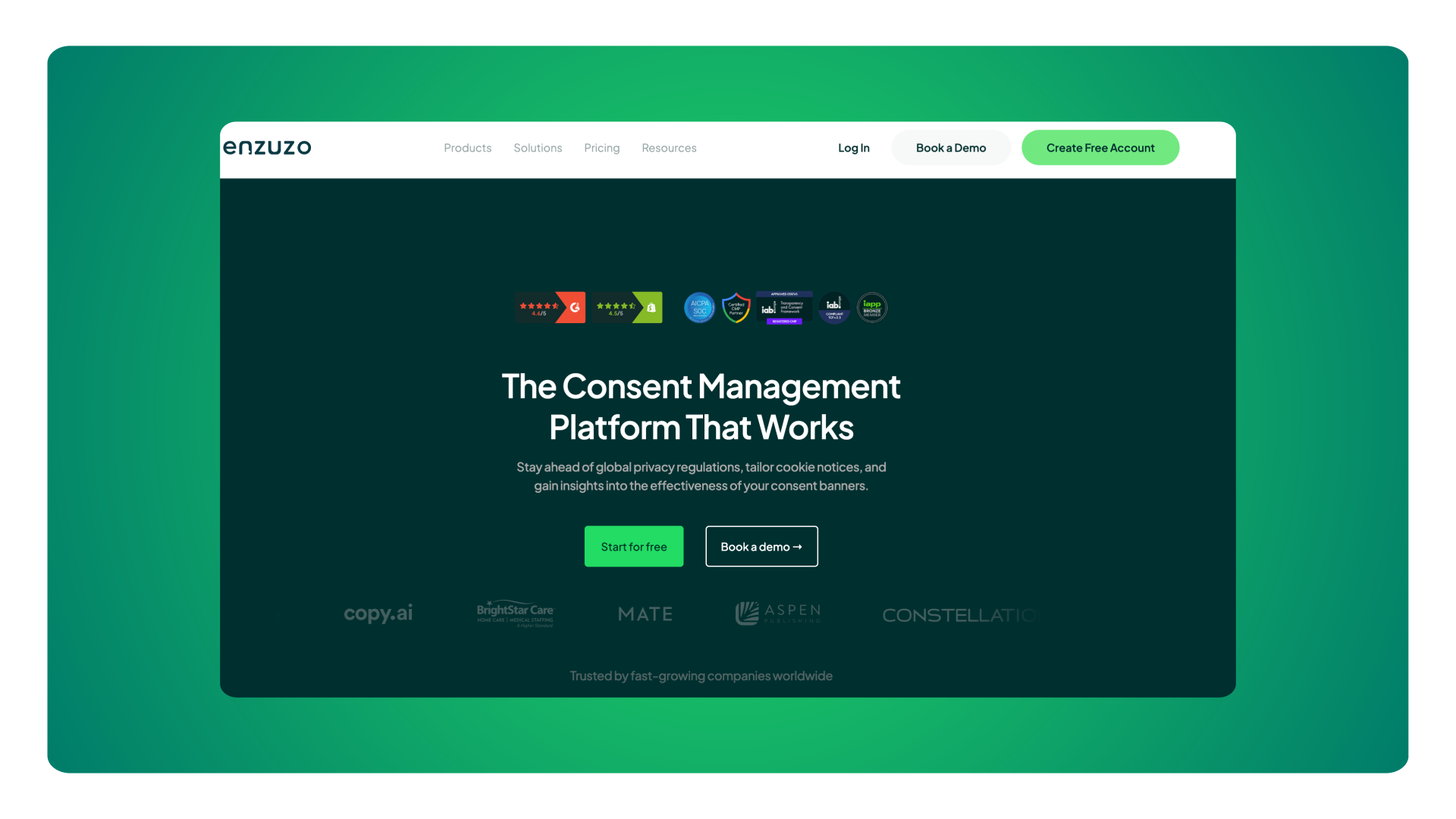
Best for: High-traffic Shopify Plus brands and multi-region ecommerce that have outgrown single-store consent apps and need a CMP that integrates natively with Shopify's Customer Privacy API.
Pricing reality. Enzuzo's mid-market plans are billed annually and scale on visitor volume, not domain count. The basic enterprise plan covers 10 storefronts, 5 admin seats, and 250,000 monthly unique visitors and starts in the $300/month range. Top-ups are predictable at $30 per 25,000 additional visitors, scaling proportionally at higher tiers.
What you get. A native Shopify app that writes consent state directly to Shopify's Customer Privacy API. Apps installed through Shopify (Klaviyo, Shopify Email, post-checkout apps) respect consent without GTM bridging. A multi-store dashboard with one billing parent and child storefronts beneath. Google Consent Mode v2 compliance (Enzuzo is a Gold-certified partner).
DSAR automation across all stores from one form. Geofencing for the nineteen US states with active privacy laws. A documented CIPA configuration, Slack-first onboarding, and a comprehensive stack audit during the first 30 days.
Where it wins. Native Shopify install path. Flat domain pricing (10 storefronts at every tier). Two-to-five-day deployment time including a staging-site test. Engineering-grade onboarding support that scales with the buyer's stack complexity.
A 20-minute call with Enzuzo's privacy compliance team identifies the consent gaps on your storefronts, walks through your CIPA and US state law posture, and outlines the next steps.
Book a Shopify compliance review →
Just need a banner for a single Shopify store under 100,000 monthly visitors? Try Enzuzo for Shopify free.

2. OneTrust
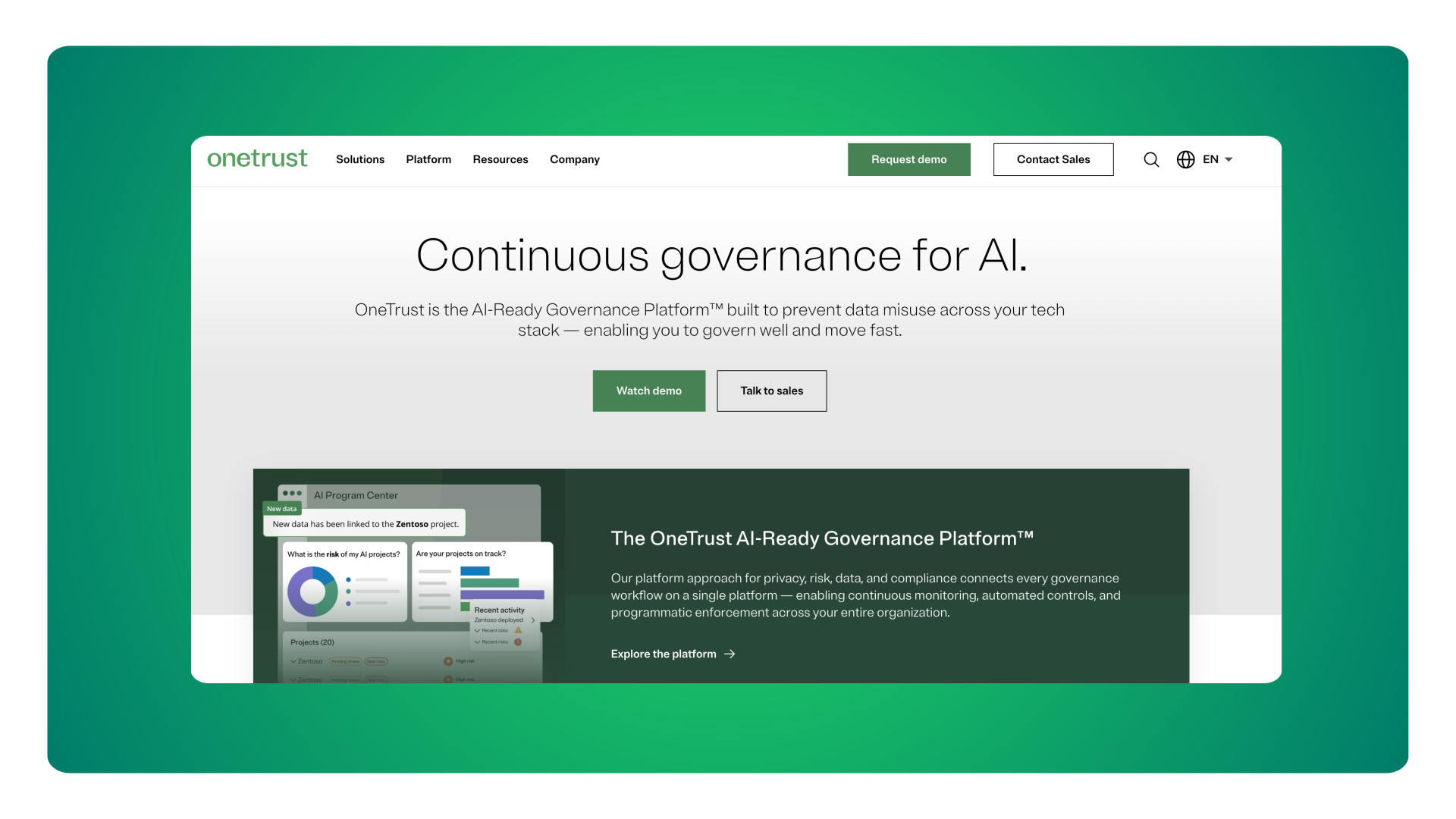
Best for: Large enterprise privacy programs with dedicated privacy teams, complex data mapping requirements, and hefty compliance budgets.
Pricing reality. OneTrust raised its minimum annual contract value to $10,000 in early 2026. Most mid-market deployments land between $30,000 and $100,000 a year. The consent management module alone starts around $827 a month, with per-domain pricing at the enterprise tier. Multi-year contracts are standard. Pricing is opaque and demo-led; no public price list exists.
What you get. A comprehensive privacy suite covering consent management, data discovery, vendor risk assessment, RoPA (records of processing activities), DSAR automation, privacy assessments, and security operations in a single platform. Google Consent Mode v2 certification. Coverage of all major privacy laws including GDPR, CCPA, LGPD, and PIPEDA. Strong analyst recognition from Gartner and Forrester. Established enterprise references. Dedicated CSMs at higher tiers.
Where it wins. The platform breadth is real and the analyst recognition matters in long enterprise sales cycles. Brands that need data mapping plus consent plus vendor risk in one consolidated system find that breadth worth the price. The compliance coverage is comprehensive across jurisdictions.
Where it loses. No native Shopify app. Implementation cycles run weeks to months, often longer than the demand letter response window after a CIPA filing. The Trustpilot rating of 1.7 out of 5 reflects documented customer support concerns. Most mid-market customers report using only a fraction of the platform while paying for the full suite. As of 2026, OneTrust itself refers mid-market customers who do not need the full enterprise suite to a short list of alternative CMPs, including Enzuzo.
Versus Enzuzo. OneTrust is a privacy program platform; Enzuzo's consent management platform is a CMP. Brands that need full data mapping and vendor risk modules go with OneTrust. Brands that need a Shopify-shaped CMP with engineering support and mid-market pricing go with Enzuzo. For a broader competitive view beyond Shopify, see our roundup of OneTrust alternatives.
3. Osano
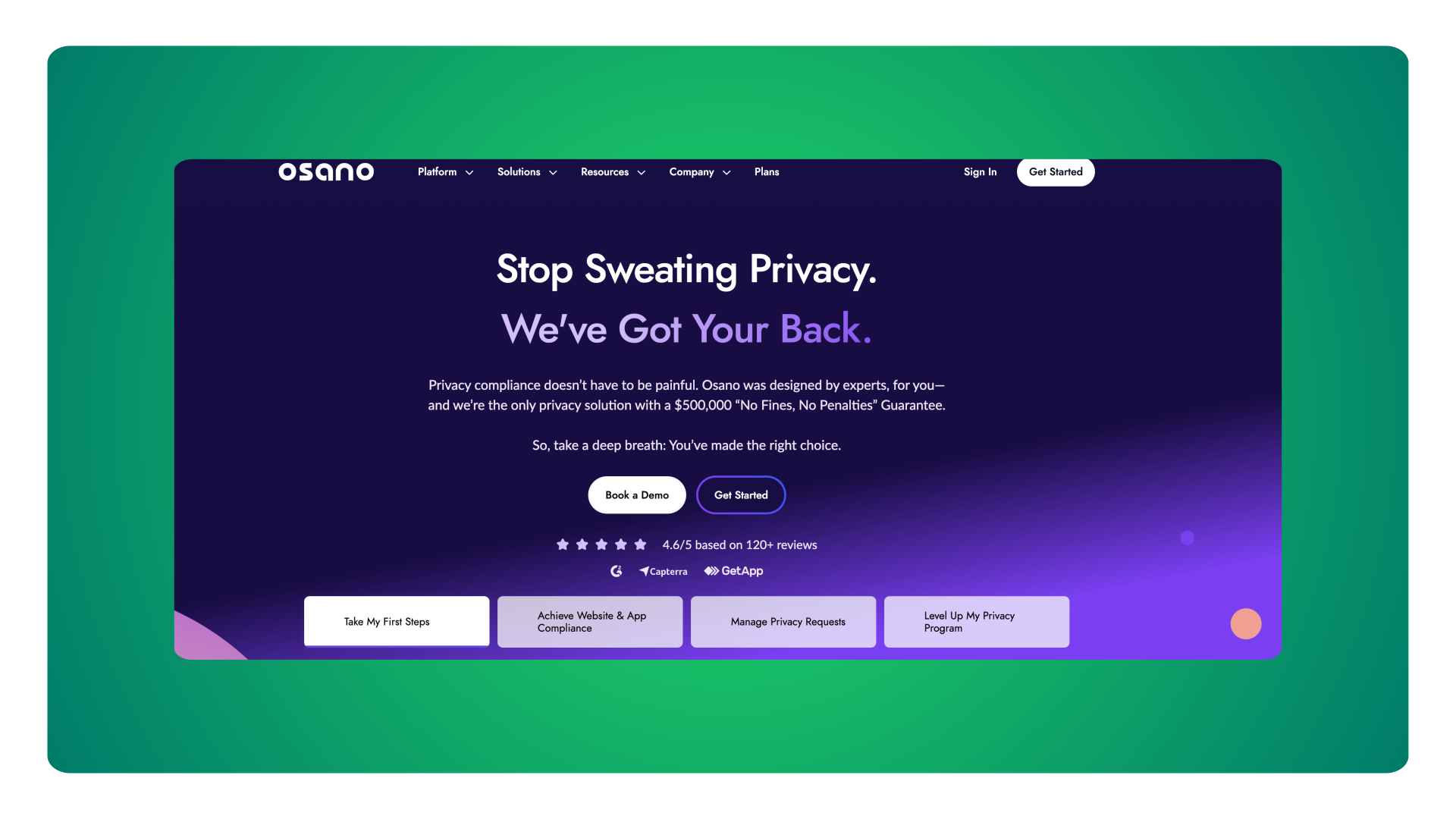
Best for: Mid-market US brands with one or two storefronts, HubSpot-centric DSAR workflows, and a need for legal-tracking content as part of a privacy operations function.
Pricing reality. Osano does not publish pricing anymore - legacy plans would start at $199 per month per domain, but it is now reasonable to suggest that the prices are higher. All pricing conversations require a sales call first.
What you get. A privacy operations platform rather than a pure CMP. Cookie consent management with geo-targeting. TrustHub, an email-driven privacy law alert service that notifies subscribers when new regulations pass or enforcement actions occur. DSAR automation. Limited vendor risk and data mapping. A native HubSpot integration that some HubSpot-heavy brands rely on for DSAR routing. Google Consent Mode v2 certification and IAB TCF 2.2 support. API access. A multi-store dashboard, with each domain priced separately.
Where it wins. TrustHub's privacy law alert service is genuinely useful for legal teams tracking regulation changes across jurisdictions. The HubSpot DSAR integration is a real differentiator if HubSpot is central to the brand's customer data workflow. Solid product depth for single-store mid-market deployments.
Where it loses. No native Shopify app. The script-tag installation creates the same Customer Privacy API gap as Cookiebot. Per-domain pricing penalizes multi-region brands. CIPA-specific compliance posture is not prominently documented. Support runs through a standard ticket system, not a high-touch Slack channel. A four-region Shopify brand pays roughly 3× what a Shopify-native CMP charges for comparable coverage.
4. Cookiebot
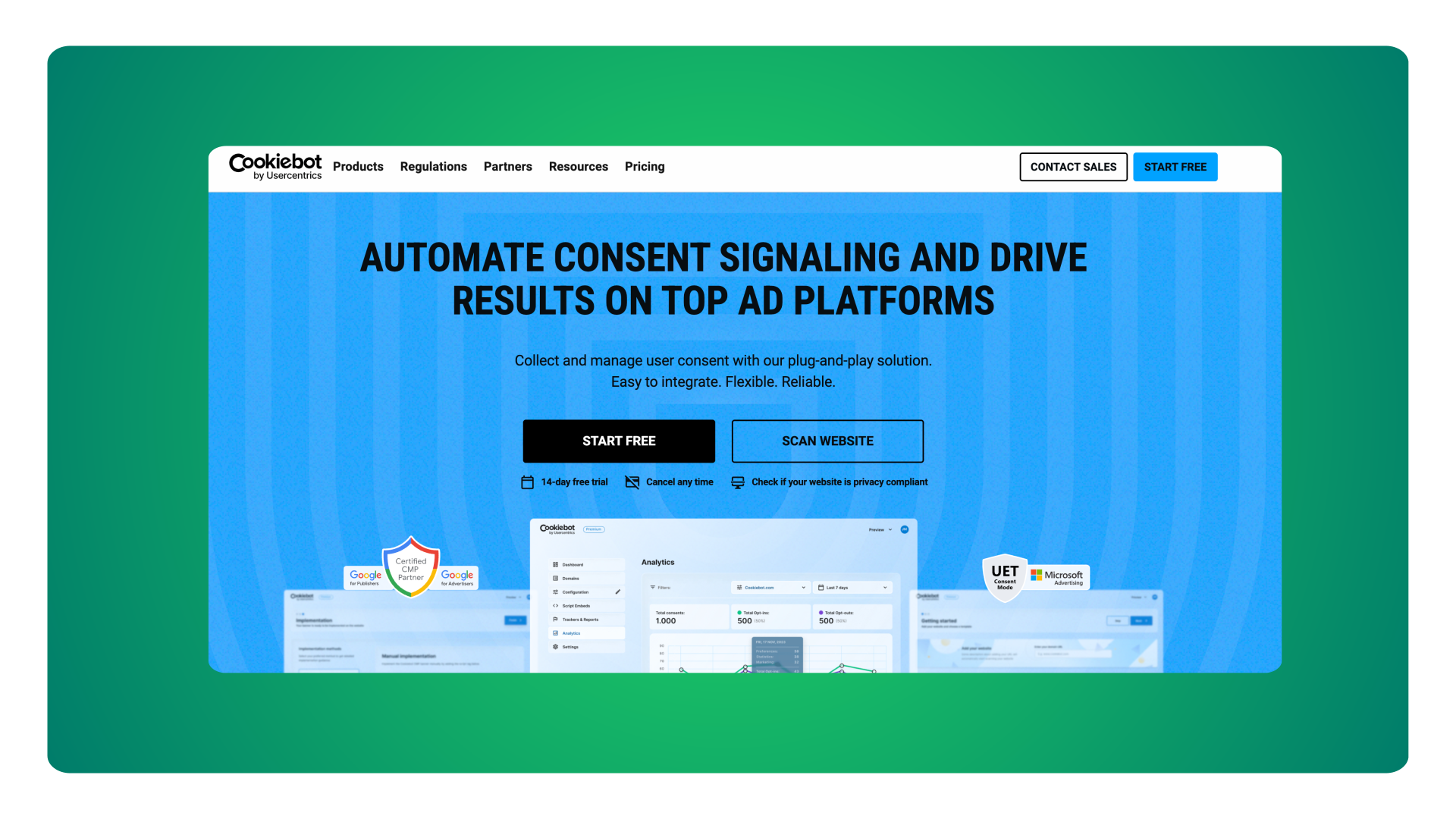
Best for: EU-based brands with one Shopify storefront, predictable and modest page counts, and primary GDPR compliance needs.
Pricing reality. Cookiebot prices per page rather than per domain, an unusual model in the CMP market. The base paid tier sits around €30 a month after the August 2025 doubling (it was approximately €15 before). Pricing scales by page count, so a Shopify catalog with 1,000 SKUs and a few hundred content pages can push the monthly bill into the hundreds of euros. Multi-domain customers pay the full per-page cost across each domain separately; there is no flat-rate multi-domain plan.
What you get. Strong GDPR coverage and IAB TCF 2.3 support. Google-certified CMP status. A 2.1-million-website install base. The free tier supports up to 50 subpages, which makes Cookiebot a common choice for small EU sites starting out.
Where it wins. EU compliance depth is real. The product is mature and well-known among European media and publisher buyers. The certification stack (Google Consent Mode v2, IAB TCF 2.3) is complete.
Where it loses. Per-page pricing scales badly on a product-catalog-heavy Shopify store. No API at the entry tier, which blocks integration into CI/CD pipelines or custom workflows. No DSAR automation, so brands need a second tool for data subject requests. Email-only support is slow for compliance-critical issues. Limited US state law coverage. The August 2025 price doubling triggered an industry-wide migration that continues into 2026.
What does a Shopify CMP need to do in 2026?
Several criteria separate a real Shopify CMP from a banner widget. If a platform misses any one of them, it is solving a smaller problem than the one a high-traffic Shopify brand actually faces in 2026.
Customer Privacy API integration
Shopify exposes a Customer Privacy API that is the canonical place where consent state lives. Apps installed through Shopify look at that API to decide whether to fire. A CMP that only manages tags inside Google Tag Manager does not write to that API natively, which means apps like Klaviyo flows, Shopify Email, and the native Shopify Inbox can keep running on consent state the CMP does not control.
Multi-store DSAR centralization
A four-region Shopify brand running US, UK, EU, and AU sub-stores will receive data subject access requests across all of them. A CMP that requires four separate DSAR scripts and four separate dashboards turns the weekly operational reality into 5 to 10 hours of manual reconciliation. The right model is one billing parent, child storefronts beneath it, and a single DSAR script the brand injects everywhere.
Geofencing across US states
Four states had active comprehensive consumer privacy laws in 2023. As of April 2026 there are nineteen, with another seven taking effect later in 2026 and 2027. The right model is a rule engine that the vendor maintains, with the brand picking the strictest configuration that fits its risk tolerance.
Post-consent pixel governance
The recurring pain point in Shopify consent is that pixels keep firing after consent is denied. Klaviyo, TikTok Pixel, Reddit Pixel, and Meta Pixel are the most common offenders. The cause is almost always a configuration gap between the CMP, the GTM consent layer, and Shopify's Customer Privacy API. A battle-tested Shopify CMP closes that gap during onboarding, with a live test on a staging store.
CIPA coverage
Most CMPs have no documented posture on California Invasion of Privacy Act (CIPA). The right posture is a documented configuration that addresses Meta Pixel and TikTok Pixel under California's wiretap reading, with the option for opt-in (rather than opt-out) consent in the affected jurisdictions.
Many Shopify cookie banners do not block what they claim
In March, our CTO ran a live test from a German VPN during an onboarding call with a multi-region Shopify retailer migrating to Enzuzo's consent management platform. The site was running another well-known consent tool. Within sixty seconds, the diagnosis: the site was sending cookies by default and Google Analytics was firing as if consent had been granted, because the consent default was not set properly.
That is a real conversation, anonymized. It is also a common one.
The mechanism is straightforward. A consent management platform has a setting called the consent default, which controls what state the page loads in before the visitor interacts with the banner. There are two valid options.
Implicit consent. The page loads as if consent was granted. Tags fire. The banner gives the visitor a way to opt out.
Explicit consent (block by default). The page loads with all non-essential tags blocked. The banner asks the visitor to opt in before anything fires.
For California, the EU, and the UK, explicit consent is the safer posture. A growing number of Shopify-native consent apps default to implicit consent, sometimes silently, often because the brand's installer accepted the defaults without checking them.
There is a 60-second test any Shopify brand can run today.
- Open the storefront in an incognito window with a VPN set to Germany.
- Open the browser's Network tab.
- Reload the page. Do not click the cookie banner.
- Filter the network requests for "googletagmanager," "klaviyo," "tiktok," "facebook," and "reddit."
- If any of those scripts fire before the banner is clicked, the consent default is set to allow, not block. The site is non-compliant for EU traffic.
This is the configuration that breaks under a CIPA demand letter or a GDPR audit. It is also the most common reason a brand discovers, after the fact, that the cookie consent app it is paying for is not actually doing the job.
CIPA, GDPR, and US state laws: what is actually driving Shopify lawsuits
Three regulatory pressure points are driving the current wave of Shopify CMP evaluations.
CIPA (California Invasion of Privacy Act)
CIPA is a 1967 California wiretap statute that has been applied to Meta Pixel and TikTok Pixel since 2024. The legal theory is that a third-party tracker recording user activity on a website, without consent, is functionally a wiretap. According to court filings since 2024, plaintiffs' law firms, most prominently the Swigart Law Group, have been filing demand letters in bulk against Shopify brands running these pixels without proper consent.
Penalties under California Penal Code §631 range from $5,000 to $50,000 per violation. A typical demand letter cites multiple violations, which is why a single letter can carry exposure of $50,000 to $200,000, comparable in scale to the biggest compliance fines hitting other digital businesses.
GDPR and the UK GDPR
The European Union's General Data Protection Regulation and the UK's parallel framework both require explicit, opt-in consent before placing non-essential cookies. A Shopify brand selling to EU or UK customers needs a banner that blocks all marketing and analytics tags by default in those jurisdictions, with consent state preserved across page loads. According to publicly reported GDPR enforcement actions in 2025, ecommerce brands faced fines in the €1 million to €10 million range for repeat violations.
The expanding US state map
According to the IAPP US State Privacy Legislation Tracker, nineteen US states have active comprehensive consumer privacy laws as of April 2026, with another seven taking effect in 2026 and 2027. Most are opt-out frameworks similar to California's CCPA, requiring a "Your Privacy Choices" link or modal that lets visitors withdraw consent. The geofencing requirement is real: a Shopify brand serving customers in Virginia, Colorado, Connecticut, Utah, Oregon, Texas, and others has to display the right opt-out mechanism for each.
The combined pressure means cookie consent is no longer a checkbox on a Shopify brand's marketing operations checklist. It is a real buying decision that requires real evaluation criteria.
FAQs
Which platform offers leading GDPR automation for Shopify stores?
Enzuzo, OneTrust, and Cookiebot all offer GDPR automation for Shopify stores, including geofencing for EU and UK visitors, IAB TCF 2.3 support, and Google Consent Mode v2. Enzuzo is the only one of the three with a native Shopify app, which means consent state integrates directly with Shopify's Customer Privacy API rather than wrapping around it through Google Tag Manager.
What is the best CCPA compliance tool for Shopify merchants?
The best CCPA compliance tool for Shopify merchants is one that handles California's "Your Privacy Choices" requirement, geofences correctly across the eighteen other US states with active opt-out laws, and supports the bundled rights pattern that legal counsel increasingly recommends. Enzuzo, Osano, and OneTrust all meet these requirements. Cookiebot has limited US state law coverage.
How does cookie consent work across multiple Shopify storefronts?
A multi-store Shopify brand should run one consent management platform parent account with each storefront added as a child. The right CMP propagates consent state, geofencing rules, and DSAR processing across all storefronts from one dashboard, while letting each store inherit region-specific configurations (US opt-out, EU opt-in, UK GDPR). This avoids reconciling separate dashboards every week.
Should I use "Do Not Sell My Information" or "Your Privacy Choices" on Shopify?
Use "Your Privacy Choices." Legal counsel increasingly recommends the unified "Your Privacy Choices" modal over the older "Do Not Sell My Information" link, because it surfaces all data subject rights in one place and aligns with how state laws standardize. Most CMPs support both patterns; pick the one your legal counsel currently endorses.
What happens to my marketing data when Shopify visitors deny consent?
When a Shopify visitor denies consent, marketing tags like Meta Pixel, TikTok Pixel, and GA4 stop firing for that session. Google Consent Mode v2 partially fills the gap by sending modeled signals to Google Ads and GA4. Brands typically see 10% to 30% measured-conversion drops in opt-in regions, partially recovered through Consent Mode modeling and first-party data from logged-in checkouts. Klaviyo flows for known customers continue to function because consent is captured at account creation.
Do Shopify apps work without cookies for GDPR compliance?
Yes. Shopify apps can run without cookies if they use only strictly-necessary cookies (login, cart, checkout, security) and defer all marketing, analytics, and personalization cookies until after the visitor opts in. The cookie consent platform's job is to enforce that boundary by blocking marketing tags by default and releasing them only after the visitor grants consent.
What are the top marketing automation tools for Shopify consent capture?
The marketing tools that most often need consent governance on Shopify are Klaviyo (email), Meta Pixel, TikTok Pixel, Reddit Pixel, Google Analytics 4, and Google Ads conversion tracking. Each fires identifiers that fall under GDPR, CCPA, and CIPA scope. A Shopify CMP captures consent before any of them fire and propagates that state to each tool individually.
How long does it take to deploy a cookie consent platform on Shopify?
Deployment time depends on platform and stack complexity. Native Shopify apps like Enzuzo can go live in two to five business days including a staging-site test. Script-tag platforms like Osano and Cookiebot typically take one to two weeks. OneTrust enterprise implementations run weeks to months.
How much does a Shopify cookie consent platform cost?
Costs range from free (single-store SMB tools like CookieYes) to $10,000+ per year (OneTrust enterprise). Mid-market Shopify brands typically pay between $300 and $600 per month, depending on traffic volume and store count. Enzuzo's mid-market plans start at $300 per month for 10 storefronts and 250,000 monthly visitors.
Run a Shopify consent management compliance review
A call with Enzuzo's engineering team identifies the post-consent pixel gaps on your storefronts, walks through your CIPA and US state law posture, and quotes pricing tailored to your traffic volume and store count.
Book a Shopify compliance review →
Osman Husain
Osman is the content lead at Enzuzo. He has a background in data privacy management via a two-year role at ExpressVPN and extensive freelance work with cybersecurity and blockchain companies. Osman also holds an MBA from the Toronto Metropolitan University.
LinkedIn →More related blogs
Your next read
.png)