Osman Husain
Why cookie consent has become a compliance issue for education websites
Education organizations have historically focused their privacy programs on internal data governance: securing student information systems, managing data processing agreements with EdTech vendors, training staff on FERPA requirements. Website consent management was treated as an IT afterthought, not a compliance requirement.
That assumption became harder to sustain after the December 2024 PowerSchool breach, which exposed records belonging to 62 million students and 9.5 million educators across North America.
The PowerSchool breach was a backend credential compromise, not a website tracking issue. But it accelerated a broader reckoning about how education organizations handle student data at every layer, including the public-facing website.
The regulatory picture has tightened simultaneously. In January 2025, the FTC finalized amendments to the COPPA Rule, shifting from opt-out to opt-in consent for data collection from children under 13. K-12 websites and EdTech platforms serving young students must obtain verifiable parental consent before collecting data for AI training or third-party sharing.
State student privacy laws have multiplied rapidly, too. As of 2025, more than 121 state laws protect student privacy beyond FERPA. California's SOPIPA restricts EdTech vendor use of student data. Illinois' SOPPA mandates opt-in consent and breach notification within 72 hours.
At the same time, CIPA litigation from plaintiffs' firms like Swigart Law Group has expanded across industries, including education. Universities and school districts running Meta Pixel or session replay tools on California-accessible pages face statutory damages of $5,000 per violation.
A consent management platform (CMP) does not solve all of these problems. What it does is handle the public-facing consent layer on your website: geofenced banner rules, tag blocking that prevents pixels from firing before consent is given, and documented consent records for audit purposes.
If you need FERPA compliance tooling, vendor data processing agreement management, or internal data governance across your EdTech ecosystem, you need a broader privacy platform alongside your CMP.
Here are the best ones suited for your use case.
| Your situation | Best fit | Why |
| Large university system, dedicated privacy office, $10K+ budget | OneTrust | Full enterprise suite, data mapping, vendor risk assessment, regulatory audit documentation |
| Mid-market university, community college, or school district with GTM-based tracking | Enzuzo | Geofenced consent, GTM-native tag blocking, flat multi-domain pricing, fast deployment |
| Education org needing privacy monitoring alongside consent | Osano | Consent plus privacy law alerts and vendor risk tools |
| K-12 district with COPPA obligations and California exposure | Enzuzo | Pixel blocking before consent, CIPA coverage, COPPA-compliant consent flows |
| EdTech SaaS serving K-12 and higher ed clients | Enzuzo / OneTrust | Multi-jurisdiction geofencing, GDPR opt-in, CCPA opt-out in one platform |
The three best consent management platforms for education organizations in 2026
1. OneTrust: best for large university systems
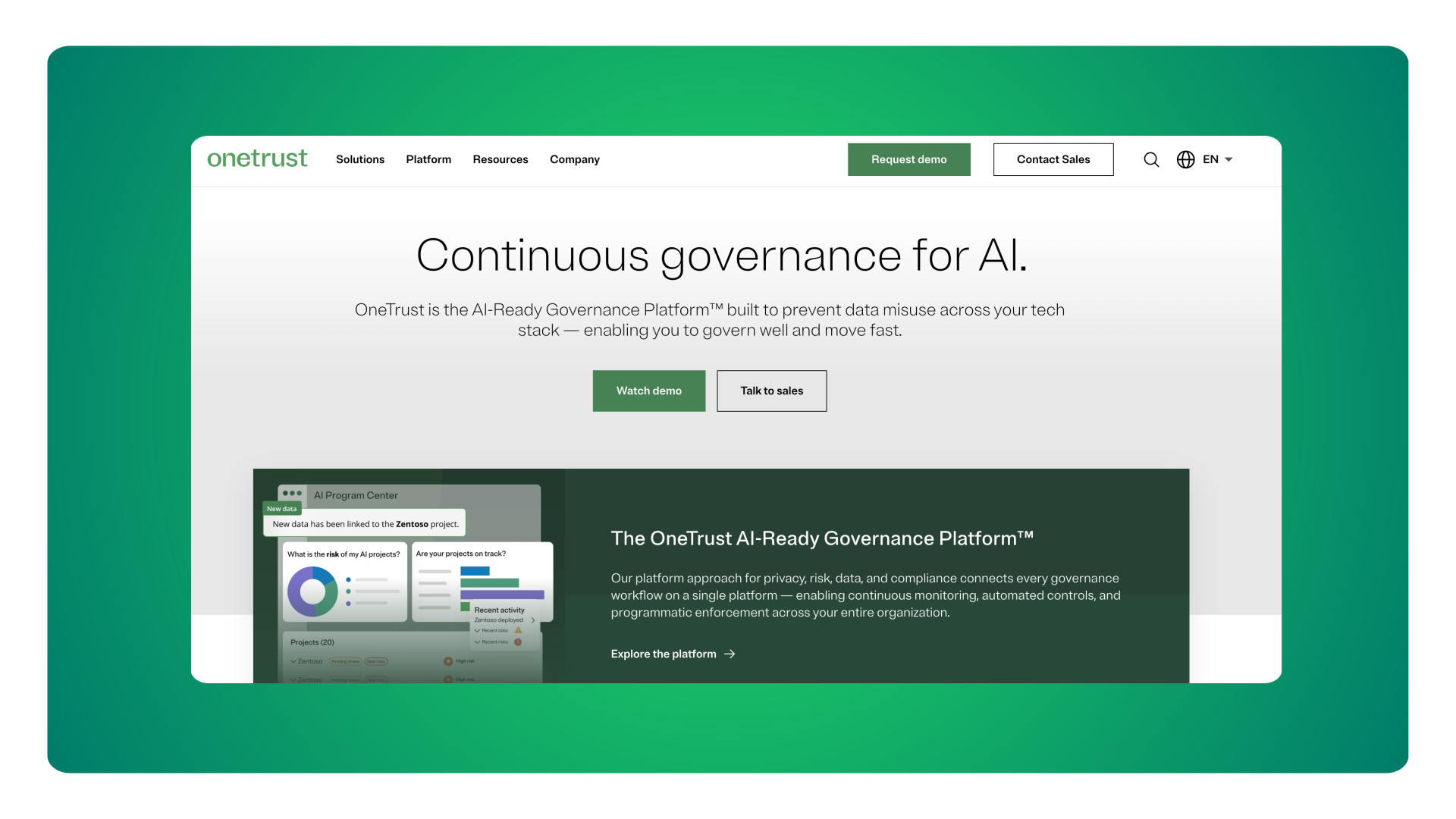
OneTrust is the category leader in enterprise privacy and consent management. For large university systems with dedicated privacy offices, compliance budgets exceeding $10,000 per year, and complex vendor ecosystems spanning hundreds of EdTech providers, OneTrust offers the most comprehensive feature set available.
Where it works well for education:
OneTrust's platform covers consent management alongside data mapping, vendor risk assessment, and regulatory audit documentation. For an R1 research university managing 150+ EdTech vendor relationships, complex data flows across departments, and a dedicated team of privacy professionals, the platform's breadth is useful.
Data mapping helps institutions understand which vendors receive student data, and the vendor assessment module lets compliance teams evaluate third-party tools before onboarding them.
Where education organizations run into constraints:
OneTrust raised its minimum ACV to $10,000 per year in March 2026. Community colleges, smaller universities, and K-12 districts that primarily need public-facing website consent management rather than the full governance suite will pay for features they may not use. Implementation timelines are typically measured in weeks to months, and the platform requires dedicated privacy engineering resources to operate effectively.
Pricing: Minimum $10,000 per year ACV. Enterprise pricing negotiated.
2. Enzuzo: best for mid-market universities, school districts, and EdTech companies
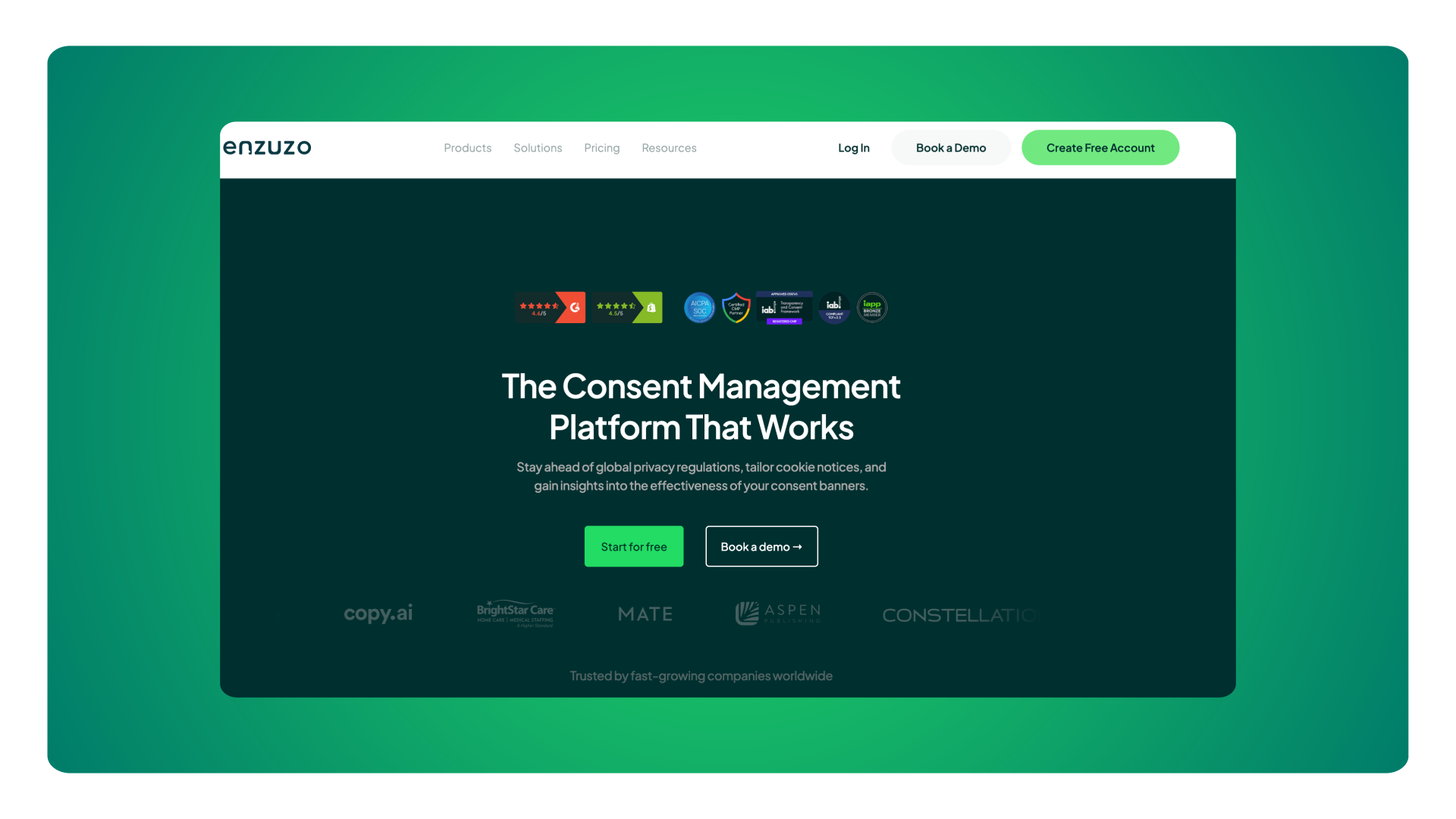
Enzuzo is a consent management platform built for mid-market organizations that need comprehensive, geofenced consent management without the cost or complexity of enterprise-tier tools.
What Enzuzo covers for education websites:
Geofenced consent rules are automatic. An international applicant visiting from the EU sees a GDPR-compliant opt-in banner. A California parent sees a CCPA-compliant opt-out. Visitors from US states with active privacy laws (Virginia, Colorado, Connecticut, Texas, and the expanding list) get the appropriate treatment. The platform updates these rules as new state laws take effect, which matters for education organizations that cannot afford to monitor legislative calendars across 50 states manually.
GTM-based tag blocking is the primary deployment path. Enzuzo deploys through a Google Tag Manager template that blocks non-essential pixels from firing until consent is given. This directly addresses the FERPA concern: tracking technologies cannot transmit student data to third parties before a visitor has consented, because the tags are blocked at the GTM layer. Setup typically takes hours rather than weeks.
Multi-domain pricing is flat. PLG Pro covers 10 domains for $59 per month (billed annually). A university running a main site, an admissions portal, athletics, alumni, and a research center site is not paying for five separate licenses. Mid-market plans covering high-traffic deployments start at $300 per month.
The DSAR form is included. When a student or parent submits a data subject access request under GDPR or CCPA, Enzuzo manages the intake and creates an audit trail. For universities with international students, DSAR handling is a concrete GDPR obligation, not an edge case. Enzuzo also automatically generates a privacy policy, which education websites are required to publish under FERPA, state privacy laws, and GDPR.
Important to note:
Enzuzo handles public-facing website consent. It does not replace FERPA compliance programs, data processing agreements with EdTech vendors, internal student data governance, or vendor risk management.
Education organizations with complex internal governance requirements should evaluate whether they need a broader privacy platform alongside their CMP, or whether a CMP plus their existing compliance infrastructure is sufficient.
Pricing: PLG Pro at $59 per month (billed annually) covers 10 domains. Mid-market plans start at $150 per month for high-traffic deployments. A free trial is available.
See how Enzuzo handles consent management for education websites. Book a 30-minute demo. No contract, no commitment
3. Osano: best for education organizations needing privacy monitoring alongside consent
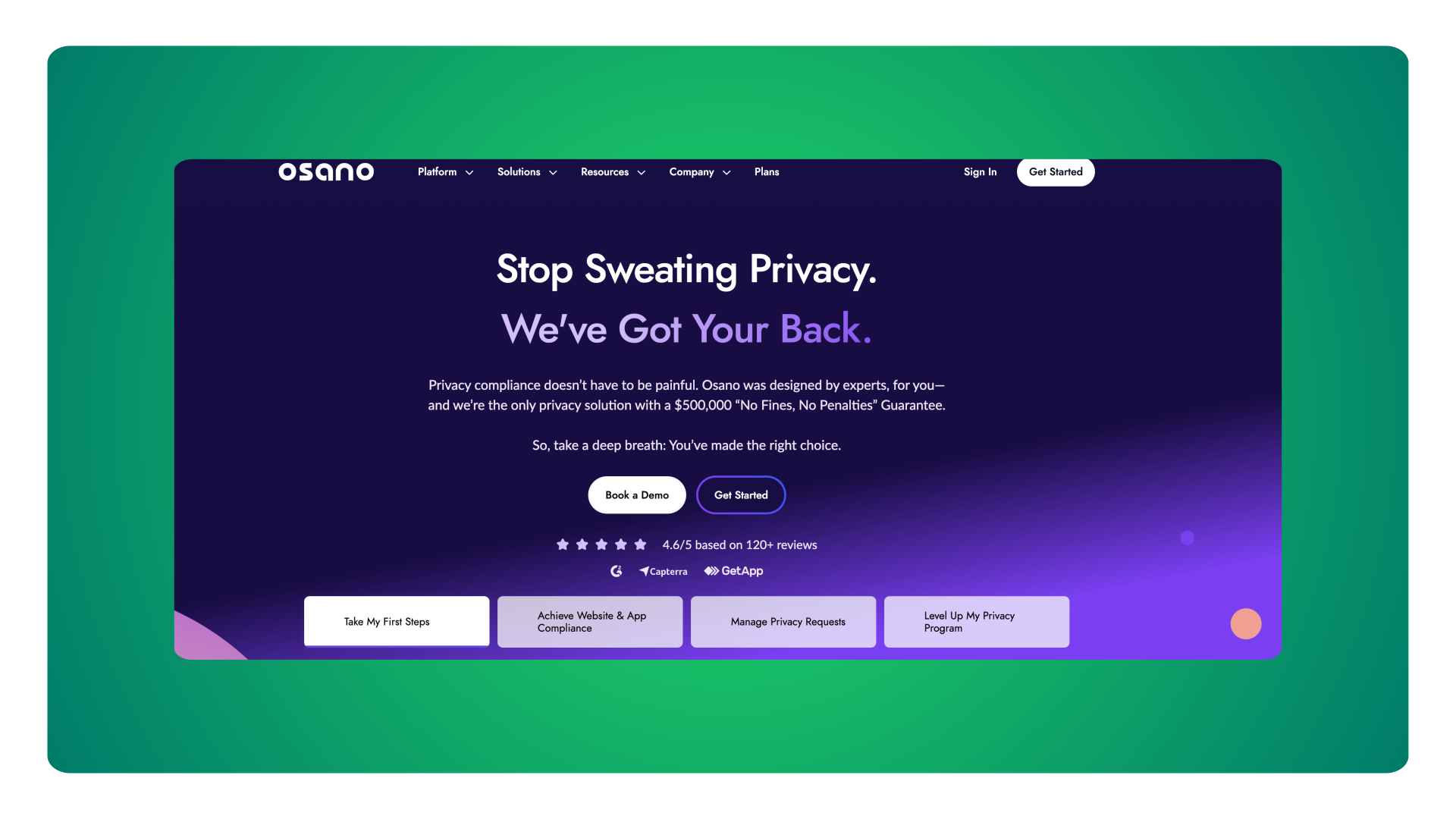
Osano is a mid-market privacy platform that combines consent management with privacy law monitoring and vendor risk assessment. For education organizations with an active compliance function that tracks their regulatory environment, the bundled approach is useful.
Where it works well for education:
Osano's privacy law alert system notifies compliance teams when regulations change. For education organizations tracking the expanding patchwork of US state student privacy laws (121+ and growing) alongside FERPA, COPPA, and GDPR, automated alerts reduce the manual monitoring burden.
The vendor risk assessment tool lets compliance teams evaluate the privacy posture of EdTech tools before they enter the classroom. Consent management is solid: geofencing works across GDPR, CCPA, and several US state laws, banner customization is flexible, and Google Consent Mode v2 is supported.
Where to be careful:
Osano has removed all pricing from its website. Previously, it charged per domain at a starting price of $199 per month. It is reasonable to infer that the costs are now higher, meaning education organizations primarily needing consent management rather than the full privacy monitoring suite will find it cost-prohibitive, particularly for multi-domain deployments.
Pricing: Custom. Previously per-domain starting at $199 per month.
What education websites actually need from a CMP
The requirements for an education CMP are different from retail or SaaS. Before evaluating tools, understand the five capabilities that matter specifically for this context.
1. Geofenced consent by jurisdiction.
A prospective student browsing from Germany requires GDPR-compliant opt-in consent before any non-essential cookie fires. A visitor from California requires CCPA-compliant disclosure and opt-out. A parent in Virginia falls under the VCDPA. Universities and school districts frequently serve geographically diverse populations, including international applicants, out-of-state families, and exchange students. Your CMP must detect visitor location automatically and apply the correct consent framework.
2. Pixel and tag blocking before consent.
This is the core technical requirement. If a marketing pixel fires on a student-facing page before a visitor gives consent and transmits identifiable data to a third party, the education organization may face exposure under FERPA's disclosure restrictions, COPPA, CIPA, or applicable state privacy laws. Your CMP must block all non-essential tags at the GTM layer until consent is captured, with no race conditions that allow tags to fire during banner load.
3. COPPA-compliant consent flows for K-12.
Websites serving children under 13 must obtain verifiable parental consent before non-essential data collection under the 2025 COPPA amendments. Marketing cookies, social media pixels, and behavioral advertising trackers cannot be justified under the school consent exception. If your institution operates K-12 websites alongside a main institutional site, the CMP needs to enforce different consent rules per domain or subdomain.
For guidance on what a compliant consent banner looks like in practice, see the cookie banner examples guide.
4. Documented consent records and audit trail.
FERPA requires schools to maintain records of disclosures. COPPA requires detailed record-keeping for FTC audit purposes. A CMP that stores timestamped consent records, including visitor identifier, consent status, banner version, and jurisdiction, creates the audit trail you need to respond to regulatory inquiries, parent complaints, or CIPA litigation discovery.
5. Multi-domain support.
Universities and school districts typically operate many domains: a main website, a student portal, an admissions site, athletics, alumni pages, research center sites, and department microsites. K-12 districts may run separate sites for each school. Tools that charge per domain make compliance prohibitively expensive as the digital footprint grows.
How to choose the right CMP
Choose OneTrust if you are a large university system with a dedicated privacy office, an existing OneTrust relationship, or compliance needs that extend well beyond website consent into internal data governance, vendor risk assessment, and regulatory audit documentation.
Choose Enzuzo if you are a mid-market university, community college, school district, or EdTech company that needs geofenced consent management deployed quickly across multiple domains, without the cost or complexity of an enterprise implementation. The flat multi-domain pricing and hours-not-weeks deployment timeline make it the most practical option for organizations that need compliant consent infrastructure without a dedicated privacy engineering team.
Choose Osano if you are an education organization with a compliance function that will actively use privacy law monitoring and vendor risk tools, and your budget can absorb per-domain pricing across your domain portfolio.
For a broader comparison of consent management tools across all industries, see the guide to the best consent management platforms of 2026.
FAQs
Can consent be shared across subdomains so students are not prompted on every page?
Consent can be shared across subdomains of the same root domain. A student who consents on www.university.edu will not see the banner again on admissions.university.edu or athletics.university.edu during the same session. The CMP stores the consent decision in a first-party cookie scoped to the root domain, so any subdomain under that root inherits it.
However, consent cannot be shared across different root domains. If your institution operates separate root domains for different properties (for example, a .edu for academics and a separate domain for alumni or a research institute), each root domain requires its own consent capture. For institutions with large subdomain portfolios, this distinction is the difference between one consent prompt and dozens.
We run 10 to 50 websites. Do we have to pay for each domain separately?
It depends on the vendor. Per-domain pricing is common in the CMP market, and it scales linearly with your institutional footprint. A university system running a main site, admissions portal, athletics, alumni, five department microsites, and a research center would pay for each one individually under a per-domain model. That adds up quickly for institutions with tight compliance budgets.
Enzuzo's PLG Pro plan covers up to 10 domains for $59 per month (billed annually), and mid-market plans accommodate larger portfolios at a flat rate. OneTrust bundles domains into enterprise contracts but requires a minimum $10,000 per year commitment. Osano has historically charged per domain starting at $199 per month. When evaluating vendors, calculate the total cost across your full domain portfolio, not the cost for a single site.
What happens when a student or parent submits a data deletion request?
Under GDPR, CCPA, and several state privacy laws, students and parents have the right to request deletion of their personal data. A CMP with a built-in DSAR (data subject access request) form manages the intake: the requester fills out a secure form, the system logs the request with a timestamp and jurisdiction, and your team receives a structured record with an audit trail.
This covers the public-facing layer of the obligation. It does not cover data held in your student information system, learning management platform, or other internal databases. Those deletion requests need to be routed to the teams managing those systems.
Does a university website need a cookie consent banner if it complies with FERPA?
FERPA compliance and website cookie consent are separate requirements that overlap on tracking technologies. FERPA governs education records. GDPR, CCPA, and state privacy laws govern consent for tracking cookies and pixels on websites regardless of whether the organization is a FERPA-covered institution. A university serving EU or California visitors needs a compliant consent mechanism under those laws, independently of its FERPA obligations.
Does COPPA apply to university websites?
Generally not, unless the website is directed at children under 13 or knowingly collects data from children under 13. COPPA applies primarily to K-12 websites, EdTech platforms used by young students, and child-directed content. University websites serving adult students are not subject to COPPA, though they remain subject to FERPA, GDPR, CCPA, CIPA, and applicable state privacy laws.
Can a CMP replace a data processing agreement with our EdTech vendors?
No. A data processing agreement is a contract between a school and a vendor that handles student data on the school's behalf. A CMP controls whether cookies and tracking pixels fire on your website. They address different parts of the compliance picture. If your EdTech vendor handles education records, you need a DPA regardless of whether you have a CMP in place.
Which privacy laws apply to education websites in the US?
FERPA applies to all schools receiving Department of Education funding. COPPA applies to websites serving children under 13. CCPA and CIPA apply to any website accessible by California residents, regardless of industry. Nineteen states now have comprehensive consumer privacy laws, and 121+ state laws specifically address student privacy. GDPR applies to any organization handling data of EU residents. A geofenced CMP applies the correct framework automatically based on visitor location.
Osman Husain
Osman is the content lead at Enzuzo. He has a background in data privacy management via a two-year role at ExpressVPN and extensive freelance work with cybersecurity and blockchain companies. Osman also holds an MBA from the Toronto Metropolitan University.
LinkedIn →More related blogs
Your next read
.jpg)