Best Cookie Tracking Software: 9 Tools Evaluated (2026)
Table of Contents
GDPR enforcement in Europe, CCPA obligations in California, and a growing wave of CIPA pixel lawsuits mean that failing to manage cookies correctly carries real financial exposure. Penalties under CIPA alone can run from $10,000 to $200,000 per claim.
The right cookie tracking software does not just put a banner on your site. It scans automatically, categorizes every tracker and pixel, enforces user consent preferences in real time, and produces audit-ready records if a regulator or plaintiff comes knocking. The wrong tool gives you a pop-up that looks compliant while quietly failing every standard that matters.
This guide covers the 9 best cookie tracking software tools in 2026. We evaluated each on feature depth, Google Consent Mode certification, pricing transparency, platform integrations, ease of setup, and regulatory coverage.
What is cookie tracking software?
Cookie tracking software is a tool that scans your website for all active cookies, pixels, and third-party scripts, displays a legally compliant consent banner, blocks non-consented tracking technologies before they fire, and stores timestamped consent records for regulatory audits.
Modern cookie tracking tools apply the correct consent rules based on each visitor's location. A visitor from Germany sees a GDPR opt-in banner. A visitor from California sees a CCPA opt-out notice. A visitor from Texas may see something different as US state privacy laws continue to expand.
The 9 best cookie tracking software tools
Here's a quick comparison table of the tools we've covered below:
| Tool | Best for | Google certified | Free plan | Starting price | Shopify native | CIPA coverage |
| Enzuzo | SMB / mid-market | Yes | Yes | $9/mo | Yes (native) | Yes |
| OneTrust | Enterprise | Yes | No | $10,000/yr min | No | Yes |
| Osano | Mid-market | Yes | Yes | $199 | No | Yes |
| CookieYes | SMB | Yes | Yes | $10/mo | Yes | Limited |
| Cookiebot | EU-focused multi-domain | Yes | Yes | $8/mo | Via script | Limited |
| iubenda | Agencies / multi-site | Yes | Yes | $27/yr per site | Via script | Limited |
| Termly | US SMB | Yes | Yes | $14/mo | Via script | Limited |
| Ketch | Enterprise / developer | Yes (Silver) | No | From $150/mo | No | Limited |
| Didomi | Multi-device publishers | Yes | No | Not published | No | Yes |
1. Enzuzo
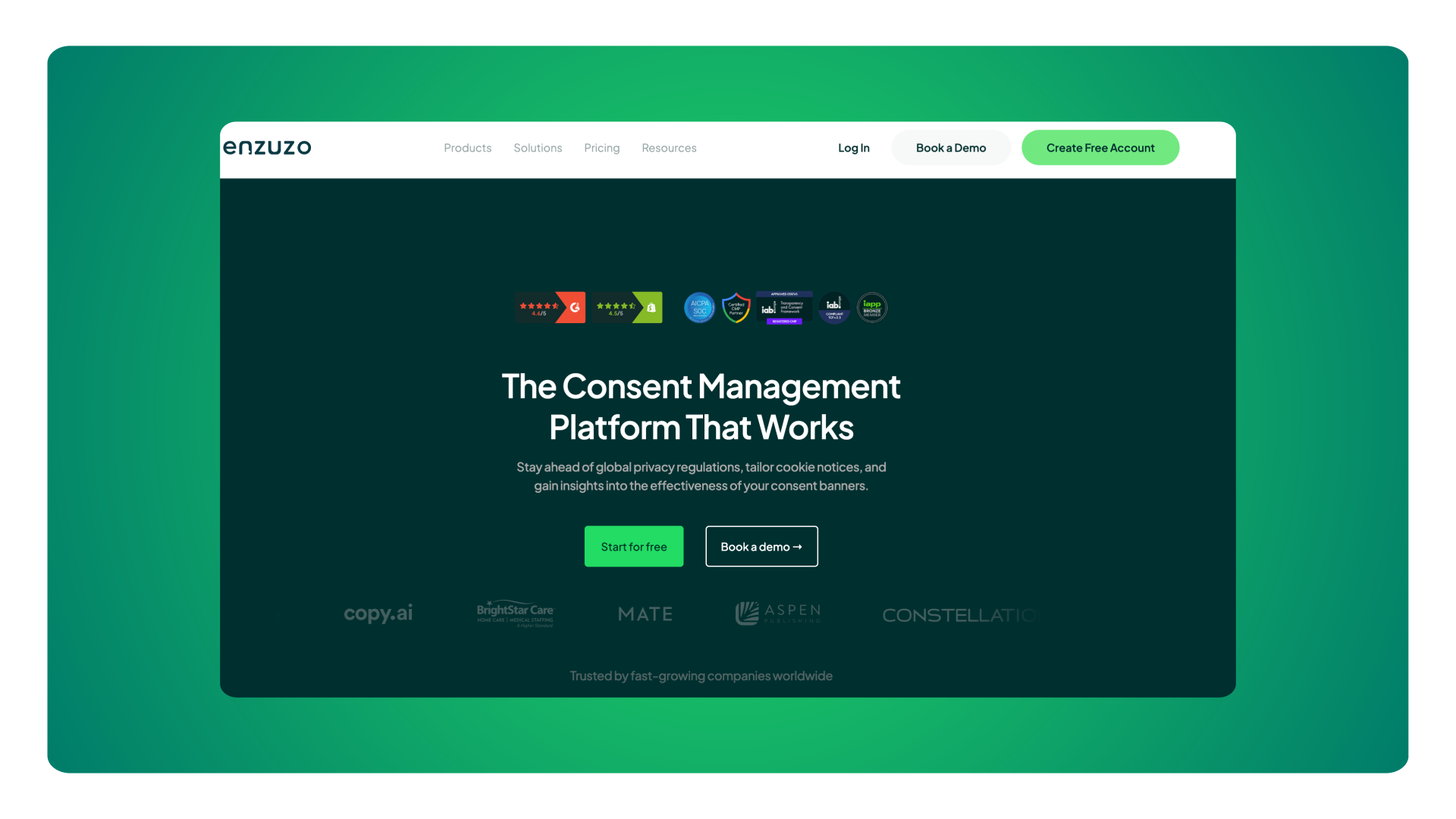
Best for: SMBs and mid-market teams who need advanced cookie tracking and management features without the enterprise price tag.
Enzuzo is a Google Gold-certified consent management platform built for the segment that enterprise tools have historically ignored: companies with 50 to 500 employees that need real compliance, not a checkbox. The product covers Google Consent Mode v2, GDPR, CCPA, CIPA, and a growing list of US state opt-out laws, with geofencing that automatically serves the legally correct consent experience based on each visitor's location.
Where Enzuzo's consent management platform stands apart from most tools in this list is the combination of transparent flat-rate pricing, native platform integrations, and direct support. There is no per-domain model that escalates as your site portfolio grows, no required sales conversation to get a number, and no GTM workaround required for Shopify: Enzuzo installs directly from the Shopify App Store. API access is included on all paid plans.
Key features:
- Google Consent Mode v2 (Google Gold-certified CMP)
- Geotargeted consent: GDPR opt-in for EU visitors, CCPA/CIPA opt-out for California, plus 10+ US state opt-out laws
- Native integrations: Shopify App Store, Webflow, WordPress
- Automated cookie scanning and categorization
- Consent audit logs with timestamped, user-level records
- DSAR form included on paid plans
- Multi-domain support on higher-tier plans

Pricing: Free plan available. Paid plans from $9/month. Fully public, no sales call required.
Pros: only CMP in this list with a native Shopify App Store integration (no GTM required); Google Gold-certified (highest tier); pricing is fully public; setup in hours for most standard implementations.
Cons: does not offer a no-fines compliance guarantee; vendor risk monitoring and internal data mapping are not included (this is a focused CMP, not a full privacy suite); DSAR form has no Salesforce/HubSpot sync yet.
Need cookie tracking & compliance for your business? Book a conversation with an industry expert.
2. OneTrust
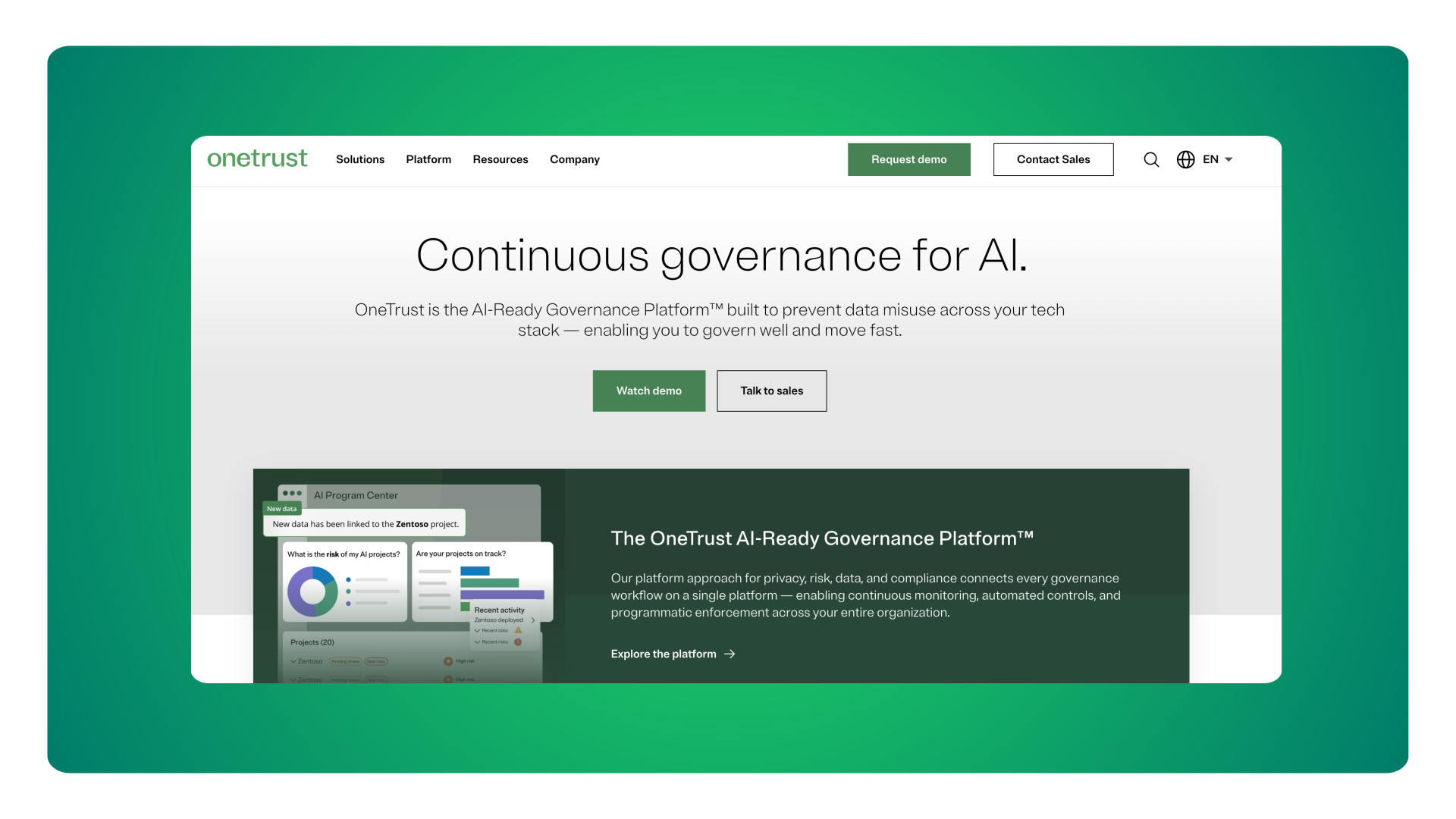
Best for: Large enterprises that need a full privacy suite and have a budget to match, with a minimum $10,000 ACV.
OneTrust is the market leader in enterprise privacy governance. Its CMP is one component of a broader platform that includes data mapping, vendor risk management, privacy impact assessments, and regulatory change monitoring. For a large enterprise with a dedicated privacy team and a complex global compliance requirement, OneTrust is the most complete platform available.
The important context for 2026: OneTrust raised its minimum ACV to $10,000 in early 2026 and is actively notifying customers on sub-$10K plans during their current renewal cycle. Many mid-market companies that had been on OneTrust entry-level plans are now being priced out. OneTrust has named Enzuzo as one of three preferred migration paths for displaced customers.
Key features:
- Full privacy governance suite: cookie consent, data mapping, DSARs, vendor risk, PIAs
- Google Consent Mode v2 certified
- Broad regulation coverage: GDPR, CCPA, 50+ global frameworks
- Enterprise-grade audit trails and reporting
- API access for custom integrations
Pricing: Minimum $10,000 ACV as of 2026. No self-serve option. Requires a full sales process.
Pros: most complete privacy governance platform available; strong regulatory coverage across all major frameworks; well-established for enterprise procurement (SOC 2, ISO 27001).
Cons: $10,000 ACV minimum makes it inaccessible for most SMB and mid-market buyers; complex implementation that typically takes weeks to months; overkill for companies that only need a cookie consent banner and DSAR form.
3. Osano
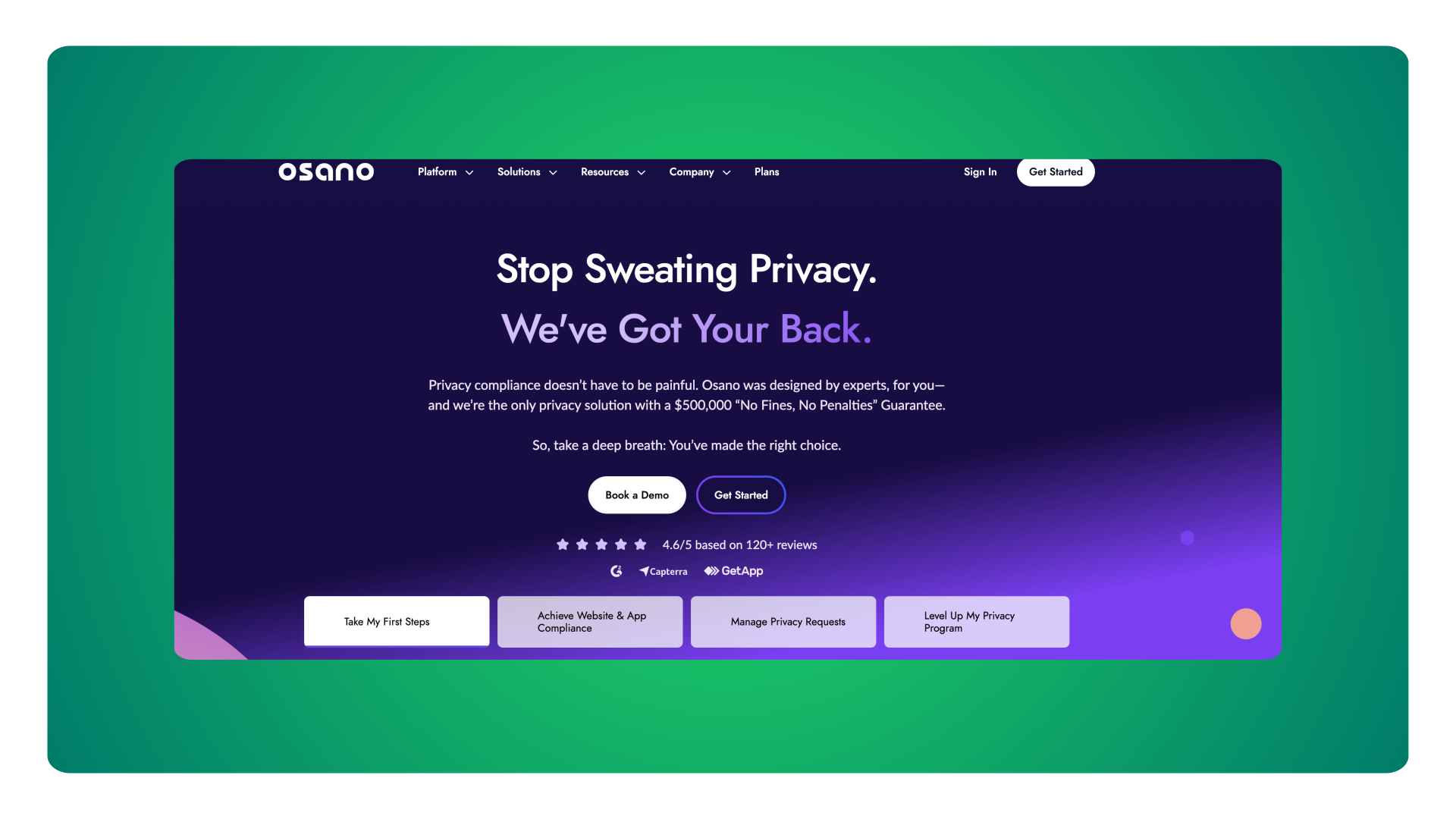
Best for: Mid-market teams that want broad global coverage and a contractual compliance guarantee.
Osano targets mid-market privacy teams with a notably differentiated offer: a contractual guarantee to cover up to $500,000 in regulatory fines arising from its platform (restrictions apply). For teams where a legal or compliance executive needs a defensible risk position, that guarantee carries weight in internal conversations. Osano also covers 95+ regulations across 50+ countries, making it a reasonable choice for companies with global operations.
The key change in 2026: Osano is moving to a sales-led model. Previously its entry-level Plus plan was listed at $199/month, but that figure is now stale and current pricing requires a demo. This slows down procurement for teams with urgent compliance needs.
Key features:
- No-fines, no-penalties guarantee up to $500,000 (restrictions apply)
- 95+ regulations, 50+ countries
- AI-powered cookie categorization
- DSAR workflow automation
- Vendor risk monitoring
- Single-tag deployment
Pricing: Starts at $199/month for a limited plan restricted to 30,000 visitors/month.
Pros: only tool in this list with a contractual compliance guarantee; broad regulatory coverage; includes vendor risk monitoring.
Cons: pricing is opaque; no native Shopify integration (requires GTM workaround); shift to sales-led model slows procurement for urgent compliance needs.
4. CookieYes
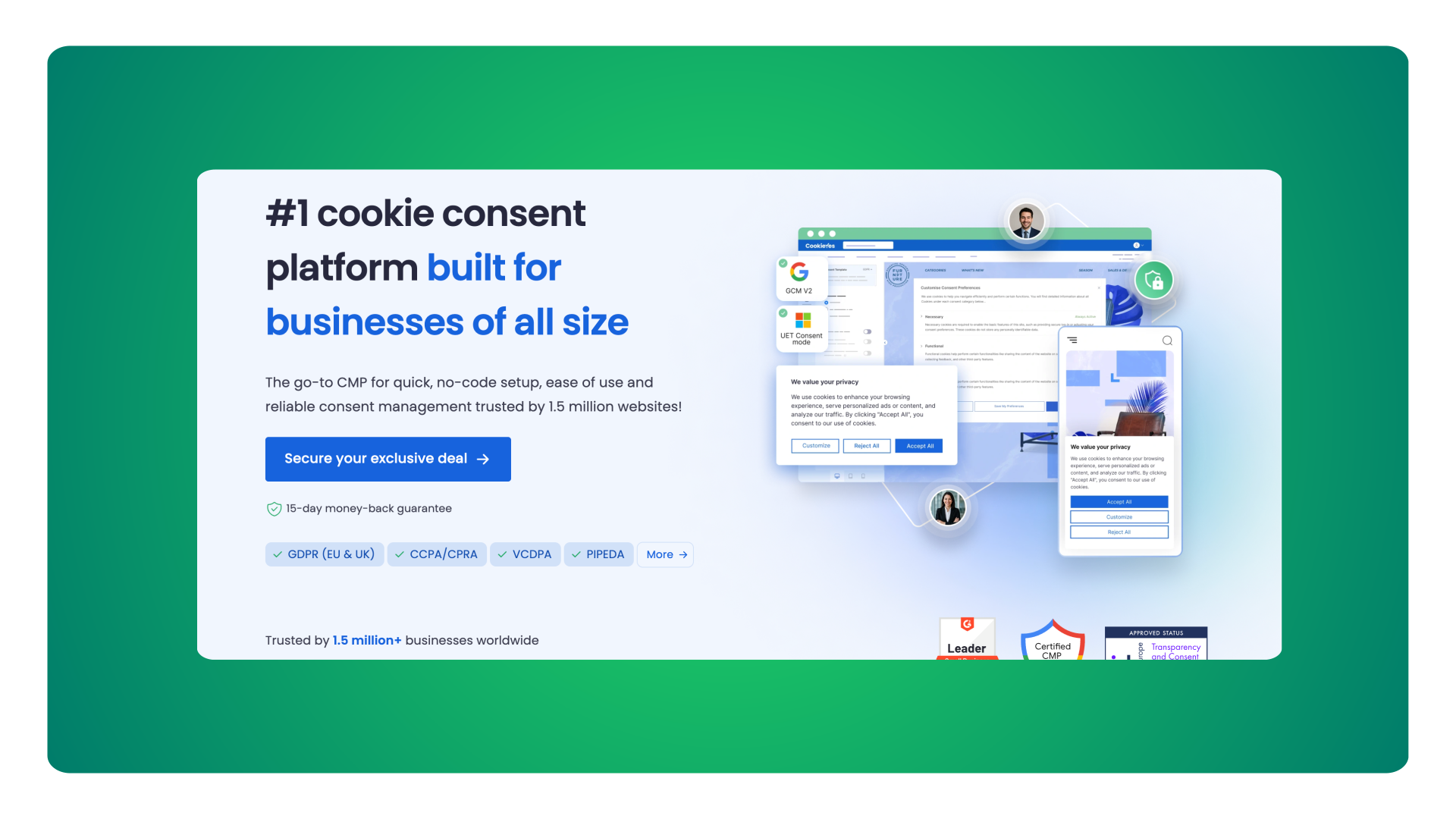
Best for: Small businesses and early-stage Shopify stores that need basic cookie consent on a tight budget.
CookieYes is one of the most widely used cookie consent tools among SMBs, with a genuinely usable free plan and straightforward setup. It is a Google-certified CMP with IAB TCF support, automated website scans, and reasonable banner customization. For a small business or solo founder that needs basic GDPR and CCPA coverage without a monthly bill, CookieYes is a credible starting point.
The limitation becomes visible at scale. CookieYes lacks enterprise-grade features, and teams that outgrow the free tier or need more sophisticated geotargeting often find themselves evaluating mid-market alternatives. Its CIPA-specific tooling and US state opt-out law coverage are less developed than platforms built with the US market as the primary target.
Key features:
- Google-certified CMP with Consent Mode v2
- IAB TCF support
- Automated scheduled website scans
- Cookie policy and privacy policy generator
- Geotargeting and auto-translation options
- WordPress and Shopify plugin integrations
Pricing: Free plan available. Paid plans: Basic $10/month, Pro $25/month, Ultimate $55/month (multi-site).
Pros: free plan sufficient for low-traffic sites; simple setup usable without technical expertise; Google-certified.
Cons: free plan has limited banner customization and no audit trail; lacks enterprise-grade consent records; not purpose-built for the US compliance landscape (CIPA, state opt-out laws).
5. Cookiebot
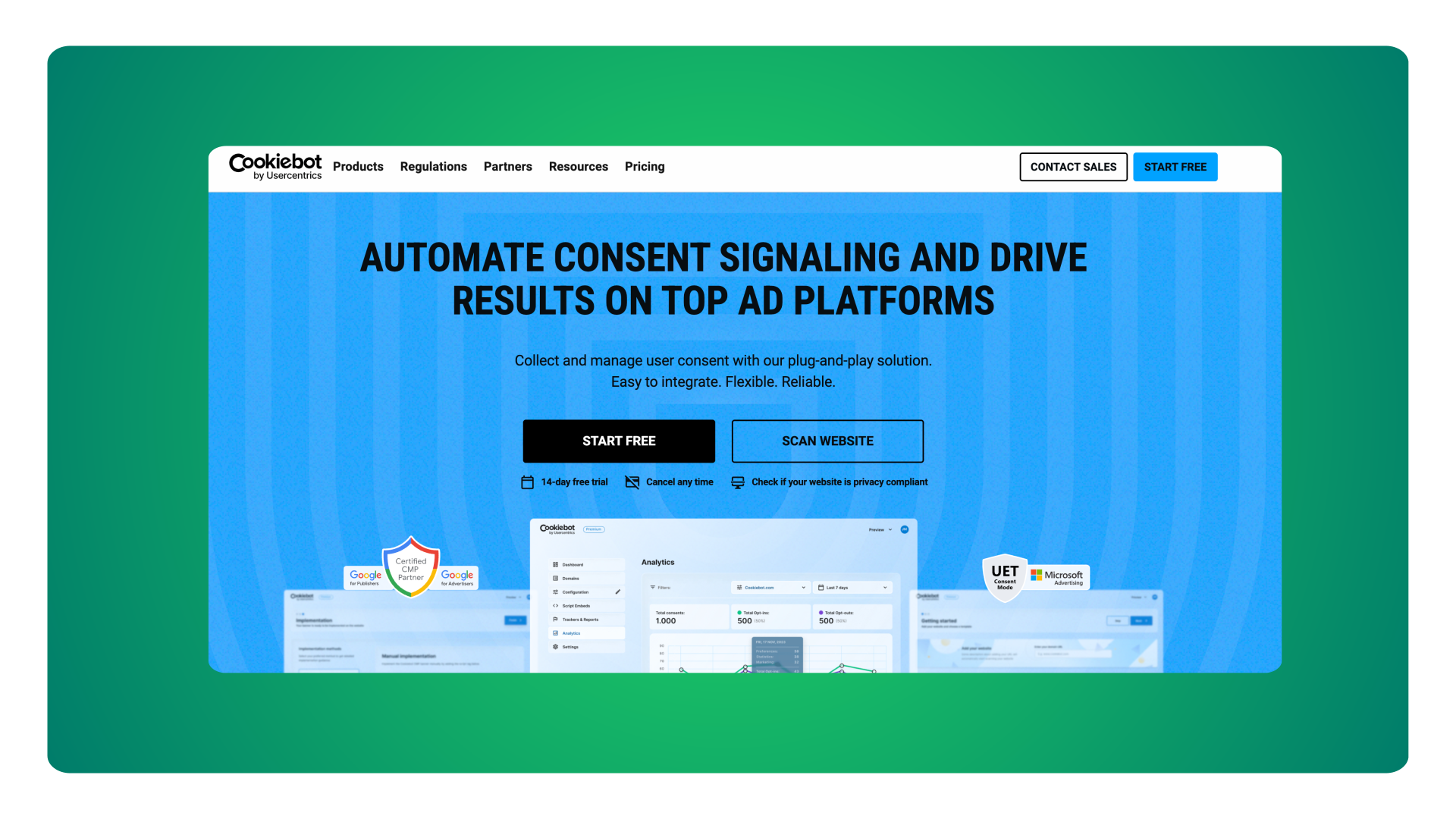
Best for: EU-focused businesses that need automated monthly scans and multilingual consent across multiple domains.
Cookiebot is a well-established cookie tracking tool in the EU market, with automatic monthly website scans, extensive multilingual support (47+ languages), native cross-domain consent synchronization, and solid Google Consent Mode v2 integration. It is the tool many European businesses deployed when GDPR first came into force. Its cross-domain consent feature is one of the more mature implementations in this list, making it relevant for businesses running multiple related domains.
Cookiebot was acquired by Usercentrics in 2021. Its weakness for US buyers is the EU-first orientation: CIPA compliance and US state opt-out law support are less developed than on platforms built with the US market as the primary target.
Key features:
- Automated monthly website scans
- Google Consent Mode v2, Microsoft UET Consent Mode
- IAB TCF certified
- 47+ language auto-translation
- Cross-domain consent synchronization
- Compliance coverage: ePrivacy, GDPR, CCPA, LGPD, and more
Pricing: Free plan (1 domain, up to 50 subpages). Paid plans: Lite $8/month, Small $16/month, Medium $34/month, Large $56/month, Extra Large $96/month.
Pros: automated monthly scanning; strong EU regulatory coverage; transparent pricing; native cross-domain consent.
Cons: monthly scans only (not continuous), so cookies introduced mid-month may go undetected; US compliance tooling less developed than EU coverage.
6. iubenda

Best for: Agencies and freelancers managing multiple client sites who want bundled policy generation with cookie consent.
iubenda built its reputation on legal document generation (privacy policies, terms of service, cookie policies) and added consent management as a natural extension. For an agency managing 20 to 50 client sites that need both legal documents and cookie consent banners, iubenda's bundled approach can reduce the number of tools in the stack.
The cookie tracking side is functional but not as deep as dedicated CMPs. iubenda's cookie solution covers GDPR, CCPA, and major global frameworks, but lacks some of the geotargeting sophistication and US state law specificity that mid-market compliance teams increasingly need.
Key features:
- Cookie tracking with geotargeted rules
- Bundled privacy policy, cookie policy, and terms generator
- IAB TCF 2.2 support
- Google Consent Mode v2
- Multi-site management dashboard
Pricing: Free plan available. Paid plans from approximately $27/year per site for the Cookie Solution. Bundled plans from $9/month.
Pros: bundled policy and consent approach reduces vendor count for agencies; affordable for high-volume site portfolios; large documentation library.
Cons: cookie consent features less sophisticated than dedicated CMP competitors; US compliance coverage (CIPA, state opt-out laws) less developed; customer support response times have drawn criticism in G2 reviews.
7. Termly
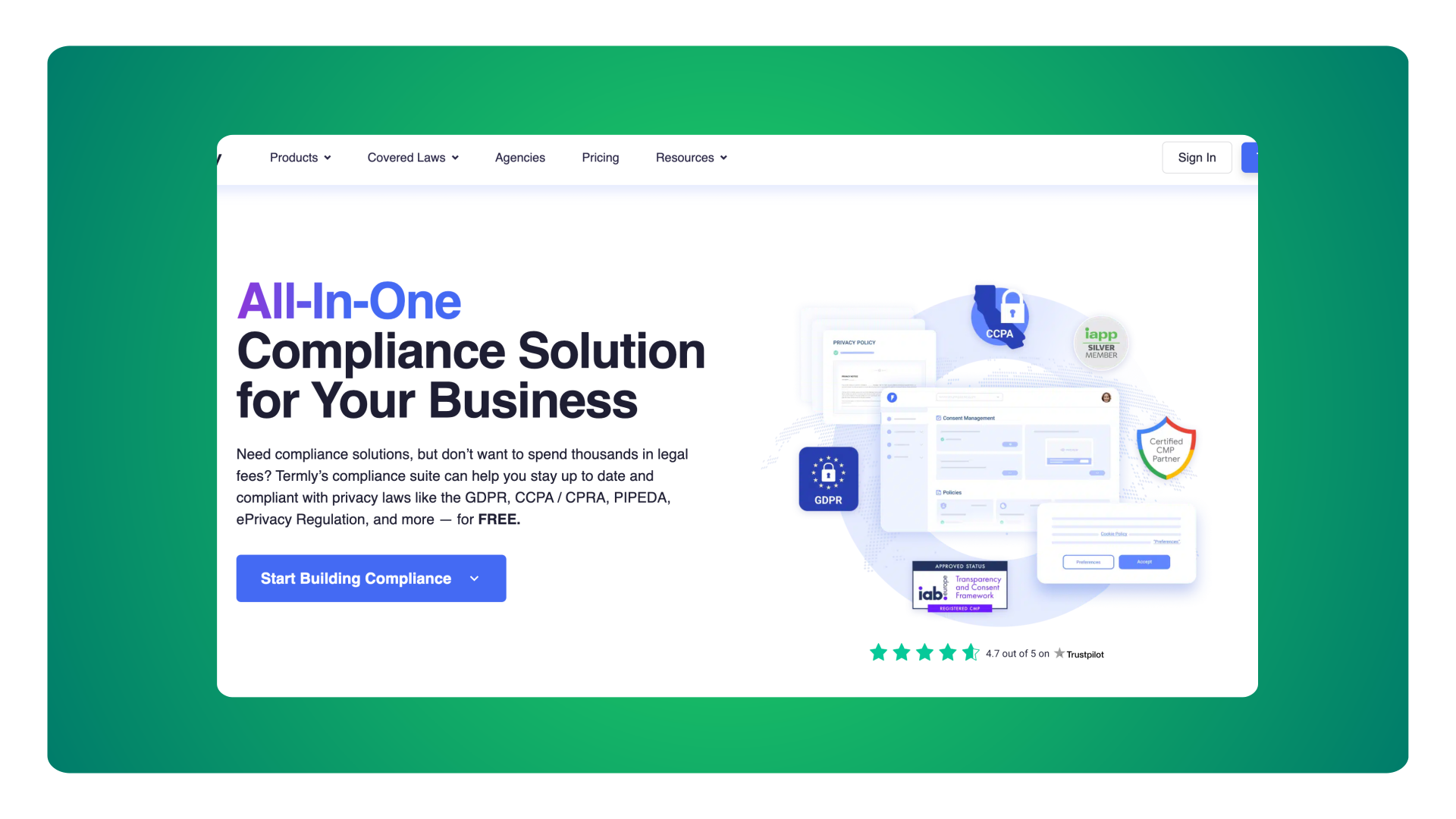
Best for: US-based SMBs that need cookie consent bundled with privacy policy, terms of service, and other legal document generation.
Termly occupies a similar position to iubenda in the market: a legal document generator that has built out a cookie consent layer. Where Termly differentiates is its US focus: it was built with CCPA and US state laws as primary targets, which makes it more relevant to the US SMB market than many EU-first alternatives. Termly is a Google-certified CMP with IAB TCF 2.2 support, automated website scans, and a solid free plan.
Key features:
- Google-certified CMP
- IAB TCF 2.2 implementation
- Privacy policy, terms of service, return policy, and shipping policy generators
- Automated website scans with regular monitoring
- Preference center for granular consent options
- Compliance coverage: GDPR, ePrivacy, CCPA, LGPD, PDPA, PIPEDA
Pricing: Free plan (10,000 banner views/month limit). Paid plans: Starter $14/month, Pro+ $20/month.
Pros: US-first approach with strong CCPA coverage; bundled legal document generation; affordable entry price; Google-certified.
Cons: limited banner customization relative to dedicated CMPs; free plan's 10,000 banner view limit is restrictive for growing sites; less depth on enterprise features and audit trail quality.
8. Ketch
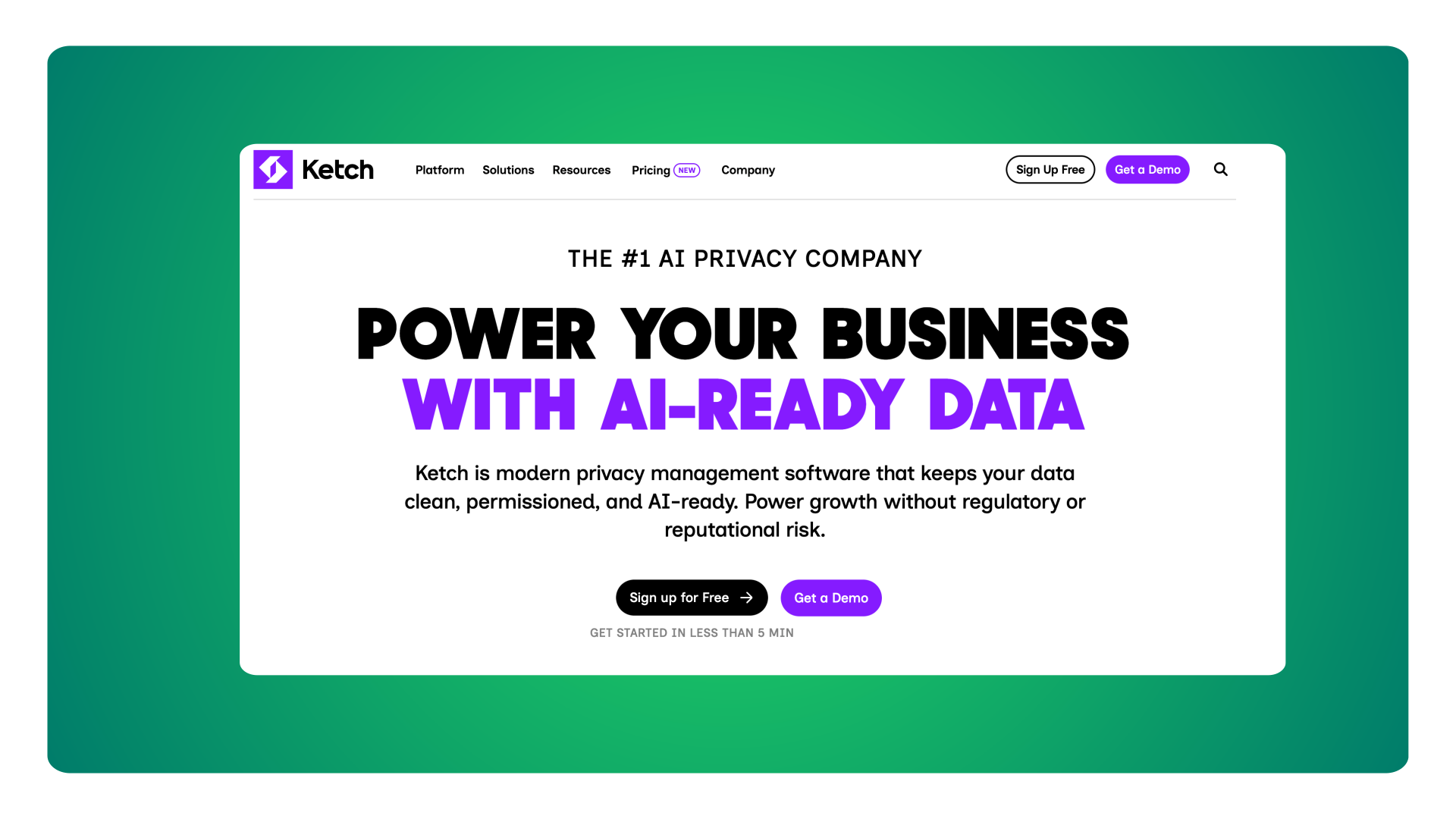
Best for: Enterprise teams building custom consent experiences with developer-heavy, API-first requirements.
Ketch is an enterprise-grade consent and data control platform designed for companies with sophisticated technical requirements, including server-side tag management, custom consent UIs, and deep integration with data stack infrastructure. It competes with OneTrust at the top of the market and has particular strength with companies that want to build consent logic directly into their data pipelines, not bolt it on via a tag. Ketch holds Google Silver CMP certification.
For most SMB and mid-market buyers, Ketch is overkill. Its pricing reflects enterprise positioning and its implementation complexity requires developer involvement that smaller teams typically do not have.
Key features:
- API-first architecture for custom consent experiences
- Server-side tag management support
- Data control platform: consent, preferences, DSARs, and data discovery
- Google Consent Mode v2 support (Silver CMP certification)
- Enterprise compliance coverage across global frameworks
Pricing: Enterprise pricing. Limited self-serve plans from approximately $150/month.
Pros: most flexible architecture for custom consent implementations; strong for companies with server-side GTM requirements; deep data control platform beyond just cookie consent.
Cons: Enterprise pricing makes it inaccessible for most mid-market teams; implementation complexity requires developer resources; no self-serve path.
9. Didomi
Best for: Companies collecting consent across websites, mobile apps, and other devices simultaneously.
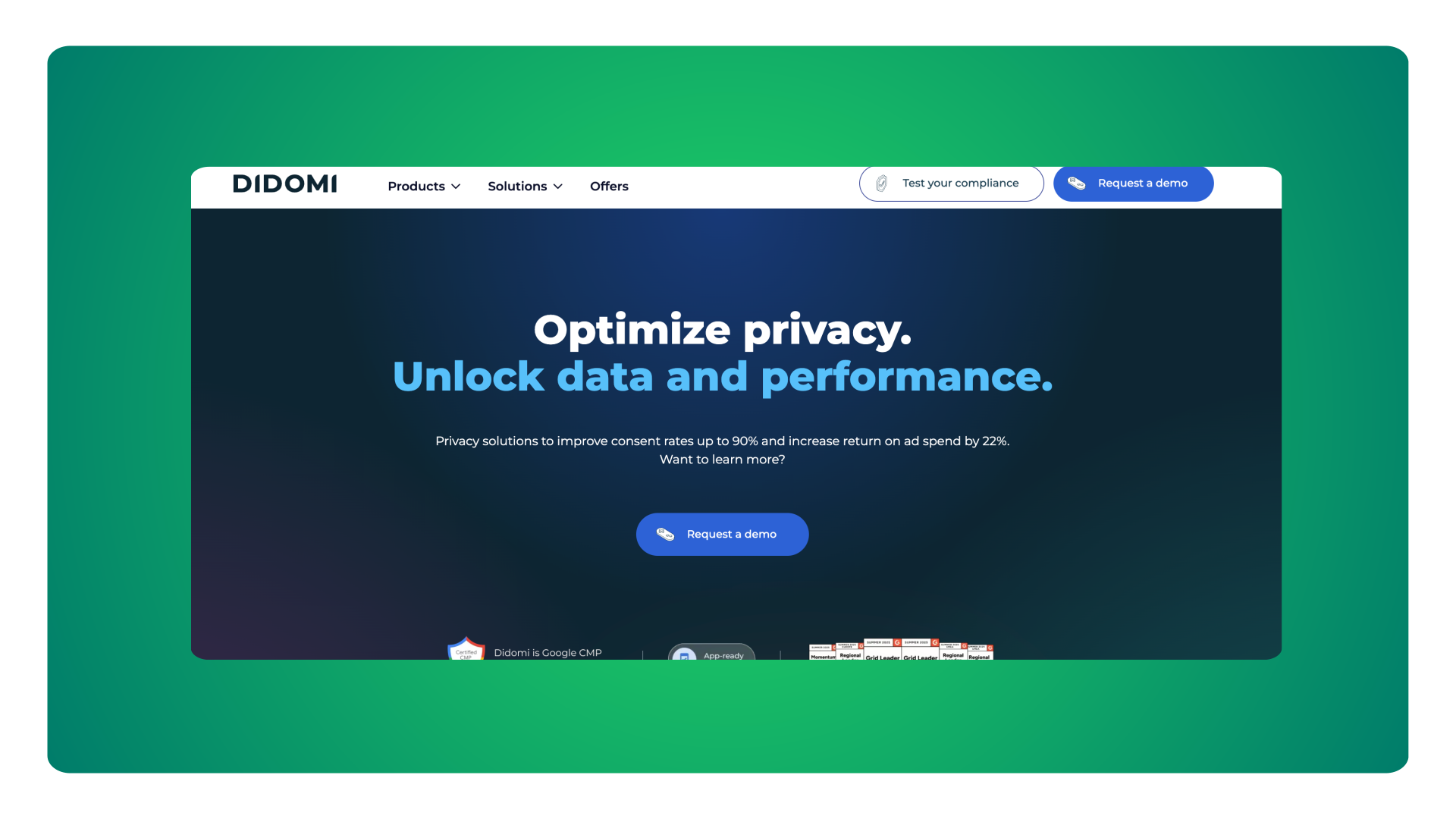
Didomi's main differentiation is cross-device consent synchronization: it aligns consent signals across web, mobile apps, connected TVs, and other channels, ensuring that a user's preference on one surface is honored everywhere. For a media company, publisher, or consumer app with a multi-surface presence, that real-time synchronization is something that most CMPs do not handle well.
For a standard website-first business, Didomi's cross-device capability is underutilized and the pricing reflects features you will not use.
Key features:
- Real-time consent synchronization across websites, mobile apps, CTV, and other devices
- IAB TCF, Google Consent Mode v2, Microsoft UET Consent Mode
- Geotargeting with location-aware consent rules
- Robust APIs for non-standard implementations
- Multi-device consent preference synchronization
Pricing: Not published. Contact for pricing. Plans: Essential, Advanced, Premium.
Pros: best-in-class cross-device consent synchronization; strong for publishers and media companies with multi-platform audiences; flexible API.
Cons: pricing not published, requires sales conversation; no granular consent on lower-tier plans; no free trial; overkill for businesses operating only on the web.
How we evaluated these tools
We assessed each tool against six criteria that matter most to privacy-conscious businesses in 2026:
- Google Consent Mode v2 certification. Google requires websites using Google Ads or GA4 to pass consent signals through a certified CMP. Tools without Google certification create measurement gaps that affect ad performance and campaign attribution.
- US regulatory coverage. GDPR compliance is table stakes. We looked specifically at CCPA/CPRA coverage, CIPA (California's wiretapping law), and support for the growing patchwork of US state opt-out laws across Virginia, Colorado, Connecticut, Texas, Tennessee, Iowa, and others.
- Pricing transparency. Tools that do not publish pricing require a sales conversation before a buyer can evaluate fit. We noted which tools list pricing publicly and which require a demo request.
- Platform integrations. Native integrations with Shopify, Webflow, and WordPress reduce implementation time significantly. We noted which tools offer native apps versus generic script-based deployment.
- Ease of setup. For SMB and mid-market teams without dedicated privacy counsel, setup time and technical complexity are real barriers. We looked for tools that can go live in hours, not weeks.
- Consent record quality. Regulators and plaintiffs request proof of consent. We looked for tools that produce timestamped, user-level consent records that can be exported on demand.
Cookie tracking software and GDPR compliance
GDPR sets specific requirements for how cookie tracking software must operate. The regulation requires that non-essential cookies not fire until a user has actively given consent: pre-ticked boxes, consent buried in terms of service, and consent implied by continued browsing are all invalid.
A compliant setup requires four things: a mechanism for obtaining informed, specific consent before tracking begins; granular consent categories (functional, analytics, advertising) that users can accept or decline independently; a clear withdrawal mechanism; and timestamped, user-level consent records that can be produced on demand.
Of the tools in this list, Enzuzo, Osano, Cookiebot, and Didomi have the strongest EU compliance track records. CookieYes, iubenda, and Termly are functionally compliant for most use cases but are less specialized for EU regulatory scrutiny. Ketch and OneTrust are designed for enterprise compliance programs where a dedicated privacy team manages the configuration.
One practical note: the GDPR's legitimate interest basis is frequently misapplied to cookie tracking. For tracking cookies used for analytics and advertising purposes, supervisory authorities across the EU have consistently held that legitimate interest does not apply. Consent is the required lawful basis. Any tool that positions legitimate interest as an alternative to a consent banner for tracking cookies should be evaluated with skepticism.
Managing cookie tracking across multiple domains
Most businesses eventually need consent management across more than one domain. Common scenarios include a main marketing site and a separate developer subdomain, a SaaS company with a product subdomain and a documentation site, an agency managing cookie compliance across a portfolio of client sites, and a media company running several branded properties.
The default behavior of cookie consent is domain-specific: a user who accepts cookies on company.com has not consented to tracking on shop.company.com or company-checkout.com. Each domain stores its own consent record in the browser. Sharing consent across domains requires a deliberate technical implementation, typically through a shared consent identifier passed via URL parameter or a server-side consent record that both domains query.
Of the tools in this list, Enzuzo supports multi-domain management on higher-tier plans. Didomi handles cross-domain scenarios well for enterprise configurations. OneTrust and Osano support multi-domain at enterprise pricing levels.
For agencies managing cookie compliance across many client sites, iubenda's multi-site dashboard and Termly's agency pricing are worth evaluating. CookieYes has a multi-site plan (Ultimate tier at $55/month) that covers multiple domains under a single account.
Cookie tracking for marketing teams
Cookie tracking software significantly affects marketing measurement. When a visitor declines cookies, their session data, conversion events, and ad attribution are no longer available through standard tracking. On a site with a 30% consent acceptance rate, you are effectively blind to 70% of your traffic in your analytics platform.
Google Consent Mode v2 addresses this partially. A Google-certified CMP passes consent signals to Google, which then uses modeled data to estimate conversions and user behavior for users who declined tracking. The modeled data fills gaps in GA4 and Google Ads reporting, so your campaign performance data remains directionally accurate even with lower consent rates.
What marketing teams should look for in a cookie tracking tool:
- Google Consent Mode v2 certification (Gold preferred): ensures GA4 modeling and Google Ads conversion tracking work correctly for users who decline cookies.
- Consent rate reporting: some tools report what percentage of visitors accept, decline, or partially accept cookies. This data helps you understand the measurement gap and optimize banner placement without using dark patterns.
- Integration with ad platforms: beyond Google, Meta's Conversion API (CAPI) and TikTok's Events API allow server-side conversion tracking that is not dependent on browser cookies. A CMP that integrates with these platforms helps preserve attribution even in a consent-declined environment.
The practical takeaway: a non-certified cookie tracking tool does not just create legal risk. It creates a measurement gap that affects every paid media campaign you run. Google Consent Mode certification is a marketing requirement, not just a legal one.
How to choose the right cookie tracking tool
The right cookie tracking software depends primarily on your company size, technical platform, and compliance urgency.
If you are an SMB or early-stage company on Shopify or Webflow: start with Enzuzo or CookieYes. CookieYes has a functional free plan for low-traffic sites. Enzuzo's consent management platform is the stronger choice as soon as you need geotargeting, US state law coverage, or Google Consent Mode v2 certification.
If you are a mid-market company (50 to 500 employees) being displaced by OneTrust's new pricing: Enzuzo and Osano are the most relevant alternatives. Enzuzo is faster to deploy, publicly priced, and does not require a sales conversation. Osano's $500,000 compliance guarantee may be worth the added friction if your legal team requires a contractual risk backstop.
If you are an EU-focused business managing multiple domains: Cookiebot's cross-domain consent and automated scanning infrastructure make it worth evaluating. Its pricing is transparent and its scanning is among the most thorough in this list for EU compliance requirements.
If you are an agency managing multiple client sites: iubenda or Termly offer bundled policy generation with cookie consent at volume-friendly pricing. Enzuzo also has an agency plan for teams that need more sophisticated geotargeting and Google Consent Mode across client portfolios.
If you are an enterprise (500+ employees) with a complex multi-framework compliance requirement: OneTrust or TrustArc are the most complete options. Ketch is worth evaluating if your engineering team needs server-side consent or API-first architecture.
If you are responding to a CIPA demand letter right now: you need to be live within days. Enzuzo and CookieYes both offer self-serve sign-up with same-day deployment. Osano, OneTrust, Ketch, Didomi, and TrustArc all require a sales conversation that adds days or weeks to your timeline.
Not sure which tool is right for you? Book a 20-minute demo with Enzuzo. We review your current setup and tell you exactly what you need, even if it is not us.
FAQs
Is cookie tracking software legally required?
In most cases, yes. If your website serves visitors from the EU (GDPR), California (CCPA/CIPA), or any US state with an active privacy law, you are required to manage cookies lawfully. GDPR requires opt-in consent before non-essential cookies fire. CCPA requires an opt-out mechanism. CIPA is being actively enforced against companies using Meta Pixel, TikTok Pixel, and similar tracking technologies without proper consent, with demand letters ranging from $10,000 to $200,000 per claim. Cookie tracking software is the practical way to meet these requirements automatically across jurisdictions.
What is the difference between a CMP and cookie tracking software?
The terms are interchangeable in most contexts. CMP (consent management platform) is the technical industry term for software that manages user consent for cookies and tracking technologies. Cookie tracking software is a more descriptive label for the same category, commonly used by buyers who are not yet familiar with CMP terminology. All of the tools in this list are CMPs.
Does cookie tracking software work with Google Analytics and Google Ads?
Yes, but only if the tool is certified for Google Consent Mode v2. Google requires websites using GA4, Google Ads conversion tracking, or Floodlight to pass consent signals through a certified CMP. Without a Google-certified tool, your ad measurement will be modeled only at a reduced fidelity, which reduces conversion accuracy and can cause undercounting in campaign reporting.
Which cookie tracking software is best for GDPR compliance?
For EU-first businesses with strict GDPR requirements, Cookiebot's automated scanning, cross-domain consent, and DPA-track record make it a strong choice. For mid-market US-based businesses that also need GDPR coverage, Enzuzo's consent management platform covers GDPR alongside CCPA, CIPA, and 10+ US state laws from a single platform. For enterprises that need the most complete EU compliance program including data mapping and vendor risk, OneTrust or Osano are the appropriate options.
How do I manage cookie tracking across multiple domains?
Cross-domain consent requires deliberate implementation. Cookiebot offers native cross-domain consent synchronization as a platform feature. Enzuzo supports multi-domain management on higher-tier plans. Most other tools in this list handle multi-domain through account-level management (multiple sites under one account) rather than technical consent synchronization across domains. For agencies managing many client sites, iubenda and CookieYes (Ultimate plan) offer multi-site dashboards that centralize management without requiring technical cross-domain consent.
What is the cheapest cookie consent tool?
CookieYes, Cookiebot, and Termly all offer free plans for low-traffic single-domain sites. iubenda also has a free tier. For growing businesses, paid plans start from $8 to $14/month across most of these tools. Enzuzo offers a free plan and paid plans from $9/month. Enterprise tools (OneTrust, Ketch, TrustArc, Didomi) do not have self-serve pricing and require a sales conversation.
What is the best cookie consent tool for Shopify?
Enzuzo's consent management platform is the only CMP in this list with a native Shopify App Store integration: no Google Tag Manager required. CookieYes and Cookiebot both integrate with Shopify via script tag or GTM. OneTrust and Osano do not have native Shopify integrations and require GTM workarounds. For Shopify merchants, native integration matters: it eliminates a deployment step and removes the risk of consent signals being blocked by theme customizations.
How do I know if my cookie consent tool is actually working?
Three tests: first, use your browser's incognito mode to visit your site and check that non-essential cookies (Google Analytics, Meta Pixel, etc.) do not fire before you accept consent. Use your browser's developer tools to inspect the Network tab and confirm no tracking pixels load on page arrival. Second, accept consent and verify those same tracking events fire correctly. Third, check your consent records in your CMP dashboard and confirm timestamped records are being logged for each consent action. If any of these three checks fail, your implementation has a gap.

Osman Husain
Osman is the content lead at Enzuzo. He has a background in data privacy management via a two-year role at ExpressVPN and extensive freelance work with cybersecurity and blockchain companies. Osman also holds an MBA from the Toronto Metropolitan University.